


Government efforts to smooth over Taiwan-Japan relations in private have begun in earnest in the hopes of persuading Japan to support Taiwan’s bid to join the Comprehensive and Progressive Agreement for Trans-Pacific Partnership (CPTPP), despite Taiwan’s ban on food imports from five Japanese prefectures.
In a referendum held alongside the Nov. 24 local elections, 78 percent of nearly 10 million voters cast ballots in favor of referendum No. 9, which asked: “Do you agree that the government should, in connection to the March 11 Fukushima Dai-ichi nuclear disaster, continue to enforce the food imports ban on 31 regions in Japan, including agricultural and food products from Fukushima and the surrounding four prefectures and municipalities (Ibaraki, Tochigi, Gunma and Chiba)?”
Japanese Minister of Foreign Affairs Taro Kono on Friday last week said that the vote makes it unlikely that Taiwan’s CPTPP bid would succeed and Tokyo did not rule out taking the issue to the WTO.
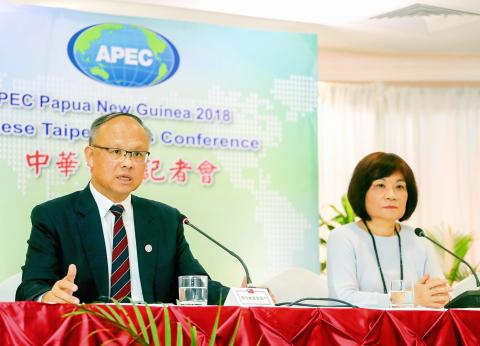
Photo: CNA
Efforts to improve relations include President Tsai Ing-wen (蔡英文) conveying her well-wishes to the Japan-Taiwan Exchange Association for Japanese Emperor Akihito’s birthday on Dec. 23, when the association hosted an early celebration, while Premier William Lai (賴清德) is to attend the event, the source said.
In a meeting with Japanese friends, Tsai also reiterated Taiwan’s wish to join the treaty, the source said, adding that the government has sought to reassure Japan that nothing would affect Taiwan-Japan relations.
Taiwan has also contacted other CPTPP signatories, such as Australia, Canada and Singapore, in the hopes of securing their sponsorship to join the pact.
Minister Without Portfolio John Deng (鄧振中) said that the government is still talking to Japan to obtain its support for Taiwan joining the free-trade pact.
With the treaty to go into effect at the end of the month, the signatories are expected to hold a ministerial-level meeting next month, during which the body might debate procedures and regulations regarding accession of new members, Deng said.
Despite facing significant challenges, the government is preparing for a possible second round of negotiations to join the treaty, a government official said.
Despite Japan’s stance, Taiwan still has a chance of being admitted as a member, the official said, speaking on condition of anonymity.
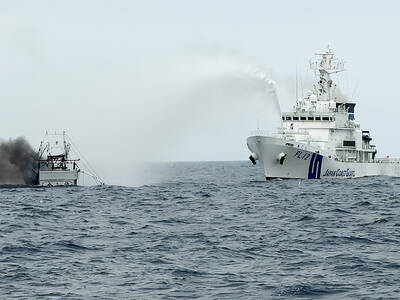
CREDIT-GRABBER: China said its coast guard rescued the crew of a fishing vessel that caught fire, who were actually rescued by a nearby Taiwanese boat and the CGA Maritime search and rescue operations do not have borders, and China should not use a shipwreck to infringe upon Taiwanese sovereignty, the Coast Guard Administration (CGA) said yesterday. The coast guard made the statement in response to the China Coast Guard (CCG) saying it saved a Taiwanese fishing boat. The Chuan Yu No. 6 (全漁6號), a fishing vessel registered in Keelung, on Thursday caught fire and sank in waters northeast of Diaoyutai Islands (釣魚台). The vessel left Keelung’s Badouzih Fishing Harbor (八斗子漁港) at 3:35pm on Sunday last week, with seven people on board — a 62-year-old Taiwanese captain surnamed Chang (張) and six
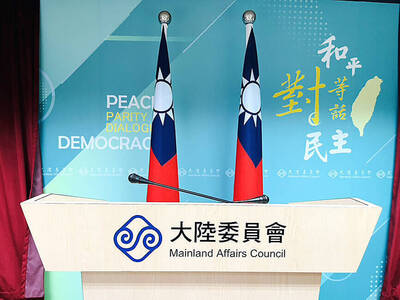
RISKY BUSINESS: The ‘incentives’ include initiatives that get suspended for no reason, creating uncertainty and resulting in considerable losses for Taiwanese, the MAC said China’s “incentives” failed to sway sentiment in Taiwan, as willingness to work in China hit a record low of 1.6 percent, a Ministry of Labor survey showed. The Directorate-General of Budget, Accounting and Statistics (DGBAS) also reported that the number of Taiwanese workers in China has nearly halved from a peak of 430,000 in 2012 to an estimated 231,000 in 2024. That marked a new low in the proportion of Taiwanese going abroad to work. The ministry’s annual survey on “Labor Life and Employment Status” includes questions respondents’ willingness to seek employment overseas. Willingness to work in China has steadily declined from

The Legislative Yuan’s Finance Committee yesterday approved proposed amendments to the Amusement Tax Act (娛樂稅法) that would abolish taxes on films, cultural activities and competitive sporting events, retaining the fee only for dance halls and golf courses. The proposed changes would set the maximum tax rate for dance halls and golf courses at 50 and 20 percent respectively, with local governments authorized to suspend the levies. Article 2 of the act says that “amusement tax shall be levied on tickets sold or fees charged by amusement places, facilities or activities” in six categories: “Cinema; professional singing, story-telling, dancing, circus, magic show, acrobatics
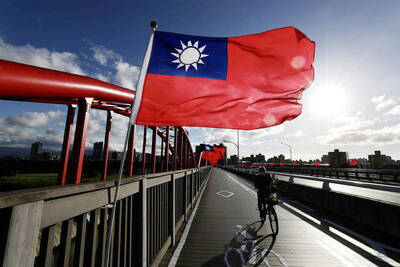
INFLATION UP? The IMF said CPI would increase to 1.5 percent this year, while the DGBAS projected it would rise to 1.68 percent, with GDP per capita of US$44,181 The IMF projected Taiwan’s real GDP would grow 5.2 percent this year, up from its 2.1 percent outlook in January, despite fears of global economic disruptions sparked by the US-Iran conflict. Taiwan’s consumer price index (CPI) is projected to increase to 1.5 percent, while unemployment would be 3.4 percent, roughly in line with estimates for Asia as a whole, the international body wrote in its Global Economic Outlook Report published in the US on Monday. The figures are comparatively better than the IMF outlook for the rest of the world, which pegged real GDP growth at 3.1 percent, down from 3.3 percent


 RSS
RSS