


By making a rare second trip this year to Vietnam, US Secretary of Defense James Mattis is signaling how intensively US President Donald Trump’s administration is trying to counter China’s military assertiveness by cozying up to smaller nations in the region that share the US’ wariness about Chinese intentions.
The visit, beginning today, also shows how far US-Vietnamese relations have advanced since the tumultuous years of the Vietnam War.
Mattis visited Hanoi in January. Three months after his visit, a US Navy aircraft carrier, the USS Carl Vinson, made a port call at Da Nang.
It was the first such visit since the war and a reminder to China that the US is intent on strengthening partnerships in the region as a counterweight to China’s growing military might.
The most vivid expression of Chinese assertiveness is its transformation of contested islets and other features in the South China Sea into strategic military outposts.
The Trump administration has sharply criticized China for deploying surface-to-air missiles and other weapons on some of the outposts.
Mattis in June said the placement of these weapons is “tied directly to military use for the purposes of intimidation and coercion.”
This time Mattis is visiting Ho Chi Minh City. He also plans to visit a Vietnamese air base, Bien Hoa, a major air station for US forces during the war and meet Vietnamese Minister of National Defense Ngo Xuan Lich.
Although Vietnam has become a common destination for US secretaries of defense, two visits in one year is unusual and Ho Chi Minh City is rarely on the itinerary.
The last Pentagon chief to visit Ho Chi Minh City was William Cohen in 2000; he was the first US secretary of defense to visit Vietnam since the war. Formal diplomatic relations were restored in 1995 and the US lifted its war-era arms embargo in 2016.
The Mattis trip originally was to include a visit to Beijing, but that stop was canceled amid rising tensions over trade and defense issues.
China recently rejected a request for a Hong Kong port visit by a US warship and last summer Mattis disinvited China from a major maritime exercise in the Pacific.
China last month scrapped a Pentagon visit by its navy chief and demanded that Washington cancel an arms sale to Taiwan.
These tensions have served to accentuate the potential for a stronger US partnership with Vietnam.
Josh Kurlantzick, a senior fellow and Asia specialist at the Council on Foreign Relations, said in an interview that Vietnam in recent years has shifted from a foreign and defense policy that carefully balanced relations with China and the US to one that shades in the direction of Washington.
“I do see Vietnam very much aligned with some of Trump’s policies,” he said, referring to what the administration calls its “free and open Indo-Pacific strategy.”
“Vietnam, leaving aside Singapore, is the country the most skeptical of China’s Southeast Asia policy and makes the most natural partner for the US,” Kurlantzick said.
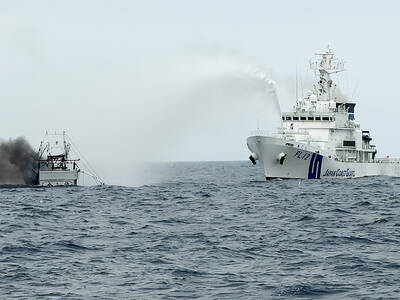
CREDIT-GRABBER: China said its coast guard rescued the crew of a fishing vessel that caught fire, who were actually rescued by a nearby Taiwanese boat and the CGA Maritime search and rescue operations do not have borders, and China should not use a shipwreck to infringe upon Taiwanese sovereignty, the Coast Guard Administration (CGA) said yesterday. The coast guard made the statement in response to the China Coast Guard (CCG) saying it saved a Taiwanese fishing boat. The Chuan Yu No. 6 (全漁6號), a fishing vessel registered in Keelung, on Thursday caught fire and sank in waters northeast of Diaoyutai Islands (釣魚台). The vessel left Keelung’s Badouzih Fishing Harbor (八斗子漁港) at 3:35pm on Sunday last week, with seven people on board — a 62-year-old Taiwanese captain surnamed Chang (張) and six
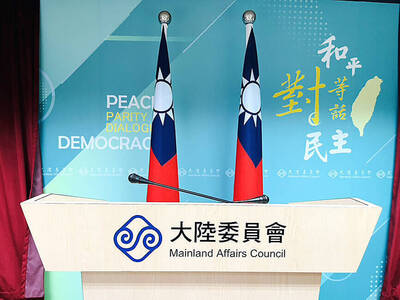
RISKY BUSINESS: The ‘incentives’ include initiatives that get suspended for no reason, creating uncertainty and resulting in considerable losses for Taiwanese, the MAC said China’s “incentives” failed to sway sentiment in Taiwan, as willingness to work in China hit a record low of 1.6 percent, a Ministry of Labor survey showed. The Directorate-General of Budget, Accounting and Statistics (DGBAS) also reported that the number of Taiwanese workers in China has nearly halved from a peak of 430,000 in 2012 to an estimated 231,000 in 2024. That marked a new low in the proportion of Taiwanese going abroad to work. The ministry’s annual survey on “Labor Life and Employment Status” includes questions respondents’ willingness to seek employment overseas. Willingness to work in China has steadily declined from

The Legislative Yuan’s Finance Committee yesterday approved proposed amendments to the Amusement Tax Act (娛樂稅法) that would abolish taxes on films, cultural activities and competitive sporting events, retaining the fee only for dance halls and golf courses. The proposed changes would set the maximum tax rate for dance halls and golf courses at 50 and 20 percent respectively, with local governments authorized to suspend the levies. Article 2 of the act says that “amusement tax shall be levied on tickets sold or fees charged by amusement places, facilities or activities” in six categories: “Cinema; professional singing, story-telling, dancing, circus, magic show, acrobatics
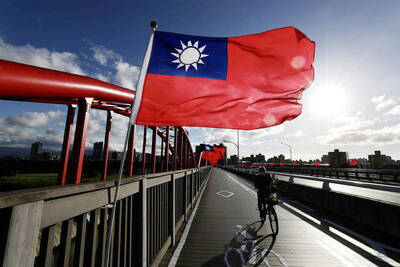
INFLATION UP? The IMF said CPI would increase to 1.5 percent this year, while the DGBAS projected it would rise to 1.68 percent, with GDP per capita of US$44,181 The IMF projected Taiwan’s real GDP would grow 5.2 percent this year, up from its 2.1 percent outlook in January, despite fears of global economic disruptions sparked by the US-Iran conflict. Taiwan’s consumer price index (CPI) is projected to increase to 1.5 percent, while unemployment would be 3.4 percent, roughly in line with estimates for Asia as a whole, the international body wrote in its Global Economic Outlook Report published in the US on Monday. The figures are comparatively better than the IMF outlook for the rest of the world, which pegged real GDP growth at 3.1 percent, down from 3.3 percent


 RSS
RSS