


The Executive Yuan’s Department of Cyber Security has drafted six sets of regulations to complement the Information and Communication Security Management Act (資通安全管理法) passed by the Legislative Yuan in May.
The regulations are to take effect on Jan. 1 next year alongside the act.
The regulations are: enforcement rules for the information and communication security management act; regulations governing information security levels and the distribution of responsibilities; regulations governing the reporting of information security incidents and response measures; regulations on the assessment of the execution of information security safeguarding plans; regulations exchanging information security intelligence; and regulations on rewarding and punishing civil servants tasked with safeguarding information security.
The regulations were made available for public viewing for 60 days and were discussed at public hearings, which proceeded smoothly, the department said.
They underwent minor revisions after the hearings and are expected to be approved by the Executive Yuan soon, after which they would be forwarded to the Legislative Yuan to be archived, it said.
Asked how the government plans to address a shortage of information security personnel in the public sector, department Director Jian Hong-wei (簡宏偉) said the government would initiate projects to cultivate professionals to implement the regulations.
Under the act, central and local government agency heads must appoint deputies or other suitable personnel as their chief information security officer, whose job would be to monitor and lead information protection tasks within their agencies.
Agencies that fail to comply are to be punished under regulations set forth by the Executive Yuan, according to the act.
Public foundations and state-run companies that fail to report information security incidents to their central governing agencies are to be fined between NT$300,000 and NT$5 million (US$9,820 and US$163,661), which would be repeated until they make changes, the act states.
The regulations governing the reporting of information security incidents and response measures are concerned with a standard procedure to be adopted by government agencies when liaising with their parent agencies to report information security incidents.
According to the regulations, information security incidents are categorized into four levels: Levels 1 and 2 refer to information breaches of lower threats, while levels 3 and 4 denote graver threats.
In the event of a level 3 or 4 information security breach, the chief information security officer at the agency involved should hold a meeting to devise countermeasures and may request the assistance of other concerned agencies, the draft regulations state.
Meanwhile, to help central government agencies fend off state-sponsored Chinese hackers and cyberattacks originating in other nations, the Executive Yuan is deliberating a bill that would require agencies whose annual budget requests routinely top NT$1 billion to allocate at least 5 percent of the request to uphold information security, a source with knowledge of the matter said.
Central government agencies whose annual budget normally ranges between NT$100 million and NT$1 billion should allot 6 percent of that amount to ensure information security, while agencies with an annual budget of up to NT$100 million should allocate 7 percent for the task, the source said.
The bill is derived from a Ministry of Science and Technology initiative, which proposed the percentages, they said.
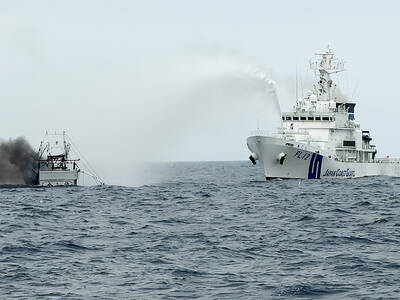
CREDIT-GRABBER: China said its coast guard rescued the crew of a fishing vessel that caught fire, who were actually rescued by a nearby Taiwanese boat and the CGA Maritime search and rescue operations do not have borders, and China should not use a shipwreck to infringe upon Taiwanese sovereignty, the Coast Guard Administration (CGA) said yesterday. The coast guard made the statement in response to the China Coast Guard (CCG) saying it saved a Taiwanese fishing boat. The Chuan Yu No. 6 (全漁6號), a fishing vessel registered in Keelung, on Thursday caught fire and sank in waters northeast of Diaoyutai Islands (釣魚台). The vessel left Keelung’s Badouzih Fishing Harbor (八斗子漁港) at 3:35pm on Sunday last week, with seven people on board — a 62-year-old Taiwanese captain surnamed Chang (張) and six
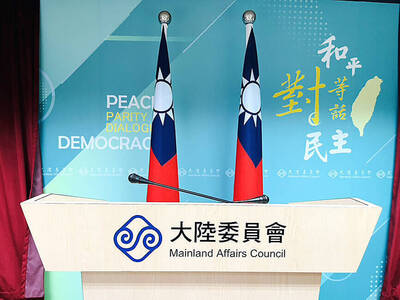
RISKY BUSINESS: The ‘incentives’ include initiatives that get suspended for no reason, creating uncertainty and resulting in considerable losses for Taiwanese, the MAC said China’s “incentives” failed to sway sentiment in Taiwan, as willingness to work in China hit a record low of 1.6 percent, a Ministry of Labor survey showed. The Directorate-General of Budget, Accounting and Statistics (DGBAS) also reported that the number of Taiwanese workers in China has nearly halved from a peak of 430,000 in 2012 to an estimated 231,000 in 2024. That marked a new low in the proportion of Taiwanese going abroad to work. The ministry’s annual survey on “Labor Life and Employment Status” includes questions respondents’ willingness to seek employment overseas. Willingness to work in China has steadily declined from

The Legislative Yuan’s Finance Committee yesterday approved proposed amendments to the Amusement Tax Act (娛樂稅法) that would abolish taxes on films, cultural activities and competitive sporting events, retaining the fee only for dance halls and golf courses. The proposed changes would set the maximum tax rate for dance halls and golf courses at 50 and 20 percent respectively, with local governments authorized to suspend the levies. Article 2 of the act says that “amusement tax shall be levied on tickets sold or fees charged by amusement places, facilities or activities” in six categories: “Cinema; professional singing, story-telling, dancing, circus, magic show, acrobatics
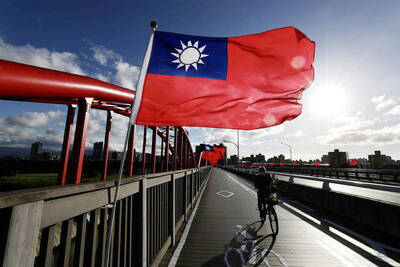
INFLATION UP? The IMF said CPI would increase to 1.5 percent this year, while the DGBAS projected it would rise to 1.68 percent, with GDP per capita of US$44,181 The IMF projected Taiwan’s real GDP would grow 5.2 percent this year, up from its 2.1 percent outlook in January, despite fears of global economic disruptions sparked by the US-Iran conflict. Taiwan’s consumer price index (CPI) is projected to increase to 1.5 percent, while unemployment would be 3.4 percent, roughly in line with estimates for Asia as a whole, the international body wrote in its Global Economic Outlook Report published in the US on Monday. The figures are comparatively better than the IMF outlook for the rest of the world, which pegged real GDP growth at 3.1 percent, down from 3.3 percent


 RSS
RSS