


The Cabinet yesterday approved a bill to abolish the statute of limitations for serious criminal offenses, with the current 30-year limit for crimes punishable by death or life sentence to be abolished.
A set of amendments to the Criminal Code have been approved to abolish the statute of limitations for crimes punishable by death, life imprisonment or a prison sentence of at least 10 years if any death is caused due to the crimes, the Ministry of Justice said.
Under the proposed amendments, investigations into at least two unsolved cases that occurred in 1996 — a mass shooting at the home of then-Taoyuan County commissioner Liu Pang-yu (劉邦友) and the murder of prominent women’s rights activist Peng Wan-ju (彭婉如) — would be able to continue indefinitely, Minister of Justice Chiu Tai-san (邱太三) said.

Photo: CNA
The punishment for murdering a close relative is to be lowered to a minimum 15 years in prison from the current minimum sentence of life imprisonment because some defendants had been found to have been subjected to abuse by their victims, often their parents, the ministry said.
To protect children, a minimum six months would be added to the current maximum five-year prison sentence for maltreating a minor under the age of 16.
A minimum 10-year sentence would be imposed on people found guilty of committing child abuse that leads to the death of the child.
In cases where someone causes the death of another due to negligence, stiffer penalties have also been proposed, raising the maximum prison sentence from two to five years.
The amendments remove the punishments for killing or injuring a person due to negligence in the performance of occupational duties, as the ministry said a person performing occupational duties has no higher obligation than other people to prevent death or injuries.
A worker causing the death or injuries of others in the line of duty would only be punished by sentences pertaining to negligence instead of occupational negligence.
The amendments would also increase the maximum prison sentence for assault from three to five years and add to that category the act of deliberately infecting someone with a venereal disease.
Deliberately spreading a venereal disease is currently punishable by a maximum prison sentence of one year and mandatory treatment.
The amendments would also give the judiciary a broader authority to confiscate money made illegally.
Currently, it is prohibited to confiscate the illegal gains if they are discovered after conviction and the amendments would lift that prohibition.
The draft bill also addresses the issue of fines, stipulating up to NT$100,000 for offenses that carry a maximum prison sentence of one year, NT$200,000 for those with a maximum sentence of two years, NT$300,000 for those with a maximum sentence of three years and NT$500,000 for offenses that carry a maximum sentence of five years.
Additional reporting by CNA
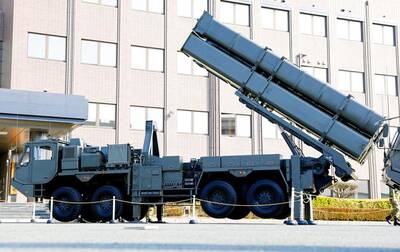
Japan has deployed long-range missiles in a southwestern region near China, the Japanese defense minister said yesterday, at a time when ties with Beijing are at their lowest in recent years. The missiles were installed in Kumamoto in the southern region of Kyushu, as Japan is attempting to shore up its military capacity as China steps up naval activity in the East China Sea. “Standoff defense capabilities enable us to counter the threat of enemy forces attempting to invade our country ... while ensuring the safety of our personnel,” Japanese Minister of Defense Shinjiro Koizumi said. “This is an extremely important initiative for

MORE POPULAR: Taiwan Pass sales increased by 59 percent during the first quarter compared with the same period last year, the Tourism Administration said The Tourism Administration yesterday said that it has streamlined the Taiwan Pass, with two versions available for purchase beginning today. The tourism agency has made the pass available to international tourists since 2024, allowing them to access the high-speed rail, Taiwan Railway Corp services, four MRT systems and four Taiwan Tourist Shuttles. Previously, five types of Taiwan Pass were available, but some tourists have said that the offerings were too complicated. The agency said only two types of Taiwan Pass would be available, starting from a three-day pass with the high-speed rail and a three-day pass with Taiwan Railway Corp. The former costs NT$2,800

POLLS CONCERNS: There are concerns within the KMT that a Cheng Li-wun-Xi Jinping meeting could trigger a voter backlash in elections in November Chinese Nationalist Party (KMT) Chairwoman Cheng Li-wun (鄭麗文) accepted an invitation from Chinese President Xi Jinping (習近平) to visit next month, her party and Chinese state media reported yesterday. Cheng, who took up her role in November last year, “gladly accepted” the invitation to lead a delegation to China, the KMT said in a statement, confirming a Xinhua news agency report. Cheng “looks forward to joint efforts by both parties to advance the peaceful development of cross-strait relations, promote cross-strait exchanges and cooperation, and work for peace in the Taiwan Strait and greater well-being for people on both sides,” the statement said. Chinese

SIGNIFICANT TO THE WORLD: The delegation’s visit aims to send a clear message that bipartisan support for Taiwan is consistent, US Senator Jeanne Shaheen said The US Senate’s bipartisan support for Taiwan remains strong and Taiwan-US ties would continue for decades to come, a US Senate delegation said in Taipei yesterday, while calling on the legislature to swiftly pass a special defense budget bill. A US delegation led by Democratic US Senator Jeanne Shaheen and Republican US Senator John Curtis — both members of the US Senate Committee on Foreign Relations — arrived in Taiwan yesterday for a two-day visit. The other senators of the delegation included Senate Taiwan Caucus cochair Thom Tillis and Senate Committee on Armed Services senior member Jacky Rosen. Shaheen told a news


 RSS
RSS