


The Atomic Energy Council yesterday approved Taiwan Power Co’s (Taipower, 台電) application to restart a nuclear reactor, despite strong opposition from environmentalists.
The state-run utility on Feb. 5 filed an application with the council to restart the No. 2 reactor at the Guosheng Nuclear Power Plant in New Taipei City’s Wanli District (萬里).
The reactor’s operational license is valid from March 15, 1983, to March 14, 2023, and, if restarted, it is expected to generate 985 megawatts of electricity.
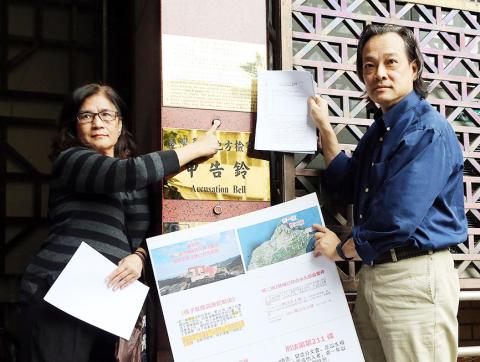
Photo: CNA
Many environmentalists have objected to the plan, saying it is dangerous to restart an old nuclear reactor that was damaged soon after it was restarted on May 16, 2016.
Green Consumers’ Foundation chairman Jay Fang (方儉) and other civic groups yesterday morning filed a lawsuit with the Taipei District Prosecutors’ Office against Taipower, council and Ministry of Economic Affairs officials, saying their attempt to restart the reactor has endangered public safety and therefore violates Article 187-2 of the Criminal Code.
According to Article 24 of the Nuclear Reactor Facilities Regulation Act (核子反應器設施管制法), a nuclear reactor that has lain dormant for more than a year without the council’s approval would be considered a permanent cessation of its operations and should be decommissioned, Fang said.
The council in the afternoon announced its approval of the utility’s application, adding that its review is available to the public on its Web site.
While the reactor has been mothballed for more than 600 days, unlike the scenario described in the article, the council has monitored Taipower’s maintenance of the reactor, Department of Nuclear Regulation Deputy Director-General Li Chi-ssu (李綺思) said.
The council respects the groups’ views, but would continue doing its part to ensure nuclear safety according to the law, he said, adding that the council would respect the Legislative Yuan’s final decision on whether to restart the reactor.
Although the “nuclear-free homeland by 2025” policy is stipulated in Article 95 of the Electricity Act (電業法), there are still varied opinions about whether the nation should phase out nuclear power.
Chung-Hwa Nuclear Society member Lee Min (李敏) last month invited proponents of nuclear energy to join a referendum petition on scrapping Article 95 and supporting “green” energy development with nuclear power.
Although he only released the petition on Friday last week, about 1,700 people have expressed their support for the proposal, Lee said.
Meanwhile, opponents of nuclear power are on Sunday to stage their annual parade on Ketagalan Boulevard in Taipei, where groups are to exhibit their achievements in promoting “green” energy generation.

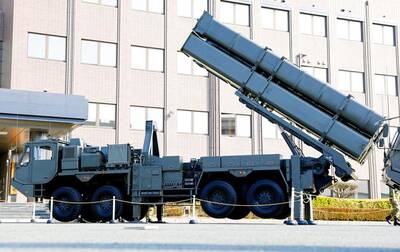
Japan has deployed long-range missiles in a southwestern region near China, the Japanese defense minister said yesterday, at a time when ties with Beijing are at their lowest in recent years. The missiles were installed in Kumamoto in the southern region of Kyushu, as Japan is attempting to shore up its military capacity as China steps up naval activity in the East China Sea. “Standoff defense capabilities enable us to counter the threat of enemy forces attempting to invade our country ... while ensuring the safety of our personnel,” Japanese Minister of Defense Shinjiro Koizumi said. “This is an extremely important initiative for

MORE POPULAR: Taiwan Pass sales increased by 59 percent during the first quarter compared with the same period last year, the Tourism Administration said The Tourism Administration yesterday said that it has streamlined the Taiwan Pass, with two versions available for purchase beginning today. The tourism agency has made the pass available to international tourists since 2024, allowing them to access the high-speed rail, Taiwan Railway Corp services, four MRT systems and four Taiwan Tourist Shuttles. Previously, five types of Taiwan Pass were available, but some tourists have said that the offerings were too complicated. The agency said only two types of Taiwan Pass would be available, starting from a three-day pass with the high-speed rail and a three-day pass with Taiwan Railway Corp. The former costs NT$2,800
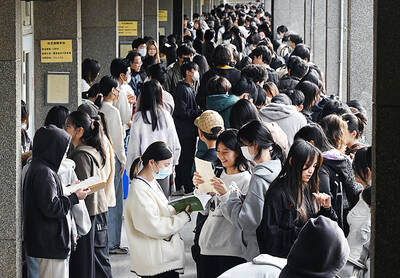
A global survey showed that 60 percent of Taiwanese had attained higher education, second only to Canada, the Ministry of the Interior said. Taiwan easily surpassed the global average of 43 percent and ranked ahead of major economies, including Japan, South Korea and the US, data from the Organisation for Economic Co-operation and Development (OECD) for 2024 showed. Taiwan has a high literacy rate, data released by the ministry showed. As of the end of last year, Taiwan had 20.617 million people aged 15 or older, accounting for 88.5 percent of the total population, with a literacy rate of 99.4 percent, the data

NEW LOW: The council in 2024 based predictions on a pessimistic estimate for the nation’s total fertility rate of 0.84, but last year that rate was 0.69, 17 percent lower An expected National Development Council (NDC) report expects the nation’s population to drop below 12 million by 2065, with the old-age dependency ratio to top 100 percent sooner than 2070, sources said yesterday. The council is slated to release its latest population projections in August, using an ultra-low fertility model, the sources said. The previous report projected that Taiwan’s population would fall to 14.37 million by 2070, but based on a new estimate of the total fertility rate (TFR) — the average number of children born to a woman over her lifetime — the population is expected to reach 12 million by


 RSS
RSS