


Taiwan’s semiconductor industry is bracing for escalating global competition amid rising protectionism and the ascension of China, Taiwan Semiconductor Industry Association (TSIA, 台灣半導體協會) director-general C.C. Wei (魏哲家) said yesterday.
Wei made the remarks during his opening speech at the annual TSIA meeting in Hsinchu.
Wei also serves as cochief executive officer of Taiwan Semiconductor Manufacturing Co (TSMC, 台積電) and is to become the sole chief executive of the chip supplier to Apple Inc in June next year in the company’s latest succession plan.
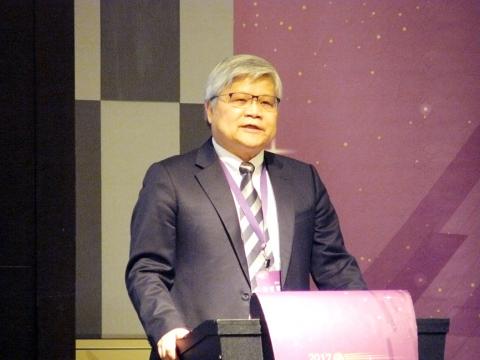
Photo: CNA
TSIA members are being presented with enormous business opportunities primarily from the nascent adoption of artificial intelligence, which is expected to be widely applied to virtual reality and augmented reality devices, the Internet of Things and self-driving cars, Wei said.
At the same time, local semiconductor companies are facing challenges, he said.
“It is a challenge for Taiwan’s semiconductor industry [to fend off competition from China] as the Chinese government is endeavoring to foster its semiconductor industry,” Wei said. “It is undeniable that China has risen to be the world’s biggest semiconductor market, with more than a 30 percent share.”
Chinese central and local governments fully support its semiconductor companies to enhance their competitiveness and reduce the nation’s dependence on chip imports. China has an ultimate goal of bringing the nation to the center of the worldwide semiconductor industry by 2025.
To address the issue, Taiwanese semiconductor companies should carve out their own technological capabilities, Wei said.
China said it would boost homemade chip supply in the nation to 40 percent by 2020 and to 60 percent by 2025, which is placing greater pressure on the nation’s export-oriented semiconductor firms, chip tester and packager Powertech Technology Inc (力成科技) general manager Hung Chia-yu said.
“Taiwanese chip testers and packagers should consolidate and work together to combat growing competition from Chinese rivals,” Hung said.
Powertech’s combination with Greatek Electronics Inc (超豐電子) has set an example, he added.
Local companies should focus on differentiating themselves from their Chinese peers in terms of their products and technology, he said.
It is also important to better manage customer relations and cultivate talent, he said.
TSIA would continue to act as a bridge between the local semiconductor industry and government agencies to help the government implement practical and beneficial policies for the industry, Wei said.
Stable supply of land, water, electricity and talent are top of the agenda at the discussions, Wei said.
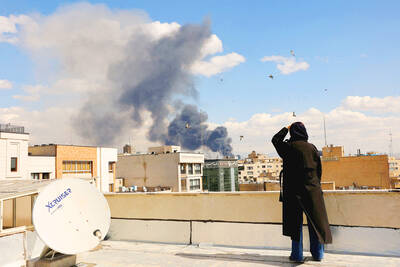
CHAOS: Iranians took to the streets playing celebratory music after reports of Khamenei’s death on Saturday, while mourners also gathered in Tehran yesterday Iranian Supreme Leader Ayatollah Ali Khamenei was killed in a major attack on Iran launched by Israel and the US, throwing the future of the Islamic republic into doubt and raising the risk of regional instability. Iranian state television and the state-run IRNA news agency announced the 86-year-old’s death early yesterday. US President Donald Trump said it gave Iranians their “greatest chance” to “take back” their country. The announcements came after a joint US and Israeli aerial bombardment that targeted Iranian military and governmental sites. Trump said the “heavy and pinpoint bombing” would continue through the week or as long
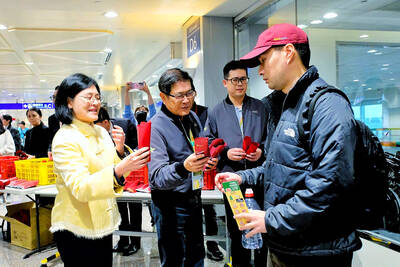
An Emirates flight from Dubai arrived at Taiwan Taoyuan International Airport yesterday afternoon, the first service of the airline since the US and Israel launched strikes against Iran on Saturday. Flight EK366 took off from the United Arab Emirates (UAE) at 3:51am yesterday and landed at 4:02pm before taxiing to the airport’s D6 gate at Terminal 2 at 4:08pm, data from the airport and FlightAware, a global flight tracking site, showed. Of the 501 passengers on the flight, 275 were Taiwanese, including 96 group tour travelers, the data showed. Tourism Administration Deputy Director-General Huang He-ting (黃荷婷) greeted Taiwanese passengers at the airport and
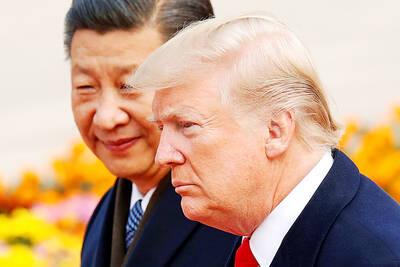
TRUST: The KMT said it respected the US’ timing and considerations, and hoped it would continue to honor its commitments to helping Taiwan bolster its defenses and deterrence US President Donald Trump is delaying a multibillion-dollar arms sale to Taiwan to ensure his visit to Beijing is successful, a New York Times report said. The weapons sales package has stalled in the US Department of State, the report said, citing US officials it did not identify. The White House has told agencies not to push forward ahead of Trump’s meeting with Chinese President Xi Jinping (習近平), it said. The two last month held a phone call to discuss trade and geopolitical flashpoints ahead of the summit. Xi raised the Taiwan issue and urged the US to handle arms sales to
State-run CPC Corp, Taiwan (CPC, 台灣中油) yesterday said that it had confirmed on Saturday night with its liquefied natural gas (LNG) and crude oil suppliers that shipments are proceeding as scheduled and that domestic supplies remain unaffected. The CPC yesterday announced the gasoline and diesel prices will rise by NT$0.2 and NT$0.4 per liter, respectively, starting Monday, citing Middle East tensions and blizzards in the eastern United States. CPC also iterated it has been reducing the proportion of crude oil imports from the Middle East and diversifying its supply sources in the past few years in response to geopolitical risks, expanding


 RSS
RSS