


President Tsai Ing-wen (蔡英文) yesterday said her administration is willing to work with China at next month’s APEC summit.
Tsai made the remarks at a news conference at the Presidential Office with People First Party Chairman James Soong (宋楚瑜), whom she named the nation’s chief delegate to the summit.
The nation’s APEC delegation would conduct exchanges with foreign leaders and heads of state to further Taiwan’s economic relations with its trade partners, Tsai said.
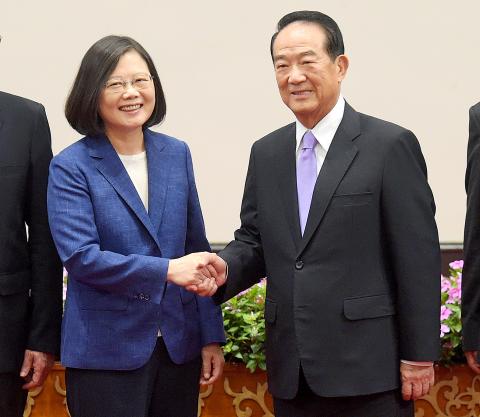
Photo: Huang Yao-cheng, Taipei Times
“We are also willing to interact with China on the basis of goodwill under the APEC framework,” she said.
This year’s APEC summit is scheduled on Nov. 11 to Nov. 12 in Da Nang, Vietnam.
Soong was also the nation’s chief delegate at last year’s APEC summit in Peru.
The delegation must actively engage in the summit agenda of “creating new dynamism and fostering a shared future,” Tsai said.
The delegation is to reaffirm Taiwan’s support for and dedication to free trade, and the sustained development of the region, she said.
The nation should work to provide advanced education, food security, sustained growth and employment in the information technology sector in the region, Tsai said.
The delegation is to promote the government’s New Southbound Policy and highlight the contributions Taiwan has already made to the region, she said.
“I hope the delegates will accomplish this mission by taking advantage of the meeting with economic leaders, associated activities, bilateral meetings and all such opportunities,” she said.
The delegation is to include members from the private sector, the government and academia, Tsai said.
“I hope the members of the delegation will work together and use their expertise on pertinent issues so as to assist Soong in his interactions with foreign representatives. We must work harder at APEC to build long-term and trusted ties with other nations,” Tsai said.
Minister Without Portfolio John Deng (鄧振中) would be the delegation’s chief adviser and spokesman, she said.
Other delegates included National Development Council Minister Chen Mei-ling (陳美伶), Minister of Economic Affairs Shen Jong-chin (沈榮津), National Security Council adviser Lin Liang-jung (林良蓉) and Democratic Progressive Party Legislator Hsiao Bi-khim (蕭美琴).
Soong said he was grateful for the president’s trust to again select him as chief delegate.
Legislative Speaker Su Jia-chyuan (蘇嘉全) said Soong is a good choice because of his familiarity with the political situation at home and abroad.
Chinese Nationalist Party (KMT) Legislator Lin Wei-chou (林為洲) said he approved of Soong’s appointment, which might help reduce cross-strait tensions.
However, New Power Party Legislator Hsu Yung-ming (徐永明) said he had wanted Tsai to choose an individual who is more representative of Taiwanese.
“[Soong] puts too much emphasis on his personal relationship with Chinese President Xi Jinping (習近平),” Hsu said.
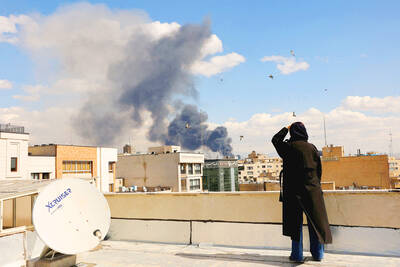
CHAOS: Iranians took to the streets playing celebratory music after reports of Khamenei’s death on Saturday, while mourners also gathered in Tehran yesterday Iranian Supreme Leader Ayatollah Ali Khamenei was killed in a major attack on Iran launched by Israel and the US, throwing the future of the Islamic republic into doubt and raising the risk of regional instability. Iranian state television and the state-run IRNA news agency announced the 86-year-old’s death early yesterday. US President Donald Trump said it gave Iranians their “greatest chance” to “take back” their country. The announcements came after a joint US and Israeli aerial bombardment that targeted Iranian military and governmental sites. Trump said the “heavy and pinpoint bombing” would continue through the week or as long
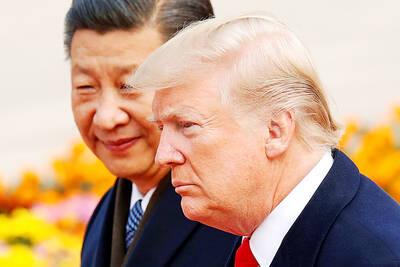
TRUST: The KMT said it respected the US’ timing and considerations, and hoped it would continue to honor its commitments to helping Taiwan bolster its defenses and deterrence US President Donald Trump is delaying a multibillion-dollar arms sale to Taiwan to ensure his visit to Beijing is successful, a New York Times report said. The weapons sales package has stalled in the US Department of State, the report said, citing US officials it did not identify. The White House has told agencies not to push forward ahead of Trump’s meeting with Chinese President Xi Jinping (習近平), it said. The two last month held a phone call to discuss trade and geopolitical flashpoints ahead of the summit. Xi raised the Taiwan issue and urged the US to handle arms sales to
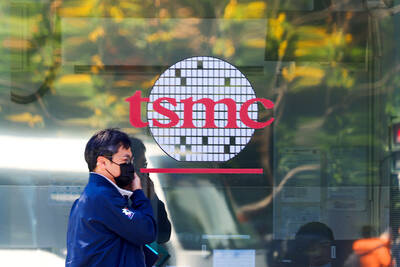
BIG SPENDERS: Foreign investors bought the most Taiwan equities since 2005, signaling confidence that an AI boom would continue to benefit chipmakers Taiwan Semiconductor Manufacturing Co’s (TSMC, 台積電) market capitalization swelled to US$2 trillion for the first time following a 4.25 percent rally in its American depositary receipts (ADR) overnight, putting the world’s biggest contract chipmaker sixth on the list of the world’s biggest companies by market capitalization, just behind Amazon.com Inc. The site CompaniesMarketcap.com ranked TSMC ahead of Saudi Aramco and Meta Platforms Inc. The Taiwanese company’s ADRs on Tuesday surged to US$385.75 on the New York Stock Exchange, as strong demand for artificial intelligence (AI) applications led to chip supply constraints and boost revenue growth to record-breaking levels. Each TSMC ADR represents
State-run CPC Corp, Taiwan (CPC, 台灣中油) yesterday said that it had confirmed on Saturday night with its liquefied natural gas (LNG) and crude oil suppliers that shipments are proceeding as scheduled and that domestic supplies remain unaffected. The CPC yesterday announced the gasoline and diesel prices will rise by NT$0.2 and NT$0.4 per liter, respectively, starting Monday, citing Middle East tensions and blizzards in the eastern United States. CPC also iterated it has been reducing the proportion of crude oil imports from the Middle East and diversifying its supply sources in the past few years in response to geopolitical risks, expanding


 RSS
RSS