


United Microelectronics Corp (UMC, 聯電), the nation’s second-largest contract chipmaker, and three of its employees were on Wednesday indicted for alleged theft and use of trade secrets from Micron Technology Inc’s local units in the latest row over escalating talent poaching.
UMC, Ho Chien-ting (何建廷), Wang Yong-ming (王永銘) and Rong Le-tien (戎樂天) allegedly illegally replicated Micron’s manufacturing techniques for the profit of UMC businesses in China, the Taichung District Prosecutors’ Office said in its indictment.
UMC is developing DRAM chip manufacturing technologies in collaboration with China’s Fujian Jin Hua Integrated Circuit Co (晉華集成電路) via a Chinese subsidiary.
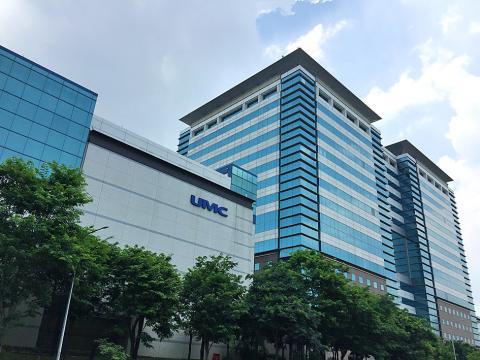
Photo: Hung Yu-fang, Taipei Times
UMC and its employees contravened the Trade Secrets Act (營業秘密法) and the Copyright Act (著作權法), prosecutors said.
In a filing with the Taiwan Stock Exchange on Wednesday, UMC said it had not received official notification of the indictment.
UMC would fully cooperate with any investigation and would hire lawyers to safeguard its interests, it added.
Micron said it aims to protect its intellectual property through the lawsuits.
The government’s enforcement of related rules would assure foreign investors who are interested in investing in Taiwan that their properties and interests would be fully safeguarded, it added.
Ho and Wang are former employees of Micron’s local unit, where Ho was a section chief and Wang a manufacturing deputy manager.
In November 2015, Ho joined UMC as technical manager for special projects.
Wang followed suit in March last year, joining UMC as a technical manager for components.
Ho stole classified trade secrets from Micron and used them at UMC, helping a UMC subsidiary in China manufacture memorychip wafers, prosecutors said.
Wang is suspected of stealing manufacturing technology and protocols, which he gave to Rong, a UMC technical division associate, to speed up the design of UMC’s process protocol, prosecutors said.
Micron in February filed a lawsuit after discovering that Wang had made electronic copies of company files, which he allegedly handed over to UMC.
Later that month, prosecutors raided UMC’s Tainan plant.
After learning about the search, Rong reportedly instructed Ho and Wang to delete all related information from the company’s database.
When questioned by prosecutors, Ho and Wang claimed that they took the data for personal research, while Rong said he only made suggestions to Wang on manufacturing design.

SILENCING CRITICS: In addition to blocking Taiwan, China aimed to prevent rights activists from speaking out against authoritarian states, a Cabinet department said The Ministry of Foreign Affairs (MOFA) yesterday condemned transnational repression by Beijing after RightsCon, a major digital human rights conference scheduled to be held in Zambia this week, was abruptly canceled due to Chinese pressure over Taiwanese participation. This year’s RightsCon, the world’s largest conference discussing issues “at the intersection of human rights and technology,” was scheduled to take place from tomorrow to Friday in Lusaka, and expected to draw 2,600 in-person attendees from 150 countries, along with 1,100 online participants. However, organizers were forced to cancel the event due to behind-the-scenes pressure from China, the ministry said, expressing its “strongest condemnation”
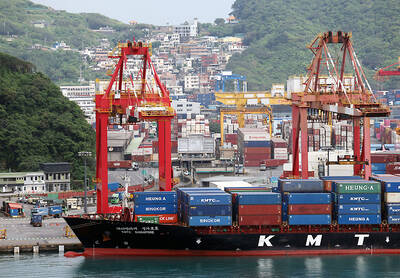
Taiwan’s economy grew far faster than expected in the first quarter, as booming demand for artificial intelligence (AI) applications drove a surge in exports, spilling over into investment and consumption, the Directorate-General of Budget, Accounting and Statistics (DGBAS) said yesterday. GDP growth was 13.69 percent year-on-year during the January-to-March period, beating the DGBAS’ February forecast by 2.23 percentage points and marking the most robust growth in nearly four decades, DGBAS senior official Chiang Hsin-yi (江心怡) told a news conference in Taipei. The result was powered by exports, which remain the backbone of Taiwan’s economy, Chiang said. Outbound shipments jumped 51.12 percent year-on-year to
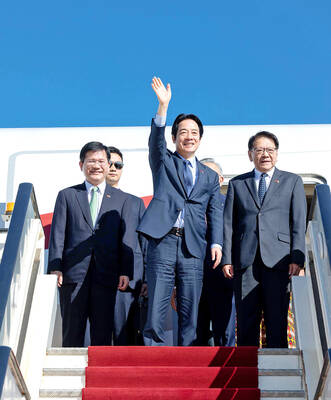
DELAYED BUT DETERMINED: The president’s visit highlights Taiwan’s right to international engagement amid regional pressure from China President Willaim Lai (賴清德) yesterday arrived in Eswatini, more than a week after his planned visit to Taiwan’s sole African ally was suspended because of revoked overflight permits. “The visit, originally scheduled for April 22, was postponed due to unforeseen external factors,” Lai wrote on social media. “After several days of careful arrangements by our diplomatic and national security teams, we successfully arrived today.” Lai said he looked forward to further deepening Taiwan-Eswatini relations through closer cooperation in the economy, agriculture, culture and education, as well as advancing the nation’s international partnerships. The president was initially scheduled to arrive in time to celebrate
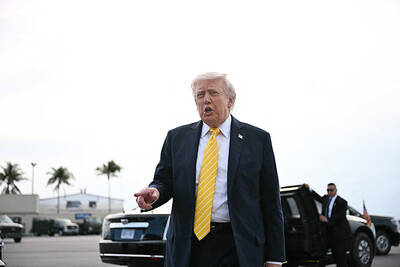
Iran’s Islamic Revolutionary Guard Corp (IRGC) yesterday said the US faced a choice between an “impossible” military operation or a “bad deal” with Tehran, after US President Donald Trump disparaged Iran’s latest peace proposal. Negotiations between the two countries have been deadlocked since a ceasefire came into effect on April 8, with only one round of direct peace talks held so far. Iran’s Tasnim and Fars news agencies reported that Tehran had submitted a 14-point proposal to mediator Pakistan, but Trump was quick to cast doubt on it. “I will soon be reviewing the plan that Iran has just sent to us, but


 RSS
RSS