


The 12-day Taipei Summer Universiade yesterday ended with a festive closing ceremony at the Taipei Municipal Stadium featuring diverse cultural performances.
The ceremony showcased a modern mix of contemporary Taiwanese and international music, integrating local musical instruments with modern dance performances, as well as indie rock, pop, electronic and Aboriginal music.
As night fell, the prologue began at 6:30pm with “Indie Formosa” — 10 songs combining influences from Taiwanese, Hakka and Aboriginal cultures, performed by six groups with diverse music styles, one or two groups at a time.
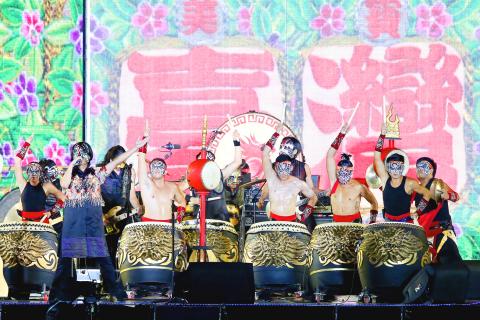
Photo: CNA
The groups were Sibongie African Drumming and Dance Crew, indie rock band Zenkwun (神棍樂團), Paiwan pop singer Ah-bao (阿爆), the award-winning Sizhukong Jazz Band (絲竹空爵士樂團), rock band The Chairman (董事長) and Chio-Tian Folk Drums and Arts.
The ceremony officially began at 7:30pm with a rendition of the “Chinese Taipei” anthem and a fireworks display over the open stadium, followed by the spectacular entrance of each nation’s delegation — more than 100 flag bearers marching with athletes cheerfully entering behind them.
Athletes from around the world danced and played with audience members — handing out candy, taking photographs with them and making silly gestures — who cheered loudly for each national team, but stood and roared when Taiwan’s team entered.
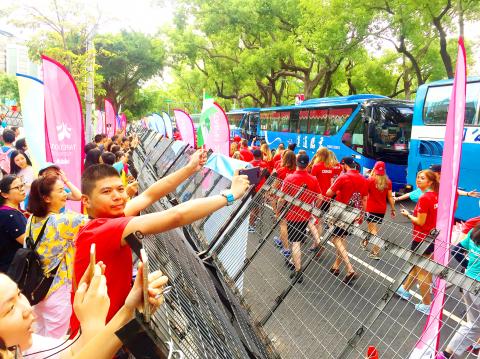
Photo: CNA
A highlight of the ceremony was a cultural performance named “Taipei Loves You,” in which Aboriginal rhythm and blues singer Jiajia (家家) sang Over the Rainbow on an elevated stage, praising those who put hard work into making their dreams come true.
That was followed by performances by alternative rock band TRASH and pop-punk band Fire Ex (滅火器), who entered the stadium on a colorful ship, with the three artists taking to the stage to sing: “Taipei is filled with happiness, Taipei loves you! Let’s all clap hands together!”
“The people of Taipei were gracious hosts and enthusiastic supporters of top athletes and delegations from around the world ... Over the past 12 days, each competition was held to the highest standards and every athlete tested their limits,” Vice President Chen Chien-jen (陳建仁) said in a speech.

Photo: CNA
“We were honored to have you in Taiwan, a place where you left both tears and sweat,” Chen added.
“Finally, to everyone who has joined us here from all corners of the world, I hope you will have the chance to return to Taiwan,” Chen said. “The 23 million free, open and warm-hearted people of Taiwan welcome you back with open arms.”
Taipei Mayor Ko Wen-je (柯文哲), who served as chairman of the Taipei Universiade Organizing Committee, thanked the International University Sports Federation (FISU), the central and local governments, city government officials, professional advisers, athletes and the “passionate” audience and volunteers
Source: The General Association of Chinese Culture
“The end of the Taipei Universiade is a new beginning. This event has allowed us to befriend the world through sport, to be further integrated into the international community and to make the world see us as we are,” Ko said.
“On our island vessel — beautiful Formosa — we shall continue to sail the world as courageous, open-minded island-dwellers,” he added.
The FISU flag was then lowered, marking the end of the Taipei Universiade, and handed over to representatives of Naples, Italy, the host city for the next Summer Universiade in 2019.
With a powerful chorus of female voices chanting an Aboriginal song, the audience was encouraged to join hands and pray for world peace as the ceremony ended at about 10pm.
Outside the venue, the Taipei Police Department deployed about 6,000 police officers and raised security levels in a bid to avoid intentional disturbances and to maintain safety at the ceremony.
Tensions flared slightly when police asked protesters to move away from entrances or asked audience members to put away green Taiwan flags as they passed ticket check points, while security personnel closely followed groups of people wearing uniforms who resembled protest groups.
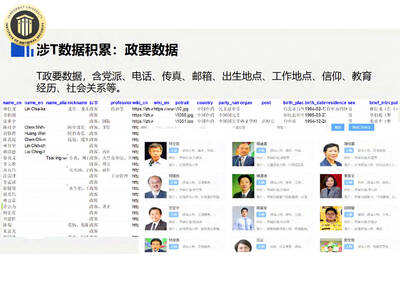
NETWORK-MAPPING PROJECT: The database contains 170 detailed files of Taiwanese politicians and about 23 million records of household registration data in Taiwan China has developed a network-mapping project targeting political figures and parties in Taiwan to monitor public opinion during elections and to craft tailored influence campaigns aimed at dividing Taiwanese society, according to documents leaked by Chinese technology firm GoLaxy (中科天璣). The documents, collected by Taipei-based Doublethink Lab, showed a database was specifically created to gather detailed information on Taiwanese political figures, including their political affiliations, job histories, birthplaces, residences, education, religion and a brief biography about them. Several notable Taiwanese politicians are in the database, including President William Lai (賴清德), former president Tsai Ing-wen (蔡英文), Minister of Foreign Affairs Lin Chia-lung (林佳龍),
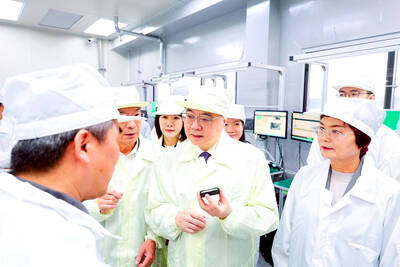
KEY INDUSTRY: The vice premier discussed a plan to create a non-red drone supply chain by next year, which has been allocated a budget of more than NT$7.2 billion The government has budgeted NT$44.2 billion (US$1.38 billion) to cultivate Taiwan’s uncrewed aerial vehicle (UAV) industry over the next five years, which would make the nation a major player in the industry’s democratic supply chain in the Asia-Pacific region, Premier Cho Jung-tai (卓榮泰) said yesterday. Cho made the remarks during a visit to the facilities of Cub Elecparts Inc (為升電裝). Democratic Progressive Party (DPP) Legislator Chen Su-yueh (陳素月) and Chinese Nationalist Party (KMT) Legislator Hsieh Yi-fong (謝依鳳) also participated in the trip. Cub Elecparts has transitioned from the automotive industry to the defense industry, which is the top priority among the nation’s
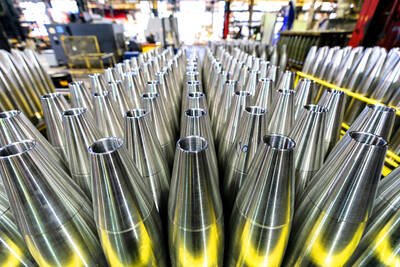
UPGRADED MISSILE: The Chungshan Institute of Science and Technology is reportedly to conduct a live-fire test of the Hsiung Feng III anti-ship missile on Thursday next week The US Army is planning to build new facilities to boost explosives production and strengthen its supply chain, a move aimed at addressing munitions shortages and supporting obligations to partners including Taiwan, Ukraine and Israel, Defense News reported. The army has issued a sources sought notice for a proposed Center of Excellence at the Blue Grass Army Depot in Kentucky, the report said. The facility would serve as a hub within the US industrial base for the production of key military explosives, including research department explosives (RDX) and high melting explosives (HMX), while also supporting research and development of next-generation materials. The proposed
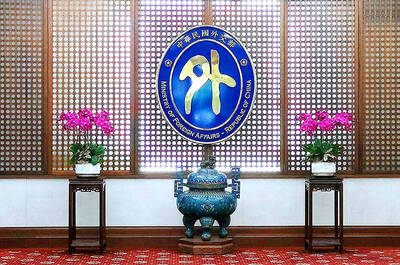
SOUTH KOREA DISPUTE: If Seoul continues to ignore its request, Taiwan would change South Korea’s designation on its arrival cards, the foreign ministry said If South Korea does not reply appropriately to a request to correct Taiwan’s name on its e-Arrival card system before March 31, the government would take corresponding measures to change how South Korea is labeled on the online Taiwan Arrival Card system, the Ministry of Foreign Affairs said yesterday. South Korea’s e-Arrival card system lists Taiwan as “China (Taiwan)” in the “point of departure” and “next destination” fields. Taipei has asked Seoul to change the wording. Since March 1, South Koreans who hold government-issued Alien Resident Certificates (ARC) have been identified as from “South Korea” rather than the “Republic of Korea,” the


 RSS
RSS