


Chinese Nationalist Party (KMT) representatives yesterday abruptly left a hearing on the party’s acquisition of land in Taipei’s Muzha District (木柵) decades ago to protest what they said was abuse of government power against the party.
The Ill-gotten Party Assets Settlement Committee called the hearing to review the KMT’s purchase of a plot of land that is now part of the site housing the KMT’s National Development and Research Institute.
Yeh Chung-chuan (葉中川) acquired the land in 1939, but it was taken over by the Imperial Japanese Army not long afterwards and then claimed by the KMT government after the end of World War II.
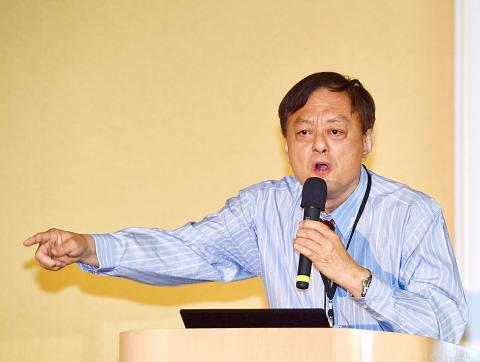
Photo: Peter Lo, Taipei Times
The KMT purchased the land from Yeh in 1964, but below the price that he had set for it.
The Yeh family sued the party in 2007, accusing it of illegally seizing the property.
In the final verdict, a court in 2011 ruled in favor of the KMT, saying there was no evidence that Yeh had been forced to sell the property.
The Yeh family yesterday reiterated that Yeh was forced to sell the property and that they had refused to take any money from the KMT.
In 1962, Yeh was taken by four armed men led by a KMT official who invited him to “have a cup of tea” to discuss the sale of the land, and he later signed a contract with the KMT to sell the land for NT$191,100 (US$6,350 at the current exchange rate), although he had previously offered to sell the land for NT$200 per ping for a total of NT$364,004, according to the testimony of Yeh’s wife, which was given in court in 2007 and brought up again in yesterday’s hearing.
The KMT, instead of paying NT$191,100, deposited NT$19,000 with the courts, as Yeh refused to accept any payment.
The KMT provided two transaction documents to back its claim that it had legally bought the land, showing that Yeh had sold a nearby plot for NT$10 per ping five months before he sold the disputed property to the KMT.
Another property in the area was sold for NT$30 per ping five years later, suggesting that the KMT actually bought the property at a price well above its market value, KMT Administration Committee deputy director Lee Fu-hsuan (李福軒) said.
The KMT also presented a copy of a contract signed between Yeh and the party, which specified that a down payment of NT$50,000 would be made to Yeh when he signed the contract, which Lee said was evidence that the KMT had paid Yeh.
Lee accused the assets committee of “abuse of government resources” by reopening a case that had already been determined by a court.
He left the hearing with KMT Administration Committee director Chiu Da-chan (邱大展) immediately after he made his comments.
Chiu said their leaving was a protest against the assets committee, and the hearing was an insult to the judiciary and “stamping on the nine judges,” who had ruled on the case.
They said they would sue three Democratic Progressive Party (DPP) spokespeople for their false accusations against the KMT over the case.
Meanwhile, assets committee Chairman Wellington Koo (顧立雄) challenged the validity of the contract presented by the KMT, saying it was unreasonable that such an important document had never been presented in past court proceedings and he said the signature and stamp on the contract do not resemble Yeh’s.
Yeh Sung-jen (葉頌仁), Yeh Chung-chuan’s son, said he had never seen the contract before.
Yeh Sung-jen reiterated that his father was forced to sell the land and the KMT as a political entity was not authorized to purchase or possess farmland during the time of acquisition.
Assets committee member Lien Li-jen (連立堅) questioned the validity of another contract between the KMT and Yeh Chung-chuan — which does not specify any down payment — as three of the five contract witnesses could not be found in the government’s household registration database.
However, those points of contention were left unanswered as KMT representatives had left the hearing prematurely.
The assets committee would decide if the KMT had illicitly acquired the disputed property and if so, the KMT would be asked to return the profit it made selling the property to a developer in 2005.

PREPAREDNESS: Given the difficulty of importing ammunition during wartime, the Ministry of National Defense said it would prioritize ‘coproduction’ partnerships A newly formed unit of the Marine Corps tasked with land-based security operations has recently replaced its aging, domestically produced rifles with more advanced, US-made M4A1 rifles, a source said yesterday. The unnamed source familiar with the matter said the First Security Battalion of the Marine Corps’ Air Defense and Base Guard Group has replaced its older T65K2 rifles, which have been in service since the late 1980s, with the newly received M4A1s. The source did not say exactly when the upgrade took place or how many M4A1s were issued to the battalion. The confirmation came after Chinese-language media reported
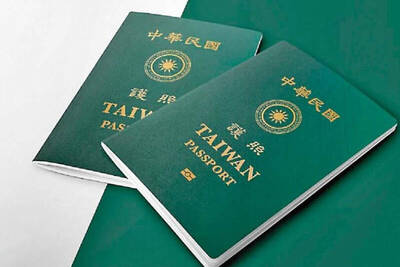
The Taiwanese passport ranked 33rd in a global listing of passports by convenience this month, rising three places from last month’s ranking, but matching its position in January last year. The Henley Passport Index, an international ranking of passports by the number of designations its holder can travel to without a visa, showed that the Taiwan passport enables holders to travel to 139 countries and territories without a visa. Singapore’s passport was ranked the most powerful with visa-free access to 192 destinations out of 227, according to the index published on Tuesday by UK-based migration investment consultancy firm Henley and Partners. Japan’s and
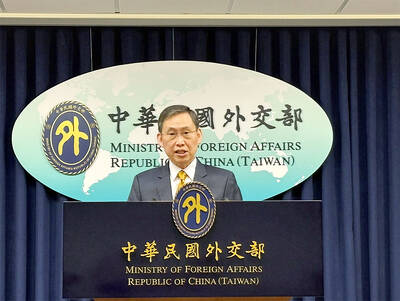
A Ministry of Foreign Affairs official yesterday said that a delegation that visited China for an APEC meeting did not receive any kind of treatment that downgraded Taiwan’s sovereignty. Department of International Organizations Director-General Jonathan Sun (孫儉元) said that he and a group of ministry officials visited Shenzhen, China, to attend the APEC Informal Senior Officials’ Meeting last month. The trip went “smoothly and safely” for all Taiwanese delegates, as the Chinese side arranged the trip in accordance with long-standing practices, Sun said at the ministry’s weekly briefing. The Taiwanese group did not encounter any political suppression, he said. Sun made the remarks when
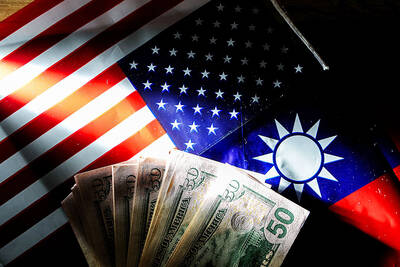
BROAD AGREEMENT: The two are nearing a trade deal to reduce Taiwan’s tariff to 15% and a commitment for TSMC to build five more fabs, a ‘New York Times’ report said Taiwan and the US have reached a broad consensus on a trade deal, the Executive Yuan’s Office of Trade Negotiations said yesterday, after a report said that Washington is set to reduce Taiwan’s tariff rate to 15 percent. The New York Times on Monday reported that the two nations are nearing a trade deal to reduce Taiwan’s tariff rate to 15 percent and commit Taiwan Semiconductor Manufacturing Co (TSMC, 台積電) to building at least five more facilities in the US. “The agreement, which has been under negotiation for months, is being legally scrubbed and could be announced this month,” the paper said,


 RSS
RSS