


Chinese authorities have blocked an Australia-based academic from boarding a flight home, Australia said yesterday, after what sources said was repeated interrogation over his links to liberal intellectuals in China.
The case of long-serving University of Technology Sydney (UTS) associate professor Feng Chongyi (馮崇義) comes just as Chinese Premier Li Keqiang (李克強) winds up a five-day official visit in Canberra and Sydney espousing free trade and closer economic ties between Australia and China.
Feng, who is an Australian permanent resident, but retains his Chinese passport, entered China three weeks ago.
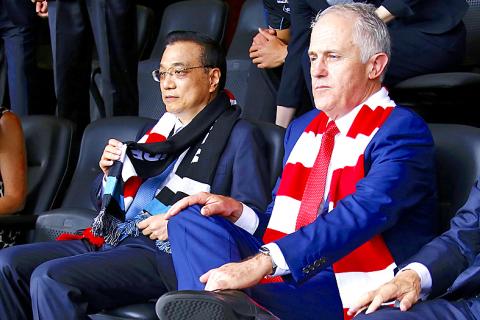
Photo: AFP
He was first held for questioning in Kunming, the provincial capital of southwestern Yunnan Province earlier this week, before being barred from boarding a flight to Sydney at Guangzhou Baiyun International Airport on Friday morning, two sources familiar with the situation told reporters.
He is traveling with his wife, who is Australian.
Having subsequently requested help from Australian authorities, Feng felt confident his case had been resolved and he would be free to travel, one of the sources said.
However, he was again notified he was on a no-fly list when attempting to board a second flight home late on Saturday.
“The Australian government is aware that a UTS professor, who is an Australian permanent resident, has been prevented from leaving China,” an Australian Department of Foreign Affairs and Trade spokesperson said yesterday. “According to the Australia-China consular treaty, the Australian government is able to provide consular assistance only to Australian citizens who have entered China on their Australian passport.”
China’s Ministry of Foreign Affairs and Ministry of Public Security did not immediately respond to requests for comment.
Feng, who was head of China Studies at UTS for 11 years, is well-known in academic circles for his research into contemporary politics, the growth of rights consciousness and democratic forces in China.
He has been vocal in the Australian media over what he and numerous fellow China experts consider Beijing’s increasing attempts to influence Australian politics and exert control over Chinese-language media.
For research into his academic work, the sources said, Feng had been meeting academics, intellectuals and rights lawyers in Beijing and other cities, before he was picked up at his hotel in Kunming by provincial state security and taken away to another hotel and questioned for three hours.
After traveling to Guangzhou to board his flight to Sydney, he received a call from the same state security officers informing him they had followed him to Guangzhou, the sources said.
They arranged to meet and Feng was questioned for another three hours over who he met while in Beijing and who his contacts were in Australia, the sources said.
It is understood that, as of yesterday morning, Feng remained free to move around within China and had not been physically detained.
Feng’s ordeal represents a rare, if not the first, instance of a prominent foreign-university academic being subjected to the same treatment.
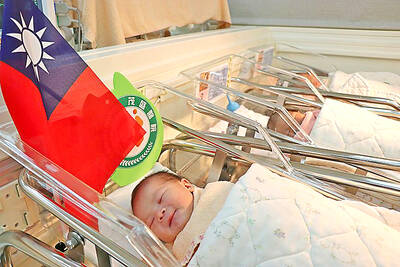
AGING: As of last month, people aged 65 or older accounted for 20.06 percent of the total population and the number of couples who got married fell by 18,685 from 2024 Taiwan has surpassed South Korea as the country least willing to have children, with an annual crude birthrate of 4.62 per 1,000 people, Ministry of the Interior data showed yesterday. The nation was previously ranked the second-lowest country in terms of total fertility rate, or the average number of children a woman has in her lifetime. However, South Korea’s fertility rate began to recover from 2023, with total fertility rate rising from 0.72 and estimated to reach 0.82 to 0.85 by last year, and the crude birthrate projected at 6.7 per 1,000 people. Japan’s crude birthrate was projected to fall below six,
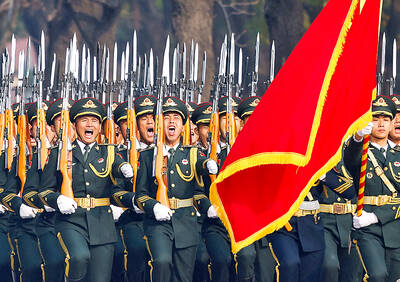
Conflict with Taiwan could leave China with “massive economic disruption, catastrophic military losses, significant social unrest, and devastating sanctions,” a US think tank said in a report released on Monday. The German Marshall Fund released a report titled If China Attacks Taiwan: The Consequences for China of “Minor Conflict” and “Major War” Scenarios. The report details the “massive” economic, military, social and international costs to China in the event of a minor conflict or major war with Taiwan, estimating that the Chinese People’s Liberation Army (PLA) could sustain losses of more than half of its active-duty ground forces, including 100,000 troops. Understanding Chinese
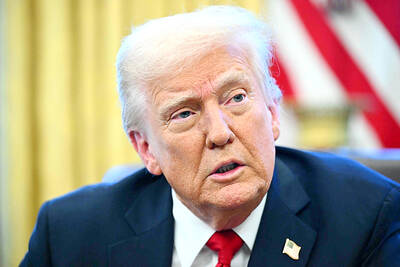
US President Donald Trump in an interview with the New York Times published on Thursday said that “it’s up to” Chinese President Xi Jinping (習近平) what China does on Taiwan, but that he would be “very unhappy” with a change in the “status quo.” “He [Xi] considers it to be a part of China, and that’s up to him what he’s going to be doing, but I’ve expressed to him that I would be very unhappy if he did that, and I don’t think he’ll do that. I hope he doesn’t do that,” Trump said. Trump made the comments in the context
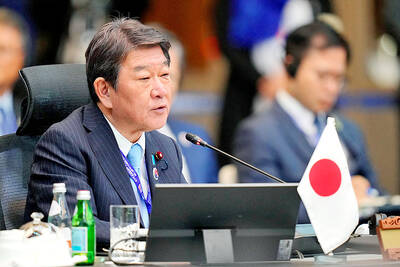
SELF-DEFENSE: Tokyo has accelerated its spending goal and its defense minister said the nation needs to discuss whether it should develop nuclear-powered submarines China is ramping up objections to what it sees as Japan’s desire to acquire nuclear weapons, despite Tokyo’s longstanding renunciation of such arms, deepening another fissure in the two neighbors’ increasingly tense ties. In what appears to be a concerted effort, China’s foreign and defense ministries issued statements on Thursday condemning alleged remilitarism efforts by Tokyo. The remarks came as two of the country’s top think tanks jointly issued a 29-page report framing actions by “right-wing forces” in Japan as posing a “serious threat” to world peace. While that report did not define “right-wing forces,” the Chinese Ministry of Foreign Affairs was


 RSS
RSS