


The Taiwan Taoyuan International Airport Mass Rapid Transit (MRT) line began trial runs yesterday, with free rides being offered to the public in two phases over the course of one month before commercial operations begin on March 2, Taoyuan Metro Corp said.
In the first phase, which is to run through Feb. 15, group passengers who apply in advance are to be allowed to travel for free between 8am and 4pm, the company said
During this phase, passengers are to be restricted to boarding and disembarking at only six of the 21 stations, which do not include the two stations serving Taiwan Taoyuan International Airport, it added.
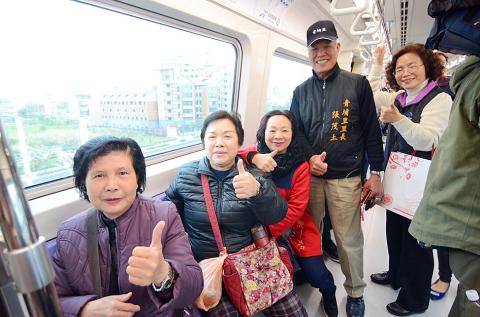
Photo: Lee Jung-ping, Taipei Times
The six stations are Taipei Main Station (A1), New Taipei Industrial Park Station (A3), Linkou Chang Gung Memorial Hospital Station (A8), Shanbi Station (A10), Taoyuan High Speed Rail Station (A18) and Huanbei Station (A21), or north link, the company said.
In the second phase, which is to start on Feb. 15 and run through March 1, a daily maximum of 40,000 free rides between 8am and 4pm will be offered to individual passengers who obtain numbered tags at the stations at 7:40am, 9:40am, 11:40am and 1:40pm, the company said, adding that passengers will have access to all 21 stations during this phase.
Although luggage check-in services for airport passengers will be available at Taipei Main Station during the second phase, outbound passengers are advised not to use it until the line’s commercial operations begin on March 2.

Photo: Lee Jung-ping, Taipei Times
The first trial run traveled from Huanbei Station to Taipei Main Station, with Taoyuan Mayor Cheng Wen-tsan (鄭文燦) and Taoyuan City Council Speaker Chiu Yi-sheng (邱奕勝) leading about 160 local officials and residents aboard the new train.
Some people who rode the line described it as “the pride of Taoyuan,” while expressing hope that it would be profitable.
However, others said they felt uncomfortable during the journey on a windy section between Huanbei Station and Airport Terminal 2.
After the MRT starts commercial operations, passengers will be offered a 50 percent discount on all trips during the first month, the company said, adding that the trains will run from 6am to 11pm every day.
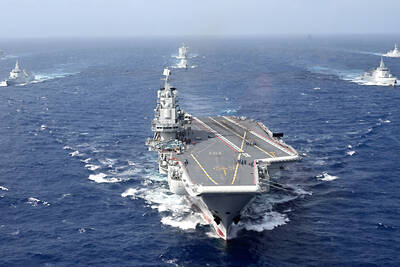
PROVOCATIVE: Chinese Deputy Ambassador to the UN Sun Lei accused Japan of sending military vessels to deliberately provoke tensions in the Taiwan Strait China denounced remarks by Japan and the EU about the South China Sea at a UN Security Council meeting on Monday, and accused Tokyo of provocative behavior in the Taiwan Strait and planning military expansion. Ayano Kunimitsu, a Japanese vice foreign minister, told the Council meeting on maritime security that Tokyo was seriously concerned about the situation in the East China and South China seas, and reiterated Japan’s opposition to any attempt to change the “status quo” by force, and obstruction of freedom of navigation and overflight. Stavros Lambrinidis, head of the EU delegation to the UN, also highlighted South China Sea
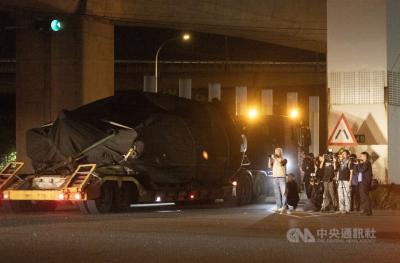
The final batch of 28 M1A2T Abrams tanks purchased from the US arrived at Taipei Port last night and were transported to the Armor Training Command in Hsinchu County’s Hukou Township (湖口), completing the military’s multi-year procurement of 108 of the tanks. Starting at 12:10am today, reporters observed more than a dozen civilian flatbed trailers departing from Taipei Port, each carrying an M1A2T tank covered with black waterproof tarps. Escorted by military vehicles, the convoy traveled via the West Coast Expressway to the Armor Training Command, with police implementing traffic control. The army operates about 1,000 tanks, including CM-11 Brave Tiger
Taiwan Semiconductor Manufacturing Co (TSMC, 台積電), the world’s largest contract chipmaker, said it expects its 2-nanometer (2nm) chip capacity to grow at a compound annual rate of 70 percent from this year to 2028. The projection comes as five fabs begin volume production of 2-nanometer chips this year — two in Hsinchu and three in Kaohsiung — TSMC senior vice president and deputy cochief operating officer Cliff Hou (侯永清) said at the company’s annual technology symposium in Silicon Valley, California, last week. Output in the first year of 2-nanometer production, which began in the fourth quarter of last year, is expected to
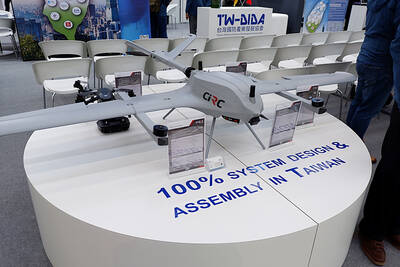
Taiwan’s drone exports surged past US$100 million in the first quarter, exceeding last year’s full-year total, with the Czech Republic emerging as the largest buyer, the Ministry of Economic Affairs said. Exports of complete drones reached US$115.85 million in the period, about 1.2 times the total recorded for all of last year, the ministry said in a report. Exports to the Czech Republic accounted for about US$100 million, far outpacing other markets. Poland, last year’s top destination, recorded about US$11.75 million in the first quarter. Taiwan’s drone exports have expanded rapidly in the past few years, with last year’s total


 RSS
RSS