


The Democratic Progressive Party (DPP) yesterday won 10 convener seats in the Legislative Yuan’s committee convener elections, with the Chinese Nationalist Party (KMT) securing the remaining six seats.
The DPP was expected to win more than 10 convener seats due to its 68 legislators in the 113-seat legislature, but the KMT managed to stop the DPP at 10 with the support of the People First Party (PFP) caucus and lotteries.
Of the eight legislative committees, the Foreign and National Defense Committee and the Finance Committee were the only two that chose their conveners via appointment instead of election.
DPP Legislator Lo Chih-cheng (羅致政) and KMT Legislator Lu Yu-ling (呂玉玲) were appointed as the conveners of the Foreign and National Defense Committee, while DPP Legislator Wang Jung-chang (王榮璋) and KMT Legislator Lai Shyh-bao (賴士葆) were appointed as the conveners of the Finance Committee.
The DPP won all convener seats of the Economics Committee and the Social Welfare and Environmental Hygiene Committee with the support of the New Power Party caucus, with DPP legislators Kuan Bi-ling (管碧玲) and Huang Wei-cher (黃偉哲) elected to preside over the Economics Committee, and DPP legislators Wu Yu-chin (吳玉琴) and Chen Ying (陳瑩) elected to convene the Social Welfare and Environmental Hygiene Committee.
DPP Legislator Yu Mei-nu (尤美女) was elected as Judiciary and Organic Laws and Statutes Committee convener, while a drawing was conducted to choose between DPP Legislator Tuan Yi-kang (段宜康) and KMT Legislator Hsu Shu-hua (許淑華), with Hsu winning.
A drawing was also held between KMT Legislator Chen Hsueh-sheng (陳雪生) and DPP legislators Lee Kun-tse (李昆澤) and Cheng Pao-ching (鄭寶清) to select conveners for the Transportation Committee after the three garnered five votes each in the election, with Chen Hsueh-sheng and Lee winning the drawing.
DPP Legislator Chao Tien-lin (趙天麟) and KMT Legislator Chen Chao-ming (陳超明) were elected as Internal Administration Committee conveners, while DPP Legislator Ho Hsin-chun (何欣純) and KMT Legislator Apollo Chen (陳學聖) won the seats for the Education and Culture Committee.
The PFP caucus cast three of its four votes for the KMT’s Apollo Chen, Chen Chao-ming (陳超明) and Chen Hsueh-sheng and one vote for the DPP’s Yu.
Chen Chao-ming won a drawing to schedule a budget review for the Ill-gotten Party Assets Settlement Committee.
DPP Legislator Chao Tien-lin said that as the committee’s primary assignment is to deal with the KMT’s assets and Chen Chao-ming is a KMT member, Chen Chao-ming should avoid abusing his scheduling power over the committee’s budget review, calling on him to remain neutral and not manipulate the agenda in the KMT’s favor.
Chen Chao-ming said he would ensure a fair scheduling and review process, as the KMT does not rely on its assets and wishes to settle the issue, even though there are controversial presumptions in the Act Governing the Handling of Ill-gotten Properties by Political Parties and Their Affiliate Organizations (政黨及其附隨組織不當取得財產處理條例).
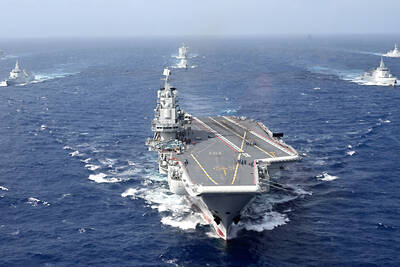
PROVOCATIVE: Chinese Deputy Ambassador to the UN Sun Lei accused Japan of sending military vessels to deliberately provoke tensions in the Taiwan Strait China denounced remarks by Japan and the EU about the South China Sea at a UN Security Council meeting on Monday, and accused Tokyo of provocative behavior in the Taiwan Strait and planning military expansion. Ayano Kunimitsu, a Japanese vice foreign minister, told the Council meeting on maritime security that Tokyo was seriously concerned about the situation in the East China and South China seas, and reiterated Japan’s opposition to any attempt to change the “status quo” by force, and obstruction of freedom of navigation and overflight. Stavros Lambrinidis, head of the EU delegation to the UN, also highlighted South China Sea

SILENCING CRITICS: In addition to blocking Taiwan, China aimed to prevent rights activists from speaking out against authoritarian states, a Cabinet department said The Ministry of Foreign Affairs (MOFA) yesterday condemned transnational repression by Beijing after RightsCon, a major digital human rights conference scheduled to be held in Zambia this week, was abruptly canceled due to Chinese pressure over Taiwanese participation. This year’s RightsCon, the world’s largest conference discussing issues “at the intersection of human rights and technology,” was scheduled to take place from tomorrow to Friday in Lusaka, and expected to draw 2,600 in-person attendees from 150 countries, along with 1,100 online participants. However, organizers were forced to cancel the event due to behind-the-scenes pressure from China, the ministry said, expressing its “strongest condemnation”
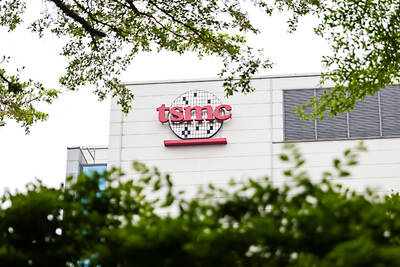
Taiwan Semiconductor Manufacturing Co (TSMC, 台積電), the world’s largest contract chipmaker, said it expects its 2-nanometer (2nm) chip capacity to grow at a compound annual rate of 70 percent from this year to 2028. The projection comes as five fabs begin volume production of 2-nanometer chips this year — two in Hsinchu and three in Kaohsiung — TSMC senior vice president and deputy cochief operating officer Cliff Hou (侯永清) said at the company’s annual technology symposium in Silicon Valley, California, last week. Output in the first year of 2-nanometer production, which began in the fourth quarter of last year, is expected to
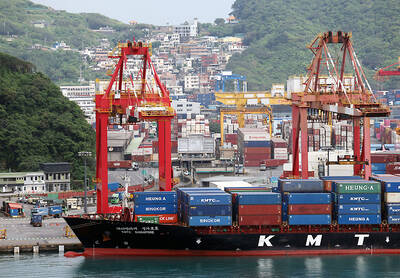
Taiwan’s economy grew far faster than expected in the first quarter, as booming demand for artificial intelligence (AI) applications drove a surge in exports, spilling over into investment and consumption, the Directorate-General of Budget, Accounting and Statistics (DGBAS) said yesterday. GDP growth was 13.69 percent year-on-year during the January-to-March period, beating the DGBAS’ February forecast by 2.23 percentage points and marking the most robust growth in nearly four decades, DGBAS senior official Chiang Hsin-yi (江心怡) told a news conference in Taipei. The result was powered by exports, which remain the backbone of Taiwan’s economy, Chiang said. Outbound shipments jumped 51.12 percent year-on-year to


 RSS
RSS