


Flooding that severely disrupted the operation of the Taiwan Taoyuan International Airport on Thursday last week was caused by a blockage in one of the airport’s draining pipelines that prevented the rapid discharge of floodwater into the Pusin River (埔心溪), an investigation by the Public Construction Commission (PCC) showed.
“Soft gravel accumulated in a box culvert at one end of Pipeline H, making it difficult to discharge floodwater into the river and subsequently leading to flooding in the airport,” PCC Minister Wu Hong-mo (吳宏謀) said, adding that Taoyuan International Airport Corp (TIAC) failed to respond to the disaster in a timely manner.
The findings were made public at a news conference at the Executive Yuan in Taipei yesterday, which was broadcast live online.

Photo: Fang Pin-chao, Taipei Times
Wu said the three-day investigation showed that accumulated rainfall during a thunderstorm on Thursday morning reached 15.1cm, adding that the airport’s draining system is designed to be able to handle that amount.
The commission also found that the flooding was not caused by reversed water flow from the Pusin River, contradicting a statement made by TIAC. The commission’s investigation concluded that the failure to promptly close a floodgate at an underpass leading to the basement of Terminal Two explained why the terminal’s basement was inundated with floodwater.
The commission suggested that TIAC inspect all drainage pipelines within a week. The contractors working on the projects at the airport should make sure that the passages are able to quickly discharge floodwater, the commission said, adding that TIAC and the Taoyuan City Government should share information on the Pusin River and jointly prevent flooding.
TIAC said financial losses caused by the flooding at the airport came to more than NT$50 million (US$1.54 million), including damage to airport facilities and compensation for passengers for the delayed delivery of their luggage.
The Ministry of Transportation and Communications (MOTC) said in a statement that it would ask TIAC to address the issues mentioned in the PCC report, adding that it would not allow a similar incident to recur.
Minister of Transportation and Communications Hochen Tan (賀陳旦) yesterday said that he had approved the resignations of TIAC chairman Samuel Lin (林鵬良) and terminated the employment of TIAC president David Fei (費鴻鈞).
Hochen faced criticism from lawmakers on the legislature’s Transportation Committee yesterday morning, when he was requested to brief lawmakers on how the ministry resumed operations at the airport after the flooding and whether it has any plans to cope with similar crises in the future.
Lawmakers also criticized the ministry over the derailment of a Chukuang-class train on the Hualien-Taitung railway line on Saturday that affected thousands of passengers.
The Taiwan Railways Administration (TRA) said it suspected that heat caused the railway tracks to deform, which consequently caused the train to derail.
Democratic Progressive Party (DPP) Legislator Lee Kun-tse (李昆澤) said that he found it hard to believe that thundershowers would turn the airport into a “hydroport” and that railway tracks would deform because of heat.
Both events exposed the vulnerability of the nation’s transport systems, particularly in coping with the threat from natural disasters, Lee said.
DPP Legislator Cheng Pao-ching (鄭寶清) said that the national gateway has become a national shame because of the flooding, adding that the airport company did not tell the whole truth to ministry.
“The airport has attributed the flooding to the water overflow from the Pusin River, which is not true. It was the draining Pipeline H that was clogged and could not discharge water,” Cheng said.
Cheng also said that the accumulated rainfall in Taoyuan’s Pusin District (埔心) hit 8.5cm per hour in 2011, but it did not cause any flooding.
In addition to the TIAC’s lack of drills to combat flooding, Cheng said that some of the company’s employees were allowed to finish work at 5pm on Thursday, even though the management was still busy handling the aftermath of the flooding.

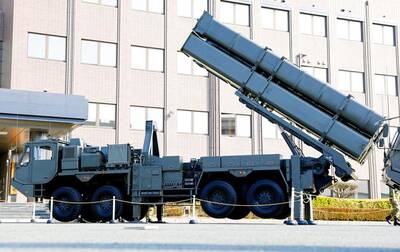
Japan has deployed long-range missiles in a southwestern region near China, the Japanese defense minister said yesterday, at a time when ties with Beijing are at their lowest in recent years. The missiles were installed in Kumamoto in the southern region of Kyushu, as Japan is attempting to shore up its military capacity as China steps up naval activity in the East China Sea. “Standoff defense capabilities enable us to counter the threat of enemy forces attempting to invade our country ... while ensuring the safety of our personnel,” Japanese Minister of Defense Shinjiro Koizumi said. “This is an extremely important initiative for
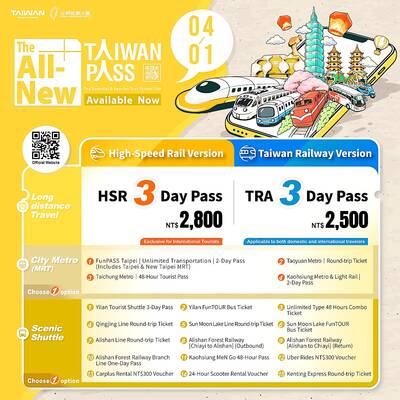
MORE POPULAR: Taiwan Pass sales increased by 59 percent during the first quarter compared with the same period last year, the Tourism Administration said The Tourism Administration yesterday said that it has streamlined the Taiwan Pass, with two versions available for purchase beginning today. The tourism agency has made the pass available to international tourists since 2024, allowing them to access the high-speed rail, Taiwan Railway Corp services, four MRT systems and four Taiwan Tourist Shuttles. Previously, five types of Taiwan Pass were available, but some tourists have said that the offerings were too complicated. The agency said only two types of Taiwan Pass would be available, starting from a three-day pass with the high-speed rail and a three-day pass with Taiwan Railway Corp. The former costs NT$2,800

NEW LOW: The council in 2024 based predictions on a pessimistic estimate for the nation’s total fertility rate of 0.84, but last year that rate was 0.69, 17 percent lower An expected National Development Council (NDC) report expects the nation’s population to drop below 12 million by 2065, with the old-age dependency ratio to top 100 percent sooner than 2070, sources said yesterday. The council is slated to release its latest population projections in August, using an ultra-low fertility model, the sources said. The previous report projected that Taiwan’s population would fall to 14.37 million by 2070, but based on a new estimate of the total fertility rate (TFR) — the average number of children born to a woman over her lifetime — the population is expected to reach 12 million by

COUNTERING HOSTILITY: The draft bill would require the US to increase diplomatic pressure on China and would impose sanctions on those who sabotage undersea cable networks US lawmakers on Thursday introduced a bipartisan bill to bolster the resilience of Taiwan’s submarine cables to counter China’s hostile activities. The proposal, titled the critical undersea infrastructure resilience initiative act, was cosponsored by Republican representatives Mike Lawler and Greg Stanton, and Democratic Representative Dave Min. US Senators John Curtis and Jacky Rosen also introduced a companion bill in the US Senate, which has passed markup at the chamber’s Committee on Foreign Relations. The House’s version of the bill would prioritize the deployment of sensors to detect disruptions or potential sabotage in real-time and enhance early warning capabilities through global intelligence sharing frameworks,


 RSS
RSS