


The organizer of the Color Play Asia event at the Formosa Fun Coast (八仙海岸) water park on June 27 last year, which ended in disaster after colored powder that was sprayed in the air exploded and triggered an inferno, yesterday said that victims might not receive compensation even if they win a lawsuit against him and his companies, because he cannot afford to pay the total being demanded.
The NT$21 billion (US$624.1 million) lawsuit against Lu Chung-chi (呂忠吉) and his companies was filed at Taipei’s Shilin District Court on Friday after 432 victims and their families were consulted to determine the total compensation they were to seek, said Luo Bing-cheng (羅秉成), who is heading a team of lawyers from the Legal Aid Foundation, which is handling the case.
The class-action lawsuit is to run parallel to criminal proceedings against Lu and his two registered companies, Color Play Co (玩色創意) and Juipo International Marketing Co (瑞博國際整合行銷), which were involved in the organization, promotion and ticket sales for the event.
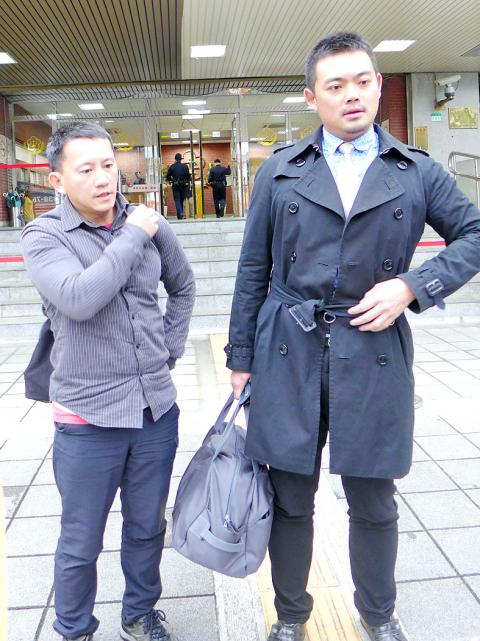
Photo: Chin Jen-hao, Taipei Times
“There were victims who have died, while others sustained burns and other injuries to various extents. The circumstances were different for each of the victims. Our foundation has provided them with guidelines and conditions to serve as a basis for financial compensation, Luo said.
“Some families requested greater amounts because of the victim’s age, the severity of their burns and injuries, and the calculated loss of earnings due to being unable to work,” he added.
The lawsuit was filed on behalf of the 432 victims and their families who agreed to participate, but did not represent all of the more than 500 victims of the disaster, of which 15 have died, Luo said.
Luo said that his legal team understands that Lu might not be able to redress all victims, “but it is still the right thing to do, because of its ramifications. If the ruling for compensation goes in our favor and if the court finds Formosa Fun Coast, which rented out the venue for the event, and other agencies legally responsible, then we would be able to demand compensation from them as well.”
However, Lu said the assets of both of his companies had been seized by authorities, adding: “I have no money left in my bank account. I am depending on my friends and family to survive day to day.”
“If the court rules against me on the compensation, the victims would get promissory notes from me, but they would not receive any money. That is a problem for the judges to solve,” Lu said.
Lu’s comments caused furor among a number of victims and their families, who said his remarks and irresponsible attitude demonstrated that he was avoiding his obligations and were in contrast to his promise to “shoulder the responsibility” made in front of the media immediately following the disaster.
“He did not visit the victims nor offer condolences. He did not attend the funerals of those who died from burns. He is an insincere and dishonest man,” one victim said yesterday.
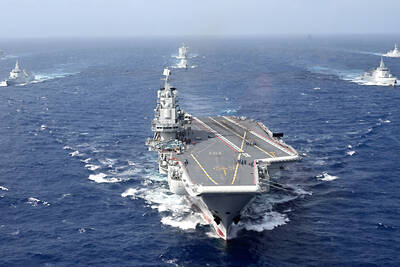
PROVOCATIVE: Chinese Deputy Ambassador to the UN Sun Lei accused Japan of sending military vessels to deliberately provoke tensions in the Taiwan Strait China denounced remarks by Japan and the EU about the South China Sea at a UN Security Council meeting on Monday, and accused Tokyo of provocative behavior in the Taiwan Strait and planning military expansion. Ayano Kunimitsu, a Japanese vice foreign minister, told the Council meeting on maritime security that Tokyo was seriously concerned about the situation in the East China and South China seas, and reiterated Japan’s opposition to any attempt to change the “status quo” by force, and obstruction of freedom of navigation and overflight. Stavros Lambrinidis, head of the EU delegation to the UN, also highlighted South China Sea

SILENCING CRITICS: In addition to blocking Taiwan, China aimed to prevent rights activists from speaking out against authoritarian states, a Cabinet department said The Ministry of Foreign Affairs (MOFA) yesterday condemned transnational repression by Beijing after RightsCon, a major digital human rights conference scheduled to be held in Zambia this week, was abruptly canceled due to Chinese pressure over Taiwanese participation. This year’s RightsCon, the world’s largest conference discussing issues “at the intersection of human rights and technology,” was scheduled to take place from tomorrow to Friday in Lusaka, and expected to draw 2,600 in-person attendees from 150 countries, along with 1,100 online participants. However, organizers were forced to cancel the event due to behind-the-scenes pressure from China, the ministry said, expressing its “strongest condemnation”
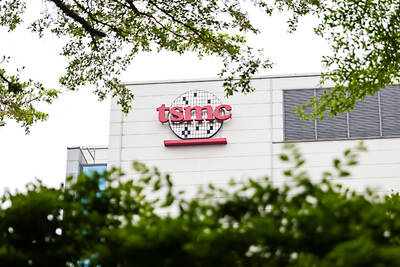
Taiwan Semiconductor Manufacturing Co (TSMC, 台積電), the world’s largest contract chipmaker, said it expects its 2-nanometer (2nm) chip capacity to grow at a compound annual rate of 70 percent from this year to 2028. The projection comes as five fabs begin volume production of 2-nanometer chips this year — two in Hsinchu and three in Kaohsiung — TSMC senior vice president and deputy cochief operating officer Cliff Hou (侯永清) said at the company’s annual technology symposium in Silicon Valley, California, last week. Output in the first year of 2-nanometer production, which began in the fourth quarter of last year, is expected to
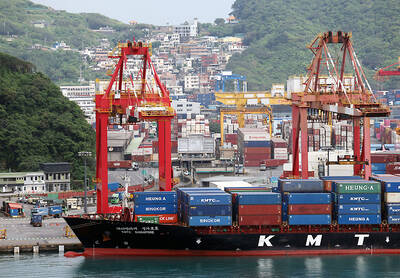
Taiwan’s economy grew far faster than expected in the first quarter, as booming demand for artificial intelligence (AI) applications drove a surge in exports, spilling over into investment and consumption, the Directorate-General of Budget, Accounting and Statistics (DGBAS) said yesterday. GDP growth was 13.69 percent year-on-year during the January-to-March period, beating the DGBAS’ February forecast by 2.23 percentage points and marking the most robust growth in nearly four decades, DGBAS senior official Chiang Hsin-yi (江心怡) told a news conference in Taipei. The result was powered by exports, which remain the backbone of Taiwan’s economy, Chiang said. Outbound shipments jumped 51.12 percent year-on-year to


 RSS
RSS