


Taipei city councilors yesterday reached an agreement to arrange two dates to make up for question-and-answer sessions delayed as a result of a boycott against Taipei Mayor Ko Wen-je (柯文哲) — on the condition that Ko apologize at the city council for his “inappropriate behavior” the previous day.
Taipei City Council Speaker Wu Pi-chu (吳碧珠) of the Chinese Nationalist Party (KMT) made the announcement following a cross-caucus negotiation, adding that the city government should deliver an official document detailing which Taipei city councilors and city government officials requested controversial “porn star” EasyCards allotted for public relations uses from EasyCard Corp (悠遊卡).
Ko, an independent, on Wednesday slammed his fist on his desk upon hearing a remark by KMT Taipei City Councilor William Hsu (徐宏庭), in which Hsu said Ko’s alleged protection of former EasyCard chairman Tai Chi-chuan (戴季全) over the firm’s issuance of controversial EasyCards implied the two men have a “special/sexual” relationship (特殊性關係).
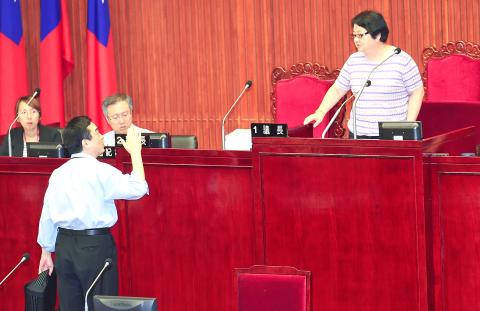
Photo: Chang Chia-ming, Taipei Times
Ko’s reaction raised the ire of some KMT city councilors, who said Ko’s move was disrespectful to the council and demanded an apology.
Wu said that Ko’s demoting Tai from EasyCard chairman to general manager instead of firing him has upset many Taipei city councilors and soured relations between his government and the council.
She urged Ko to be more prudent in enlisting officials.
Democratic Progressive Party (DPP) Taipei City Council caucus whip Rosalia Wu (吳思瑤) said that although the DPP caucus unanimously agreed that Ko’s apologizing to Wu on Wednesday was enough, it would respect the agreements reached during the negotiation.
She said that while the decision as to whether to apologize is up to Ko, the mayor should choose wisely, as his decision would have a profound impact on relations between the city government and the council.
Later yesterday, Tai issued a statement saying that, starting today, he would take an unpaid leave until Friday next week, when the company is to have a board meeting.
On Tai’s yet unclear fate, Wu said that Ko was “very emotional” and apparently tried to hold back his tears when she told him on Wednesday that his “misplaced mercy for one person [Tai] is cruelty to many others.”
Wu said that both the pan-green and pan-blue camps believe that Ko should “do whatever that needs to be done” to end the controversy surrounding the EasyCards.

South Korea has adjusted its electronic arrival card system to no longer list Taiwan as a part of China, a move that the Ministry of Foreign Affairs said would help facilitate exchanges between the two sides. South Korea previously listed “Taiwan” as “Taiwan (China)” in the drop-down menus of its online arrival card system, where people had to fill out where they came from and their next destination. The ministry had requested South Korea make a revision and said it would change South Korea’s name on Taiwan’s online immigration system from “Republic of Korea” to “Korea (South),” should the issue not be

Tainan, Taipei and New Taipei City recorded the highest fines nationwide for illegal accommodations in the first quarter of this year, with fines issued in the three cities each exceeding NT$7 million (US$220,639), Tourism Administration data showed. Among them, Taipei had the highest number of illegal short-term rental units, with 410. There were 3,280 legally registered hotels nationwide in the first quarter, down by 14 properties, or 0.43 percent, from a year earlier, likely indicating operators exiting the market, the agency said. However, the number of unregistered properties rose to 1,174, including 314 illegal hotels and 860 illegal short-term rental
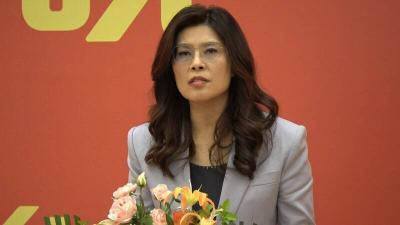
Both sides of the Taiwan Strait share a political foundation based on the “1992 consensus” and opposition to Taiwanese independence, Chinese Nationalist Party (KMT) Chairwoman Cheng Li-wun (鄭麗文) today said during her meeting with Chinese President Xi Jinping (習近平). Both sides of the Strait should plan and build institutionalized and sustainable mechanisms for dialogue and cooperation based on that foundation to make peaceful development across the Strait irreversible, she said. Peace is a shared moral value across the Strait, and both sides should move beyond political confrontation to seek institutionalized solutions to prevent war, she said. Mutually beneficial cross-strait relations are what the
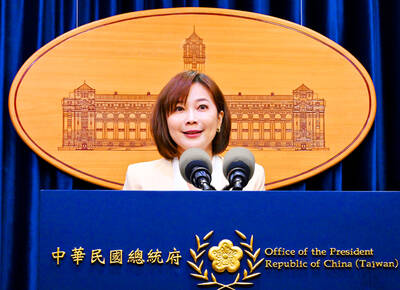
ECONOMIC COERCION: Such actions are often inconsistently applied, sometimes resumed, and sometimes just halted, the Presidential Office spokeswoman said The government backs healthy and orderly cross-strait exchanges, but such arrangements should not be made with political conditions attached and never be used as leverage for political maneuvering or partisan agendas, Presidential Office spokeswoman Karen Kuo (郭雅慧) said yesterday. Kuo made the remarks after China earlier in the day announced 10 new “incentive measures” for Taiwan, following a landmark meeting between Chinese President Xi Jinping (習近平) and Chinese Nationalist Party (KMT) Chairwoman Cheng Li-wun (鄭麗文) in Beijing on Friday. The measures, unveiled by China’s Xinhua news agency, include plans to resume individual travel by residents of Shanghai and China’s Fujian


 RSS
RSS