


The Japanese agent and personal representative of Yui Hatano, a Japanese adult video actress, yesterday bowed at a Taipei news conference to apologize for providing a previously published photograph for Taipei EasyCard Corp (悠遊卡公司) to use in a series of special-edition cards.
The company had invited Hatano to Taiwan for a photography session to produce images for two versions of her card, one “angel” and one “demon.”
Although the cards were not scheduled to be launched until Tuesday next week, there had already been a lot of discussion on the Internet, not only about the choice of Hatano, but that one image had been used on the cover of one of her adult videos.
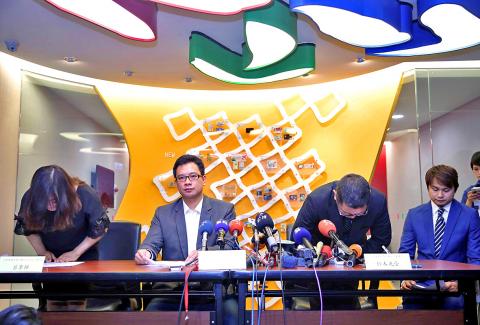
Photo: CNA
EasyCard chairman Tai Chi-chuan (戴季全) said that a temporary hold had been placed on sales of the “angel” card, adding that there would be restrictions on where the card could be purchased so that buyer’s age requirements could be enforced.
However, he said the company had done nothing illegal in selecting Hatano as a model.
Asked if Hatano’s status as an adult video star might harm the reputation of the company and the Taipei City Government, he said that he had not violated “public decency” or intended to challenge legal limits.
The controversy was the result of cultural differences between Japan and Taiwan, he said.
Hatano’s agent, Mitsukazu Suzuki, and personal representative Lu Chi-hua (呂季樺) apologized for providing an old photograph.
Suzuki said that while his company had full authorization to provide both pictures, Japanese and Taiwanese had different understandings about using previously publicized photographs.
He said that a new photograph of Yui would be taken for the “angel” card.
He said his firm had represented Hatano for four years and was working to downplay her image as an adult video star.
Lu read a statement from Hatano, who said she was happy to have the opportunity to work with EasyCard, even though her pictures might create controversy.
“Although I am an adult video star, does that mean I cannot give back to Taiwan?” she said in the statement read by Lu.
Although the cards have not been released, seven “angel” cards with the controversial photo were listed yesterday on the Ruten online auction site, priced at more than NT$40,000.
EasyCard spokesman Lin Hsiao-chi (林筱淇) said she had taken 10 sets of the cards out of storage on Wednesday so the media could take pictures, but had lost track of seven sets.
EasyCard had contacted the sellers of the cards on Ruten — but is not considering legal action at this time, she said.
Additional reporting by Abraham Gerber
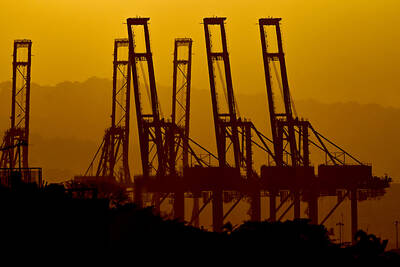
A subsidiary of a Hong Kong-based company that has lost control of two critical ports on the Panama Canal said it is seeking US$2 billion of compensation in damages from Panama over its “illegal” takeover of the ports. Panama Ports Co, a unit of Hong Kong’s CK Hutchison Holdings (長江和記實業), on Friday said in a statement that it is demanding the sum under international arbitration proceedings that it had already started. The Panamanian government last week seized control of the Balboa and Cristobal ports on each end of the Panama Canal, after the country’s Supreme Court declared earlier that a concession allowing
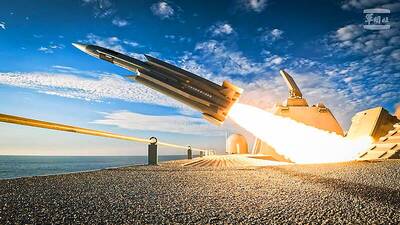
DETERRENCE: With 1,000 indigenous Hsiung Feng II and III missiles and 400 Harpoon missiles, the nation would boast the highest anti-ship missile density in the world With Taiwan wrapping up mass production of Hsiung Feng II and III missiles by December and an influx of Harpoon missiles from the US, Taiwan would have the highest density of anti-ship missiles in the world, a source said yesterday. Taiwan is to wrap up mass production of the indigenous anti-ship missiles by the end of year, as the Chungshan Institute of Science and Technology has been meeting production targets ahead of schedule, a defense official with knowledge of the matter said. Combined with the 400 Harpoon anti-ship missiles Taiwan expects to receive from the US by 2028, the nation would have

POSSIBILITIES EMERGE: With Taiwan’s victory and Japan’s narrow win over Australia, Taiwan now have a chance to advance if South Korea also beat the Aussies Taiwan has high hopes that the national baseball team would advance to the World Baseball Classic (WBC) quarter-finals after clinching a crucial 5-4 victory over South Korea in a nail-biting extra-inning game at the Tokyo Dome yesterday. Boosted by three home runs — two solo shots by Yu Chang (張育成) and Cheng Tsung-che (鄭宗哲) and a two-run homer by Stuart Fairchild — the triumph gave Taiwan a much-needed second victory in the five-team Pool C, where only the top two finishers would advance to the knockout stage in Miami, Florida. Entering extra innings with the game tied at four apiece, Taiwan scored
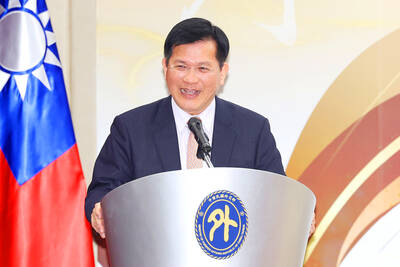
MISSION OF PEACE: The foreign minister urged Beijing to respect Taiwan’s existence as an independent nation, and work together to ensure peace and stability in the region Minister of Foreign Affairs Lin Chia-lung (林佳龍) yesterday rejected Chinese Minister of Foreign Affairs Wang Yi’s (王毅) comments about Taiwan, criticizing China as a “troublemaker” in the international community and a disruptor of cross-strait peace. Speaking at a news conference on the sidelines of the Chinese National People’s Congress, Wang said that Taiwan has always been a territory of China and that it would be impossible for it to become its own country. The “return” of Taiwan to China was the natural outcome of the Chinese people’s resistance against Japan in World War II, and that any pursuit of independence was “doomed


 RSS
RSS