


The procedure Zhongzheng First Precinct police officers employed when arresting students who entered the Ministry of Education complex on Thursday last week was legal and the safety of journalists and bystanders on the scene was duly accounted for, the Taipei Police Department said yesterday.
Dozens of people, mostly high-school students, broke into the ministry compound at about 11:35pm on Thursday to protest changes to high-school curriculum guideline changes and, after a brief occupation of the courtyard, 33 individuals — including 24 students and three reporters — were arrested at about 1am on Friday.
“Precinct Chief Chang Chi-wen (張奇文) personally saw to it that a standard operating procedure was disseminated to all precinct officers and repeatedly exhorted his colleagues to maintain the safety of civilians and evict the protestors in a nonviolent manner,” the department said in a report released yesterday reviewing the operation.
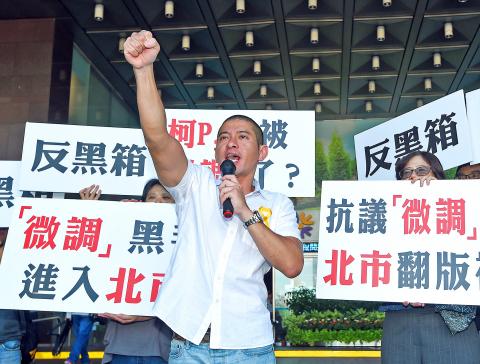
Photo: Fang Pin-chao, Taipei Times
The department said that about 200 officers were deployed to the scene.
Responding to public criticism suggesting that arresting reporters violated the freedom of the press, the report said that the officers took the reporters into custody because they had not been granted permission to enter the complex.
“The police confirmed that the three had not been granted access to the ministry complex,” the report said.
“The department hereby gives the following clarification: Given the clear violation of the law, there was no reason for police officers not to arrest [the reporters],” it said.
The department also rejected allegations that police officers confiscated mobile phones or cameras and that officers were armed during the arrests, adding that the arrests were made in compliance with the Code of Criminal Procedure (刑事訴訟法) after the ministry decided to take action against the students over their alleged violations of Articles 306 and 354 of the Criminal Code.
“Officers restrained protesters to prevent them from hurting themselves or others,” the report said.
“It was unclear whether officers had gained an advantage over the protesters to keep the situation under control, as such, the officers were not in violation of the principle of proportionality,” it said.
Regarding why there was no media liaison on the scene to facilitate communication with reporters covering the event, the agency said that police officers were handling a crime scene rather than a demonstration, so there was no need for a media contact.
“The ministry building was surrounded with barricades and barbed wire, and reporters should have been working outside the perimeter,” the report added.
The entire operation was carried out in a manner that ensured freedom of the press and guaranteed reporters’ personal safety, which demonstrated that the department had closely adhered to its guidelines promulgated at the beginning of this year on coordinating with media outlets at rallies and demonstrations, the department said.
The department added in the report that it would continue to protect people’s right to protest, and that it would continue enforcing the law in a manner that protects human rights, upholds the law and serves the public’s interests.
Democratic Progressive Party Taipei City Council caucus whip Rosalia Wu (吳思瑤) yesterday said she found the report “unreasonable and unacceptable,” as it failed to address a number of questions, such as whether plastic zip ties used to restrain protesters are considered legal policing equipment, and whether taking the protesters and reporters into custody was really necessary.
Wu said that she expected a municipal government-level investigation report to be released by the Taipei City Government next week to be more comprehensive in addressing the public’s questions.
Additional reporting by Tsai Ya-hua
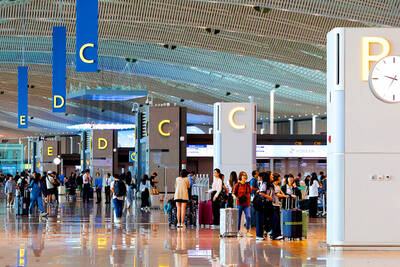
South Korea has adjusted its electronic arrival card system to no longer list Taiwan as a part of China, a move that the Ministry of Foreign Affairs said would help facilitate exchanges between the two sides. South Korea previously listed “Taiwan” as “Taiwan (China)” in the drop-down menus of its online arrival card system, where people had to fill out where they came from and their next destination. The ministry had requested South Korea make a revision and said it would change South Korea’s name on Taiwan’s online immigration system from “Republic of Korea” to “Korea (South),” should the issue not be
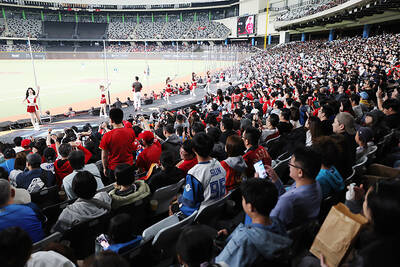
The Legislative Yuan’s Finance Committee yesterday approved proposed amendments to the Amusement Tax Act (娛樂稅法) that would abolish taxes on films, cultural activities and competitive sporting events, retaining the fee only for dance halls and golf courses. The proposed changes would set the maximum tax rate for dance halls and golf courses at 50 and 20 percent respectively, with local governments authorized to suspend the levies. Article 2 of the act says that “amusement tax shall be levied on tickets sold or fees charged by amusement places, facilities or activities” in six categories: “Cinema; professional singing, story-telling, dancing, circus, magic show, acrobatics

Tainan, Taipei and New Taipei City recorded the highest fines nationwide for illegal accommodations in the first quarter of this year, with fines issued in the three cities each exceeding NT$7 million (US$220,639), Tourism Administration data showed. Among them, Taipei had the highest number of illegal short-term rental units, with 410. There were 3,280 legally registered hotels nationwide in the first quarter, down by 14 properties, or 0.43 percent, from a year earlier, likely indicating operators exiting the market, the agency said. However, the number of unregistered properties rose to 1,174, including 314 illegal hotels and 860 illegal short-term rental
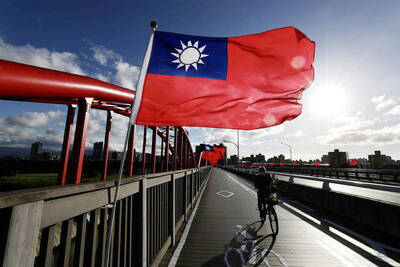
INFLATION UP? The IMF said CPI would increase to 1.5 percent this year, while the DGBAS projected it would rise to 1.68 percent, with GDP per capita of US$44,181 The IMF projected Taiwan’s real GDP would grow 5.2 percent this year, up from its 2.1 percent outlook in January, despite fears of global economic disruptions sparked by the US-Iran conflict. Taiwan’s consumer price index (CPI) is projected to increase to 1.5 percent, while unemployment would be 3.4 percent, roughly in line with estimates for Asia as a whole, the international body wrote in its Global Economic Outlook Report published in the US on Monday. The figures are comparatively better than the IMF outlook for the rest of the world, which pegged real GDP growth at 3.1 percent, down from 3.3 percent


 RSS
RSS