


Amid reports that Japan could challenge Taiwan’s decision to tighten regulations on imported Japanese foodstuffs at the WTO, Minister of Health and Welfare Chiang Been-huang (蔣丙煌) yesterday said that Taiwan is within its rights to take such an action.
“The new measure will be enforced as scheduled [tomorrow]. Even if Japan plans to file a case with the WTO, our action will stand up to scrutiny,” Chiang said.
“The ministry will continue to communicate with Japan and help it understand why it was necessary to tighten regulations,” he said, adding that the measures “will benefit both sides.”
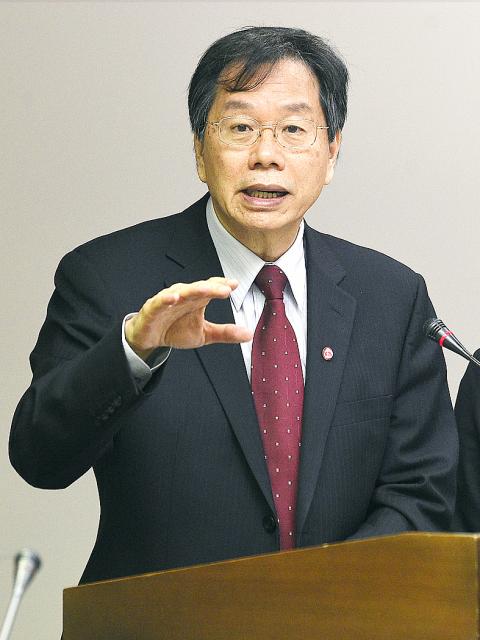
Photo: Taipei Times
The new measures were adopted after it was discovered in March that food items from five Japanese prefectures from which imports are banned had made their way into Taiwan with the help of false labels, Chiang said.
Food products from Fukushima, Ibaraki, Tochigi, Gunma and Chiba prefectures have been banned in Taiwan since those areas were suspected of radiation contamination the Fukushima Dai-ichi nuclear power plant disaster in March 2011.
Under the new laws, importers of Japanese food products would be required to present certificates of origin to prove that the items did not originate in the five prefectures.
For imports such as tea, baby food, and dairy and aquatic products, radiation inspection certificates are also to be required.
How measures are enforced remains to be seen, as the Food and Drug Administration (FDA) had not received any certificates of origin issued by official Japanese agencies or authorized bodies as of yesterday, Chiang said.
Japan has also not supplied a list of its inspection organizations, he said.
The FDA has inspected more than 8,000 shipments of Japanese food so far this year, agency statistics showed.
If related documents are not presented before tomorrow, items such as tea from Shizuoka and some aquatic and dairy products would not be allowed into Taiwan, officials said.
Japanese Minister of Agriculture, Forestry and Fisheries Yoshimasa Hayashi on Tuesday said that Japan has demanded that Taiwan retract its decision, but has yet to see any tangible progress, and that Japan has not ruled out taking the case to the WTO.
Association of East Asian Relations chairman Lee Chia-chin (李嘉進) said that he would advise Japan not to threaten to take the case to the WTO.
With such friendly bilateral relations between the two sides, he said: “We can talk about everything, but taking the case to the WTO could sour bilateral ties.”
Lee added that Taiwan is a major consumer of Japanese agricultural products and can certainly ask Japan to heed its food safety concerns.
“Once Japan has fully investigated the false labeling, Taiwan will certainly feel less pressure to impose stricter regulations,” Lee said.
Meanwhile, the Ministry of Foreign Affairs yesterday confirmed that Takeo Hiranuma, a senior Japanese lawmaker and head of the Japan-Republic of China Diet Members’ Consultative Council, recently canceled a scheduled visit to Taiwan, but said that the move was not related to conflict over the planned regulations.
Ministry spokesperson Anna Kao (高安) said that Hiranuma postponed his planned visit because he was concerned that Typhoon Noul might cause travel disruptions on his way home.
Kao made the remarks in response to a report by the Chinese-language Liberty Times (the Taipei Times’ sister newspaper) yesterday saying that Hiranuma was scheduled to arrive on Tuesday, but that he canceled the trip after he was told by the ministry that his visit would not change the government’s decision to implement the rules this week.
Additional reporting by Shih Hsiu-chuan
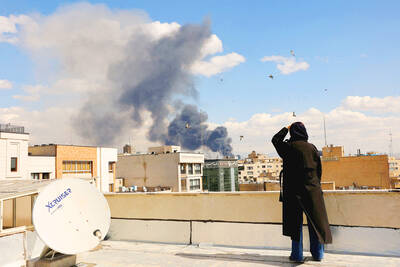
CHAOS: Iranians took to the streets playing celebratory music after reports of Khamenei’s death on Saturday, while mourners also gathered in Tehran yesterday Iranian Supreme Leader Ayatollah Ali Khamenei was killed in a major attack on Iran launched by Israel and the US, throwing the future of the Islamic republic into doubt and raising the risk of regional instability. Iranian state television and the state-run IRNA news agency announced the 86-year-old’s death early yesterday. US President Donald Trump said it gave Iranians their “greatest chance” to “take back” their country. The announcements came after a joint US and Israeli aerial bombardment that targeted Iranian military and governmental sites. Trump said the “heavy and pinpoint bombing” would continue through the week or as long
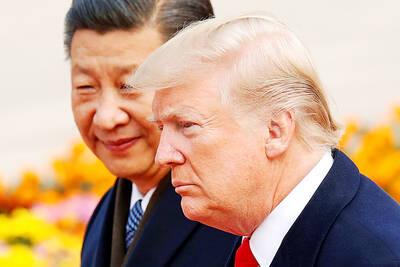
TRUST: The KMT said it respected the US’ timing and considerations, and hoped it would continue to honor its commitments to helping Taiwan bolster its defenses and deterrence US President Donald Trump is delaying a multibillion-dollar arms sale to Taiwan to ensure his visit to Beijing is successful, a New York Times report said. The weapons sales package has stalled in the US Department of State, the report said, citing US officials it did not identify. The White House has told agencies not to push forward ahead of Trump’s meeting with Chinese President Xi Jinping (習近平), it said. The two last month held a phone call to discuss trade and geopolitical flashpoints ahead of the summit. Xi raised the Taiwan issue and urged the US to handle arms sales to
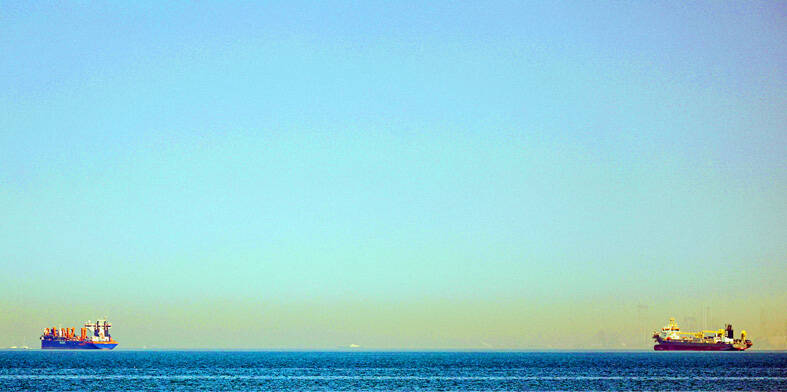
State-run CPC Corp, Taiwan (CPC, 台灣中油) yesterday said that it had confirmed on Saturday night with its liquefied natural gas (LNG) and crude oil suppliers that shipments are proceeding as scheduled and that domestic supplies remain unaffected. The CPC yesterday announced the gasoline and diesel prices will rise by NT$0.2 and NT$0.4 per liter, respectively, starting Monday, citing Middle East tensions and blizzards in the eastern United States. CPC also iterated it has been reducing the proportion of crude oil imports from the Middle East and diversifying its supply sources in the past few years in response to geopolitical risks, expanding
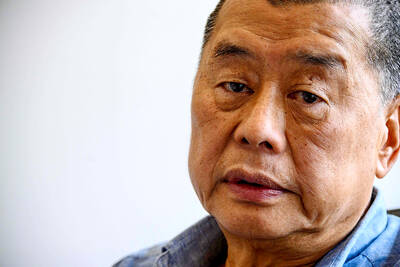
Pro-democracy media tycoon Jimmy Lai’s (黎智英) fraud conviction and prison sentence were yesterday overturned by a Hong Kong court, in a surprise legal decision that comes soon after Lai was jailed for 20 years on a separate national security charge. Judges Jeremy Poon (潘兆初), Anthea Pang (彭寶琴) and Derek Pang (彭偉昌) said in the judgement that they allowed the appeal from Lai, and another defendant in the case, to proceed, as a lower court judge had “erred.” “The Court of Appeal gave them leave to appeal against their conviction, allowed their appeals, quashed the convictions and set aside the sentences,” the judges


 RSS
RSS