


The Executive Yuan yesterday approved a proposal that would cut the workweek to 40 hours, raise the cap on overtime work to 54 hours per month and extend the application of the two days off per week policy across the board.
The proposal, which still has to be approved by the Legislative Yuan, is expected to benefit 3.4 million workers, the Ministry of Labor said.
The proposed amendments to the Labor Standards Act (勞動基準法) would change current regulations defining regular working time as 84 hours every two weeks to 40 hours per week, while raising the maximum limit on overtime work from 46 hours to 54 hours per month to minimize its effect on industries, Minister of Labor Chen Hsiung-wen (陳雄文) said.
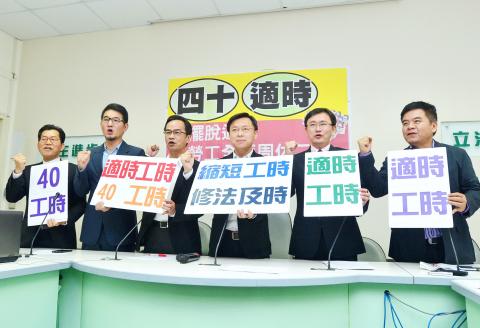
Photo: Wang Yi-sung, Taipei Times
“Business groups had suggested an annual [instead of monthly] cap on overtime hours, but the ministry believed it could easily lead to overwork. For example, workers could be asked to do 108 hours of overtime in a month over a two-month span, because that would still average out as 54 hours per month,” Chen said.
The two days off per week policy has been implemented in the public sector since 2001, and 50.1 percent of companies in the private sector have since followed suit, covering 58 percent of the working population.
“That means the remaining 42 percent, or 3.4 million workers, would benefit from an all-inclusive implementation of the policy,” the minister said.
Supporting measures have also been drafted, which includes “leveling” the number of non-working holidays enjoyed by private employees to that of public servants, Chen said.
“Civil servants have 11 nonworking holidays, while private employees have 19,” Chen said.
Non-working holidays for private employees will be cut to 11 — the same as civil servants — but they will still observe Labor Day on May 1, giving them a total of 12 non-working holidays, he said.
“The other seven national holidays will still be commemorated, but they will be working holidays,” he added.
The minister said that after factoring all the changes — 104 hours less a year due to the reduction of weekly working hours, 56 hours more as a result of the cuts in non-working holidays and 96 hours more a year due to the increase in maximum overtime working hours — “employees would be able to work 48 hours more [a year], but the extra hours would have to be paid accordingly as overtime.”
However, labor rights advocates view the proposed changes differently, especially the plan to extend the limit on overtime hours.
Describing the plan as an attempt to deceive the public, Taiwan Labour Front said it would only exacerbate the problem of long working hours in Taiwan.
Although the proposed changes would decrease working hours by eight hours per month, they are meaningless since the limit for overtime work would also be increased by eight hours, the group said.
Taiwan Labour Front member Chang Feng-yi (張烽益) said that overtime hours should be kept at 46 hours to truly protect the rights of workers.
The group intends to lobby support for separate versions of the act in the legislature before the end of the month, Chang said, adding that it plans to hold a rally outside the legislature on Thursday next week.
The newly launched Social Democratic Party (SDP) said the government’s proposal avoided more important reforms such as raising the minimum wage.
SDP legislative candidate Miao Po-ya (苗博雅) criticized the minister of labor’s claim that increasing overtime hours could “raise wages in another form.”
“The government should be ashamed of itself if workers are expected to overwork so they can meet their basic necessities,” Miao said.
The Democratic Progressive Party caucus voiced its support for limiting the workweek to 40 hours.
“Currently, the regular working time is 84 hours per two weeks, which is much longer than those in many countries, such as the US, Japan, South Korea, and Japan — which limit the workweek to 40 hours,” DPP Legislator Chao Tien-lin (趙天麟) told a press conference.
“Legislators across party lines have proposed 11 amendments that are all supportive of revising the law in that direction. I hope the amendments would be passed before Labor Day,” Chao said.
Additional reporting by Loa Iok-sin
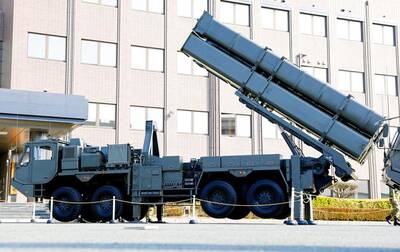
Japan has deployed long-range missiles in a southwestern region near China, the Japanese defense minister said yesterday, at a time when ties with Beijing are at their lowest in recent years. The missiles were installed in Kumamoto in the southern region of Kyushu, as Japan is attempting to shore up its military capacity as China steps up naval activity in the East China Sea. “Standoff defense capabilities enable us to counter the threat of enemy forces attempting to invade our country ... while ensuring the safety of our personnel,” Japanese Minister of Defense Shinjiro Koizumi said. “This is an extremely important initiative for
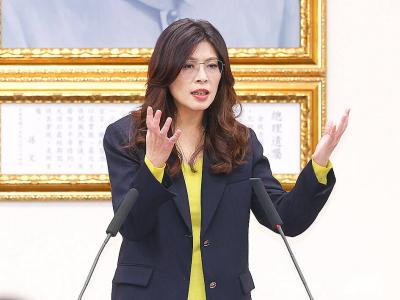
Chinese Nationalist Party (KMT) Chairwoman Cheng Li-wun (鄭麗文) today accepted an invitation from Chinese President Xi Jinping (習近平) to lead a delegation to China next month, saying she hopes to promote the peaceful development of cross-strait relations and bring stability to the Taiwan Strait. “I am grateful and happy to accept this invitation,” Cheng said in a statement from the KMT chairperson’s office. Cheng said she hopes both sides can work together to promote the peaceful development of cross-strait relations, enhance exchange and cooperation, bring stability to the Taiwan Strait and improve people’s livelihoods. At today's news conference, Cheng said any efforts to
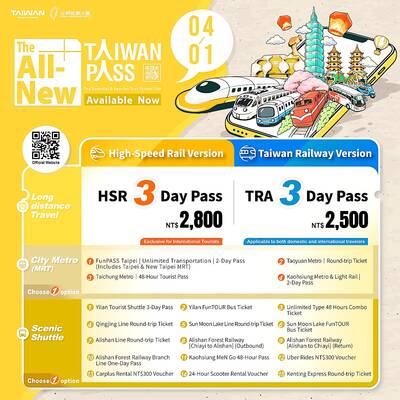
MORE POPULAR: Taiwan Pass sales increased by 59 percent during the first quarter compared with the same period last year, the Tourism Administration said The Tourism Administration yesterday said that it has streamlined the Taiwan Pass, with two versions available for purchase beginning today. The tourism agency has made the pass available to international tourists since 2024, allowing them to access the high-speed rail, Taiwan Railway Corp services, four MRT systems and four Taiwan Tourist Shuttles. Previously, five types of Taiwan Pass were available, but some tourists have said that the offerings were too complicated. The agency said only two types of Taiwan Pass would be available, starting from a three-day pass with the high-speed rail and a three-day pass with Taiwan Railway Corp. The former costs NT$2,800

The nation’s fastest supercomputer, Nano 4 (晶創26), is scheduled to be launched in the third quarter, and would be used to train large language models in finance and national defense sectors, the National Center for High-Performance Computing (NCHC) said. The supercomputer, which would operate at about 86.05 petaflops, is being tested at a new cloud computing center in the Southern Taiwan Science Park in Tainan. The exterior of the server cabinet features chip circuitry patterns overlaid with a map of Taiwan, highlighting the nation’s central position in the semiconductor industry. The center also houses Taiwania 2, Taiwania 3, Forerunner 1 and


 RSS
RSS