


Minister of Health and Welfare Chiang Been-huang (蔣丙煌) yesterday acknowledged that the ministry is mulling lifting its ban on imports of food products from five Japanese prefectures near the Fukushima Dai-ichi nuclear power plant, following discoveries that more than 250 food products manufactured in the five areas have illegally entered the country with false origin labeling.
Chiang made the remarks when pressed by Democratic Progressive Party (DPP) Legislator Lin Shu-fen (林淑芬) at a meeting of the legislature’s Social Welfare and Environmental Hygiene Committee yesterday morning to confirm reports that the government is deliberating relaxing the ban due to mounting pressure from the Japanese government.
“It is true that Japan has made such a request, actually more than once over the years since the 2011 Fukushima Dai-ichi meltdown. It stressed that its nation’s [food] products were safe, and to my knowledge, many other countries have agreed to similar requests,” Chiang said.
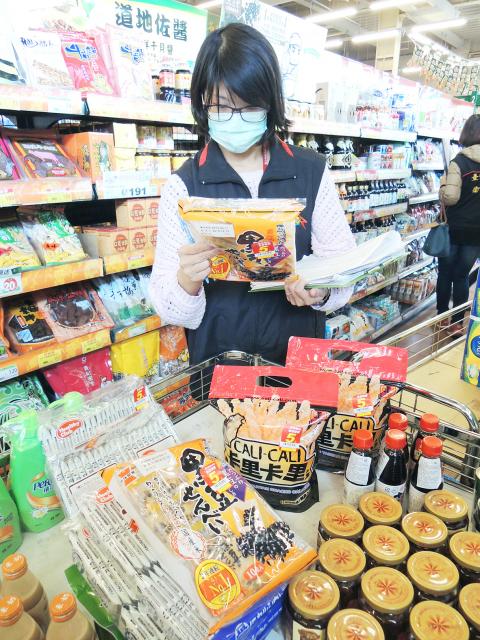
Photo: Tsai Shu-yuan, Taipei Times
Chiang said that given Taiwan’s ban on food products from the five prefectures was relatively stringent and that Japan has proposed the idea on multiple occasions, “the ministry is obligated by international custom to deliberate on the proposal’s feasibility.”
The government imposed the ban on food items from Fukushima, Ibaraki, Tochigi, Gunma and Chiba prefectures in March 2011.
It has also subjected nine categories of food products from other parts of Japan to batch-by-batch border inspections — fresh vegetables and fruits; frozen vegetables and fruits; fresh aquatic products; frozen aquatic products; baby formula; dairy products; seaweed; tea leaves; and drinking water.
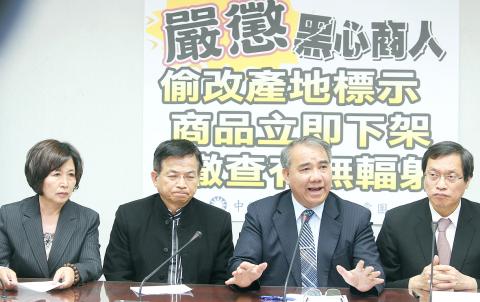
Photo: CNA
The minister’s statements came at a particularly sensitive time for the Food and Drug Administration (FDA), which has been accused of deliberately delaying the publication of its findings that a dozen Taiwanese companies had been importing hundreds of food products from the five prefectures with fake origin labels.
A press release issued by the New Taipei City Government’s Public Health Department on Tuesday evening said that the FDA recently found that two soy sauce products imported by Taipei-based Sheng Yu Trading Co (盛裕貿易) on Feb. 4 were labeled as being produced in Tokyo, but were actually manufactured in Chiba and Gunma.
However, the administration did not take any action until Thursday last week, when it accompanied health officials in raiding the factories of implicated companies. The FDA released the findings late on Tuesday.
As of 12pm yesterday, a total of 294 food products imported from 12 firms have been ordered off the shelves over their allegedly adulterated place of origin labels, including Kirin’s (午後紅茶) Afternoon Tea Straight Tea, Milk Tea and Lemon Tea beverages, Nissin Food Products Co’s cup noodles and Japanese confectioner Morinaga’s six cookie and sweet products.
The falsified Chinese labels, which were reportedly simply attached on top of the original Japanese-language ones, claimed that they were manufactured in Tokyo, Osaka, Kobe, Okayama or other regions far from the Fukushima Dai-ichi nuclear plant.
However, 108 of the products were produced in Gunma, 74 were from Ibaraki, 48 from Chiba, 45 from Tochigi and 19 from Fukushima. The FDA has sent all the potentially questionable items to the Atomic Energy Council for testing, of which 193 were found to contain no radioactive residue as of yesterday.
During the committee meeting, Lin said she was unsatisfied with Chiang’s comments, adding that Taiwan’s ban is far from strict, since China has not only banned all food imported from 10 high-risk Japanese prefectures, but also demanded a radiation detection report and a government-issued place of origin for food items from other areas of the country.
“Taiwan only imposed a food import ban on five prefectures and the ministry has used every excuse it could think up to procrastinate in implementing a draft regulation that requires importers of the above nine types of products to provide a country of origin certificate and a radiation assessment report issued by the Japanese government,” Lin said.
Lin said that nearly five months had passed since the FDA started seeking public opinion over the proposal in late October last year, a process that usually takes just two months.
FDA Director-General Chiang Yu-mei (姜郁美) pledged to publish the draft regulation within two weeks, adding that the new rule is expected to take effect in late June at the latest after both sides finalize the format of the required official documentation.
Meanwhile, the Chinese Nationalist Party (KMT) caucus called for immediate removal of potentially radioactive Japanese food products from the shelves, with one lawmaker proposing a boycott of all Japanese foodstuffs.
KMT Legislator Su Ching-chuan (蘇清泉), at a news conference held by the caucus that Chiang Yu-mei attended, proposed condemning unscrupulous companies and the Japanese government, demanded a pre-emptive measure of pulling all Japanese food products off shelves and that all Taiwanese to boycott Japanese food products.
KMT Legislator Wu Yu-jen (吳育仁) asked why Japan had failed to provide official certification on the place of origin for food exported to Taiwan, when it apparently had been doing so to other countries, including China.
Additional reporting by Alison Hsiao
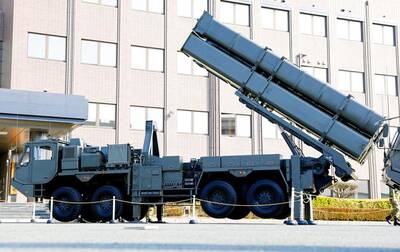
Japan has deployed long-range missiles in a southwestern region near China, the Japanese defense minister said yesterday, at a time when ties with Beijing are at their lowest in recent years. The missiles were installed in Kumamoto in the southern region of Kyushu, as Japan is attempting to shore up its military capacity as China steps up naval activity in the East China Sea. “Standoff defense capabilities enable us to counter the threat of enemy forces attempting to invade our country ... while ensuring the safety of our personnel,” Japanese Minister of Defense Shinjiro Koizumi said. “This is an extremely important initiative for
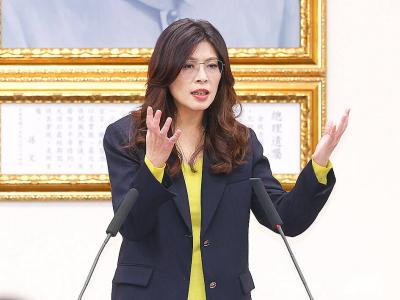
Chinese Nationalist Party (KMT) Chairwoman Cheng Li-wun (鄭麗文) today accepted an invitation from Chinese President Xi Jinping (習近平) to lead a delegation to China next month, saying she hopes to promote the peaceful development of cross-strait relations and bring stability to the Taiwan Strait. “I am grateful and happy to accept this invitation,” Cheng said in a statement from the KMT chairperson’s office. Cheng said she hopes both sides can work together to promote the peaceful development of cross-strait relations, enhance exchange and cooperation, bring stability to the Taiwan Strait and improve people’s livelihoods. At today's news conference, Cheng said any efforts to
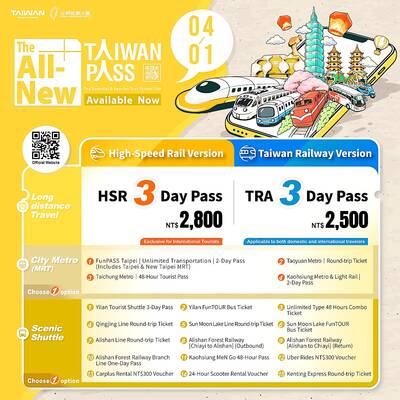
MORE POPULAR: Taiwan Pass sales increased by 59 percent during the first quarter compared with the same period last year, the Tourism Administration said The Tourism Administration yesterday said that it has streamlined the Taiwan Pass, with two versions available for purchase beginning today. The tourism agency has made the pass available to international tourists since 2024, allowing them to access the high-speed rail, Taiwan Railway Corp services, four MRT systems and four Taiwan Tourist Shuttles. Previously, five types of Taiwan Pass were available, but some tourists have said that the offerings were too complicated. The agency said only two types of Taiwan Pass would be available, starting from a three-day pass with the high-speed rail and a three-day pass with Taiwan Railway Corp. The former costs NT$2,800

The nation’s fastest supercomputer, Nano 4 (晶創26), is scheduled to be launched in the third quarter, and would be used to train large language models in finance and national defense sectors, the National Center for High-Performance Computing (NCHC) said. The supercomputer, which would operate at about 86.05 petaflops, is being tested at a new cloud computing center in the Southern Taiwan Science Park in Tainan. The exterior of the server cabinet features chip circuitry patterns overlaid with a map of Taiwan, highlighting the nation’s central position in the semiconductor industry. The center also houses Taiwania 2, Taiwania 3, Forerunner 1 and


 RSS
RSS