


The corruption trial of former Taoyuan county deputy commissioner Yeh Shi-wen (葉世文) wrapped up yesterday with the Taipei District Prosecutors’ Office asking for a 61-year prison sentence and a fine of NT$30 million (US$946,800).
Prosecutors asked for a nine-year term and NT$500,000 fine for Yeh’s alleged accomplice, Farglory Land Development Co (遠雄建設) chairman Chao Teng-hsiung (趙藤雄), who was indicted on bribery-related charges.
The Taipei District Court is scheduled to deliver its verdict on March 20.

Photo: CNA
Yeh and Chao’s fellow defendants are former National Taipei University of Technology professor Tsai Jen-jui (蔡仁惠), former Farglory vice president Wei Chun-hsiung (魏春雄) and a female friend of Yeh’s, Chen Li-ling (陳麗玲), who were charged with bribery and corruption.
The trial centered on several developments in the now Greater Taoyuan — some affordable housing projects in Bade (八德), an affordable housing project next to the A7 MRT station of Taiwan Taoyuan International Airport and the Danhai New Town project.
Yeh also faced a charge of unverifiable sources of income, as amendments to the Anti-Corruption Act (貪污治罪條例) in 2011 stipulated that civil servants, their spouses and children had legal responsibility to explain in full if their assets or wealth saw an unreasonable increase, when compared with their income, within three years of being suspected of violating the act.
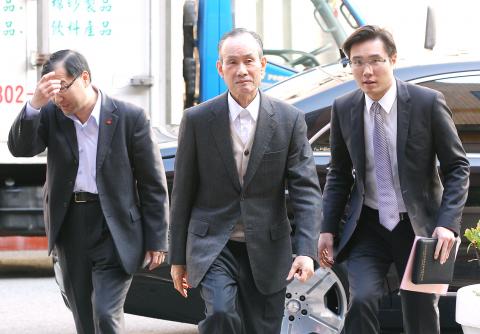
Photo: CNA
Failure to provide an explanation or speak the truth is punishable by up to five years in prison, or a fine.
During the trial, Yeh had admitted accepting bribes in connection with the Bade projects and to having unverifiable income, but denied the other charges.
Yeh said that he took the bribes for the A7 project after Tsai, the alleged go-between, brought him NT$4 million, but he said that he had not asked for the money.
He said he regretted taking NT$16 million linked to the Bade project and asked the court to hand down a light sentence, adding that he hoped to be allowed to post bail so he could return home for the Lunar New Year holiday.
Chao has denied all charges against him and said that he was the “victim” in the case.
His lawyer criticized Tsai, who appeared as a state witness in court, and said Tsai’s confession and testimony were paradoxical and illogical, adding that Chao had been afraid of getting on Yeh’s bad side and was forced to give Yeh money.
Tsai said he had only acted as an intermediary, transferring money between all the parties. He said that after being detained last year, he had decided to admit his crimes and tell the truth.
Tsai’s lawyer, Fu Tzu-sheng (傅祖聲), said that his client, who was educated in the University of Tokyo and holds a doctorate in architecture from a US university, was the only defendant with a higher education and that Farglory’s many “green” buildings owed a debt to Tsai’s contributions.
Tsai was like an artist and his emotions often won over his rational side, Fu said, adding that his client did not have a clear grasp of time, which led to differing accounts of time in his testimony.
Fu said he hoped that the other defense attorneys in the trial case would not seek to trample Tsai’s integrity and character in their efforts to prove the innocence of their own clients.
Wei and Chen have denied all charges against them.
Additional reporting by CNA
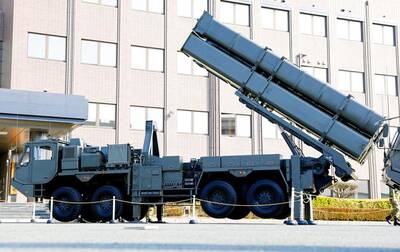
Japan has deployed long-range missiles in a southwestern region near China, the Japanese defense minister said yesterday, at a time when ties with Beijing are at their lowest in recent years. The missiles were installed in Kumamoto in the southern region of Kyushu, as Japan is attempting to shore up its military capacity as China steps up naval activity in the East China Sea. “Standoff defense capabilities enable us to counter the threat of enemy forces attempting to invade our country ... while ensuring the safety of our personnel,” Japanese Minister of Defense Shinjiro Koizumi said. “This is an extremely important initiative for
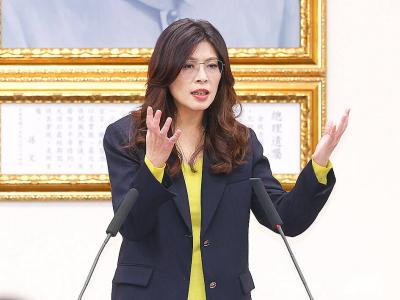
Chinese Nationalist Party (KMT) Chairwoman Cheng Li-wun (鄭麗文) today accepted an invitation from Chinese President Xi Jinping (習近平) to lead a delegation to China next month, saying she hopes to promote the peaceful development of cross-strait relations and bring stability to the Taiwan Strait. “I am grateful and happy to accept this invitation,” Cheng said in a statement from the KMT chairperson’s office. Cheng said she hopes both sides can work together to promote the peaceful development of cross-strait relations, enhance exchange and cooperation, bring stability to the Taiwan Strait and improve people’s livelihoods. At today's news conference, Cheng said any efforts to

MORE POPULAR: Taiwan Pass sales increased by 59 percent during the first quarter compared with the same period last year, the Tourism Administration said The Tourism Administration yesterday said that it has streamlined the Taiwan Pass, with two versions available for purchase beginning today. The tourism agency has made the pass available to international tourists since 2024, allowing them to access the high-speed rail, Taiwan Railway Corp services, four MRT systems and four Taiwan Tourist Shuttles. Previously, five types of Taiwan Pass were available, but some tourists have said that the offerings were too complicated. The agency said only two types of Taiwan Pass would be available, starting from a three-day pass with the high-speed rail and a three-day pass with Taiwan Railway Corp. The former costs NT$2,800

The nation’s fastest supercomputer, Nano 4 (晶創26), is scheduled to be launched in the third quarter, and would be used to train large language models in finance and national defense sectors, the National Center for High-Performance Computing (NCHC) said. The supercomputer, which would operate at about 86.05 petaflops, is being tested at a new cloud computing center in the Southern Taiwan Science Park in Tainan. The exterior of the server cabinet features chip circuitry patterns overlaid with a map of Taiwan, highlighting the nation’s central position in the semiconductor industry. The center also houses Taiwania 2, Taiwania 3, Forerunner 1 and


 RSS
RSS