


A man was found dead at an Internet cafe in New Taipei City after a five-day-straight marathon of computer gaming in the latest case of video game-related death in the nation.
The incident was reported from an Internet cafe in New Taipei City’s Yingge District (鶯歌), when a 38-year-old man surnamed Chu (朱) was found dead in the establishment’s bathroom on Thursday afternoon.
According to the manager of the Internet cafe, Chu entered the establishment on Saturday and played video games for five days straight.
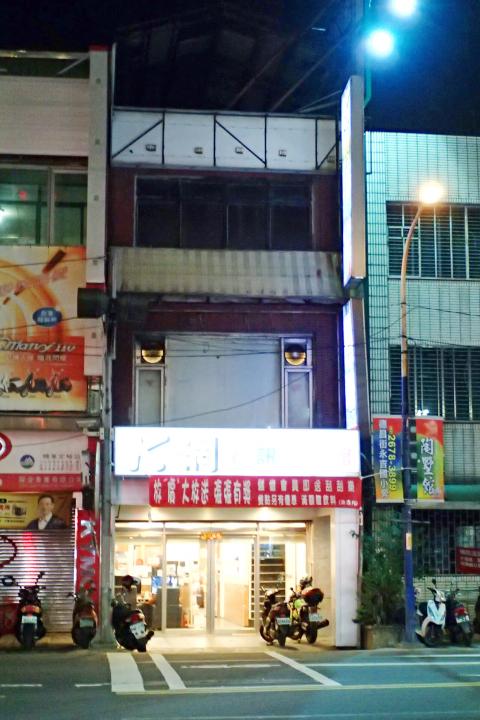
Photo by Yu Heng, Taipei Times
Chu ordered instant noodles and drinks to consume while at the computer table, but otherwise mostly stayed planted in his seat to eat and drink, with the odd sleeping session interspersed throughout the five days, the manager said.
“Except for going to the bathroom, taking cigarette breaks and occasional quick meals, the man did not leave his seat,” the manager said.
The tragic death was discovered on Thursday afternoon when other customers complained that someone was hogging the bathroom’s toilet.
One of the Internet cafe’s attendants went in to investigate and found Chu lying face down on the toilet seat.
An ambulance was called and after arriving, the paramedics found Chu’s body already cold and his face bluish-black, indicating that he had been dead for several hours.
As a preliminary examination of the site showed no signs of a fight and there were no clear injuries on the body, the police have ruled out homicide.
Medicines to treat liver disease and gall stones were found in Chu’s motorcycle seat-trunk.
Police officers said that Chu likely perished because of his medical condition, which was exacerbated by fatigue and physical exhaustion after five days playing computer games.
This is the latest in a number of cases in recent years in Taiwan of computer gamers suffering “sudden death” after playing sessions lasting from a dozen hours to a few days.
In February last year, a man surnamed Wang (王), 40, died after playing games for 13 hours at an Internet cafe in Greater Kaohsiung.
Attendants found Wang dead, but his eyes were still open and staring at the screen as though he were still playing.
In August 2013, a 35-year-old man surnamed Chang (張) was found dead in his seat after playing games for 10 hours at an Internet cafe in Hualien City.
One of the most infamous cases was the death of a 23-year-old man surnamed Chen (陳), who died clutching a keyboard and mouse while staring ahead due to rigor mortis, at an Internet cafe in New Taipei City’s Sanchong District (三重) in February 2012.
He had reportedly gone 23 hours straight playing games without leaving his seat.

The nation’s fastest supercomputer, Nano 4 (晶創26), is scheduled to be launched in the third quarter, and would be used to train large language models in finance and national defense sectors, the National Center for High-Performance Computing (NCHC) said. The supercomputer, which would operate at about 86.05 petaflops, is being tested at a new cloud computing center in the Southern Taiwan Science Park in Tainan. The exterior of the server cabinet features chip circuitry patterns overlaid with a map of Taiwan, highlighting the nation’s central position in the semiconductor industry. The center also houses Taiwania 2, Taiwania 3, Forerunner 1 and

FIRST TRIAL: Ko’s lawyers sought reduced bail and other concessions, as did other defendants, but the bail judge denied their requests, citing the severity of the sentences Former Taipei mayor Ko Wen-je (柯文哲) was yesterday sentenced to 17 years in prison and had his civil rights suspended for six years over corruption, embezzlement and other charges. Taipei prosecutors in December last year asked the Taipei District Court for a combined 28-year, six-month sentence for the four cases against Ko, who founded the Taiwan People’s Party (TPP). The cases were linked to the Core Pacific City (京華城購物中心) redevelopment project and the mismanagement of political donations. Other defendants convicted on separate charges included Chinese Nationalist Party (KMT) Taipei City Councilor Angela Ying (應曉薇), who was handed a 15-year, six-month sentence; Core Pacific
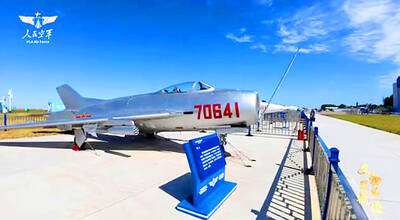
J-6 REMODEL: The converted drones are part of Beijing’s expanding mix of airpower weapons, including bombers with stand-off missiles and UAV swarms, the report said China has stationed obsolete supersonic fighters converted to attack drones at six air bases close to the Taiwan Strait, a report published this month by the Arlington, Virginia-based Mitchell Institute for Aerospace Studies said. Satellite imagery of the airfields from the institute’s “China Airpower Tracker” shows what appear to be lines of stubby, swept-winged aircraft matching the shape of J-6 fighters that first flew with the Chinese People’s Liberation Army (PLA) Air Force in the 1960s. Since their conversion to drones, the aircraft have been identified at five bases in China’s Fujian Province and one in Guangdong Province, the report said. J.

MORE POPULAR: Taiwan Pass sales increased by 59 percent during the first quarter compared with the same period last year, the Tourism Administration said The Tourism Administration yesterday said that it has streamlined the Taiwan Pass, with two versions available for purchase beginning today. The tourism agency has made the pass available to international tourists since 2024, allowing them to access the high-speed rail, Taiwan Railway Corp services, four MRT systems and four Taiwan Tourist Shuttles. Previously, five types of Taiwan Pass were available, but some tourists have said that the offerings were too complicated. The agency said only two types of Taiwan Pass would be available, starting from a three-day pass with the high-speed rail and a three-day pass with Taiwan Railway Corp. The former costs NT$2,800


 RSS
RSS