


The de-Sinicization policy that the Democratic Progressive Party (DPP)-led government carried out after the Chinese Nationalist Party (KMT) lost power in 2000 instilled a “wrong mode of thinking” in the younger generation that has turned them into people who spread distorted messages online or in newspapers that destabilize society, former vice president Lien Chan (連戰) said yesterday, before hurling a string of criticisms at independent Taipei mayoral candidate Ko Wen-je (柯文哲).
Lien made the remarks at the founding ceremony of a support group for his son, KMT Taipei mayoral candidate Sean Lien (連勝文), whose main opponent in the Nov. 29 election is Ko.
“Ever since the KMT lost power in 2000, [then-president Chen Shui-bian’s (陳水扁) administration] started implementing a series of ‘de-Sinicization’ policies, forcing children at the age of 11 or 12 to receive non-Sinicized education,” Lien Chan said in his speech.
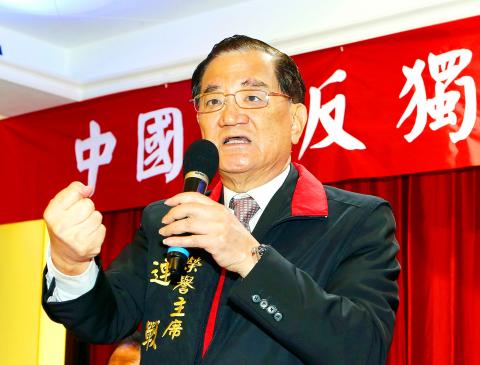
Photo: CNA
“We were saddened to see Chinese ethics, traditional morality and history being twisted to such an extent. As for those children who grew up being fed erroneous ideas, they are now in their 20s or 30s and may have different occupations, such as in the media or Internet sectors,” he added. “As you can all see, we [myself and my son] have fallen victim to distorted comments online and in the media that have unnerved our society.”
He then took aim at Ko, saying that as the third-generation descendant of a man who served the Japanese colonial government, Ko had received “imperialization” education and therefore dismisses everything pertaining to “Zhonghua culture” (中華文化), including its values and history.
“Also, the non-partisan alliance Ko has been pushing is simply an aggregation of Taiwanese independence advocates … who are in essence controlled and manipulated by the DPP,” Lien Chan said.
Lien Chan continued his attack on Ko at another event, a meeting held by the Alliance of Anti-Independence Chinese (中國人反獨護國大同盟).
“I absolutely cannot stand the thought of having someone whose grandfather changed his surname to a Japanese one during the Japanese colonial era as mayor of Taipei. He [Ko] calls himself a commoner and us the privileged few. What a bastard,” he said.
The former vice president then described Ko as a narrow-minded person filled with hatred, arrogance and discrimination, and he urged Taipei residents to use their ballots to hand the independent a “miserable” defeat.
Turning to the Sunflower movement that erupted in March against the government’s handling of the cross-strait service trade agreement, the 78-year-old said that while some of the nation’s youngsters are well-bred, socially connected and received a good education, others base their moral judgements solely on de-Sinicized textbooks, like those students who “caused troubles” during the movement.
“Because of the poorly revised textbooks, these students think they can publicly declare that they are not Chinese. They have the entire day to do nothing except surf the Internet and form something akin to an online army that propagates malicious rumors,” Lien Chan said. “It was all their [the Sunflower participants’] doing.”
Meanwhile, Ko expressed shock at Lien Chan’s remarks.
“He [Lien Chan] said I am the descendant of an official? My father was an elementary-school teacher,” Ko said, adding he was born in 1959 and “educated in the school system of the Republic of China, all the way from elementary school to university.”
DPP spokesperson Huang Di-ying (黃帝穎) said that the remarks about Sunflower protesters shows that the former vice president’s ideas go against the global tide of democracy, and are unlikely to benefit his son’s campaign.
The Taiwan Citizen Union’s youth volunteer group convener, Syu Wei-ting (許韋婷), dismissed Lien Chan’s comments about young people.
“People from older generations, not the younger ones, should be the ones taking responsibility for many of the problems [Lien Chan said are] causing ‘chaos’ in Taiwan right now,” Syu said.
“Young people’s use of media and Internet tools has only revealed existing problems, not created new ones,” Syu said. “In addition, when we were growing up, we still devoted some of our studies to the history and geography of China, learning a vast amount of information that is completely unrelated to our homeland.”
Additional reporting by Loa Iok-sin and Lii Wen

PREPAREDNESS: Given the difficulty of importing ammunition during wartime, the Ministry of National Defense said it would prioritize ‘coproduction’ partnerships A newly formed unit of the Marine Corps tasked with land-based security operations has recently replaced its aging, domestically produced rifles with more advanced, US-made M4A1 rifles, a source said yesterday. The unnamed source familiar with the matter said the First Security Battalion of the Marine Corps’ Air Defense and Base Guard Group has replaced its older T65K2 rifles, which have been in service since the late 1980s, with the newly received M4A1s. The source did not say exactly when the upgrade took place or how many M4A1s were issued to the battalion. The confirmation came after Chinese-language media reported
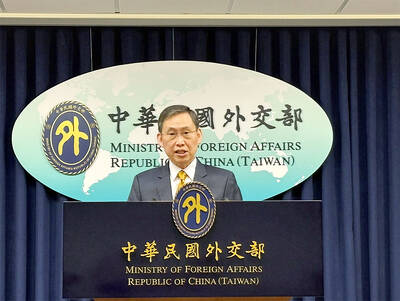
A Ministry of Foreign Affairs official yesterday said that a delegation that visited China for an APEC meeting did not receive any kind of treatment that downgraded Taiwan’s sovereignty. Department of International Organizations Director-General Jonathan Sun (孫儉元) said that he and a group of ministry officials visited Shenzhen, China, to attend the APEC Informal Senior Officials’ Meeting last month. The trip went “smoothly and safely” for all Taiwanese delegates, as the Chinese side arranged the trip in accordance with long-standing practices, Sun said at the ministry’s weekly briefing. The Taiwanese group did not encounter any political suppression, he said. Sun made the remarks when
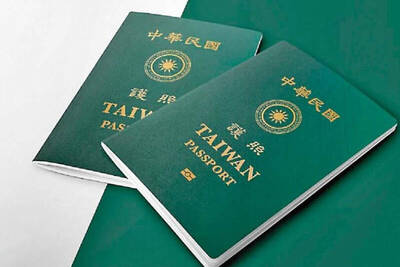
The Taiwanese passport ranked 33rd in a global listing of passports by convenience this month, rising three places from last month’s ranking, but matching its position in January last year. The Henley Passport Index, an international ranking of passports by the number of designations its holder can travel to without a visa, showed that the Taiwan passport enables holders to travel to 139 countries and territories without a visa. Singapore’s passport was ranked the most powerful with visa-free access to 192 destinations out of 227, according to the index published on Tuesday by UK-based migration investment consultancy firm Henley and Partners. Japan’s and
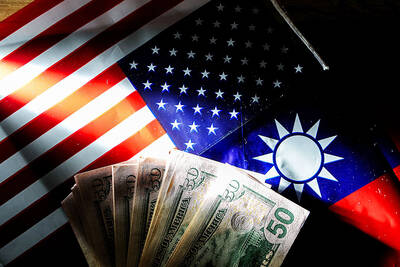
BROAD AGREEMENT: The two are nearing a trade deal to reduce Taiwan’s tariff to 15% and a commitment for TSMC to build five more fabs, a ‘New York Times’ report said Taiwan and the US have reached a broad consensus on a trade deal, the Executive Yuan’s Office of Trade Negotiations said yesterday, after a report said that Washington is set to reduce Taiwan’s tariff rate to 15 percent. The New York Times on Monday reported that the two nations are nearing a trade deal to reduce Taiwan’s tariff rate to 15 percent and commit Taiwan Semiconductor Manufacturing Co (TSMC, 台積電) to building at least five more facilities in the US. “The agreement, which has been under negotiation for months, is being legally scrubbed and could be announced this month,” the paper said,


 RSS
RSS