


Neither the American Institute in Taiwan (AIT) nor the Ministry of Foreign Affairs was able to confirm that US President Barack Obama recently expressed the US’ stance on Taiwanese independence to Chinese President Xi Jinping (習近平), but President Ma Ying-jeou (馬英九) said that Obama has mentioned to Xi that the US does not support the nation’s independence.
Ma told the Nikkei Asian Review in an interview on Thursday that: “President Barack Obama also mentioned during the summit that the US is happy to see relations between the two sides across the Taiwan Strait improve, whilst it does not support Taiwan’s independence,” according to the English excerpts provided by the Nikkei and a Chinese version published on the Presidential Office Web site.
Ma made the remarks in response to the Nikkei asking what he took from the just-concluded APEC summit, at which Obama and Xi held a bilateral meeting on Wednesday after a dinner on Tuesday night which lasted two hours.
It was not clear what Ma based his statement on, but the reported remarks by Obama were originally picked up by China’s Xinhua news agency on Wednesday, which was then cited in a report run by the Central News Agency (CNA) the same day.
The Xinhua English-language report said: “President Barack Obama reiterated on Wednesday that the United States does not support ‘independence’ of Taiwan and Tibet.”
It said Obama made the remarks when he met with Xi.
The part about the US’ stance on Tibet was attested to by the transcript of the joint news conference following the Obama-Xi meeting, available on the White House Web site, and included Obama saying: “I did note that we recognize Tibet as part of the People’s Republic of China. We are not in favor of independence.”
However, Obama saying that the US does not support Taiwanese independence was nowhere to be found in the transcript.
According to the transcript, Obama mentioned Taiwan only when he said: “I reaffirmed my strong commitment to our one-China policy based on the Three Joint Communiques and the Taiwan Relations Act. And we encourage further progress by both sides of the Taiwan Strait towards building ties, reducing tensions and promoting stability on the basis of dignity and respect.”
When asked by the Taipei Times yesterday, the AIT was unable to confirm if Obama actually told Xi that the US does not support Taiwanese independence.
AIT spokesperson Mark Zimmer said the mention of Taiwan in the transcript was Obama’s only comment on Taiwan that he was aware of.
As of press time, the ministry had not responded to the Taipei Times’ requests as to whether it had clarified with the US regarding Obama’s quote in the Xinhua report.
According to sources in diplomatic circles, Obama has never told China on the record that the US does not support Taiwanese independence, despite the position being part of the US’ Taiwan policy.
Although the US’ policy is to not support the nation’s independence, it would be something else for a US president to voice it, the sources said.
“Had Obama said that, it would mean that Beijing had pressed [Obama to do so] and got its desired result,” the sources said.
Richard Bush, former AIT chairman and director of the Center for East Asia Policy Studies at the Washington-based Brookings think tank, held a different view.
It is a matter of no consequence whether Obama told Xi that the US does not support Taiwanese independence, because it is the US’ long-held policy, Bush said.
A CNA report from Washington yesterday said that the US had briefed Taiwan on the Obama-Xi meeting according to past precedent.
Additional reporting by Nadia Tsao
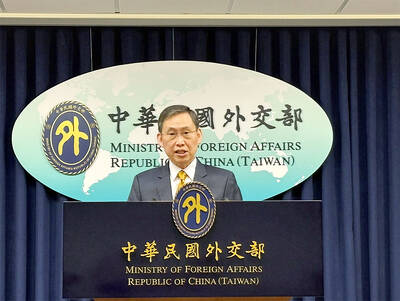
A Ministry of Foreign Affairs official yesterday said that a delegation that visited China for an APEC meeting did not receive any kind of treatment that downgraded Taiwan’s sovereignty. Department of International Organizations Director-General Jonathan Sun (孫儉元) said that he and a group of ministry officials visited Shenzhen, China, to attend the APEC Informal Senior Officials’ Meeting last month. The trip went “smoothly and safely” for all Taiwanese delegates, as the Chinese side arranged the trip in accordance with long-standing practices, Sun said at the ministry’s weekly briefing. The Taiwanese group did not encounter any political suppression, he said. Sun made the remarks when

PREPAREDNESS: Given the difficulty of importing ammunition during wartime, the Ministry of National Defense said it would prioritize ‘coproduction’ partnerships A newly formed unit of the Marine Corps tasked with land-based security operations has recently replaced its aging, domestically produced rifles with more advanced, US-made M4A1 rifles, a source said yesterday. The unnamed source familiar with the matter said the First Security Battalion of the Marine Corps’ Air Defense and Base Guard Group has replaced its older T65K2 rifles, which have been in service since the late 1980s, with the newly received M4A1s. The source did not say exactly when the upgrade took place or how many M4A1s were issued to the battalion. The confirmation came after Chinese-language media reported
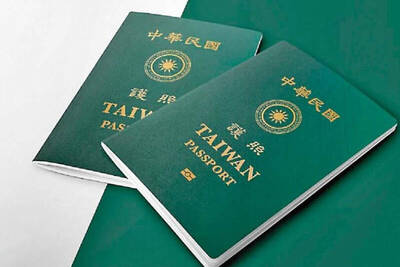
The Taiwanese passport ranked 33rd in a global listing of passports by convenience this month, rising three places from last month’s ranking, but matching its position in January last year. The Henley Passport Index, an international ranking of passports by the number of designations its holder can travel to without a visa, showed that the Taiwan passport enables holders to travel to 139 countries and territories without a visa. Singapore’s passport was ranked the most powerful with visa-free access to 192 destinations out of 227, according to the index published on Tuesday by UK-based migration investment consultancy firm Henley and Partners. Japan’s and
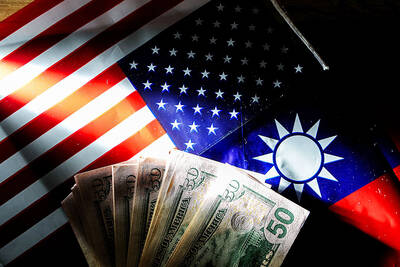
BROAD AGREEMENT: The two are nearing a trade deal to reduce Taiwan’s tariff to 15% and a commitment for TSMC to build five more fabs, a ‘New York Times’ report said Taiwan and the US have reached a broad consensus on a trade deal, the Executive Yuan’s Office of Trade Negotiations said yesterday, after a report said that Washington is set to reduce Taiwan’s tariff rate to 15 percent. The New York Times on Monday reported that the two nations are nearing a trade deal to reduce Taiwan’s tariff rate to 15 percent and commit Taiwan Semiconductor Manufacturing Co (TSMC, 台積電) to building at least five more facilities in the US. “The agreement, which has been under negotiation for months, is being legally scrubbed and could be announced this month,” the paper said,


 RSS
RSS