


Prosecutors yesterday announced the indictment of Hu Ching-pin (胡景彬), a judge at the Taiwan High Court’s Greater Taichung branch, on charges of corruption and owning property of unknown provenance.
The Special Investigation Division (SID) of the Supreme Court, which is in charge of the case, said Hu owns a property worth about NT$300 million (US$10 million) obtained through unidentified sources.
Prosecutors said it was impossible that Hu had earned the money to buy the property from his judge’s salary.
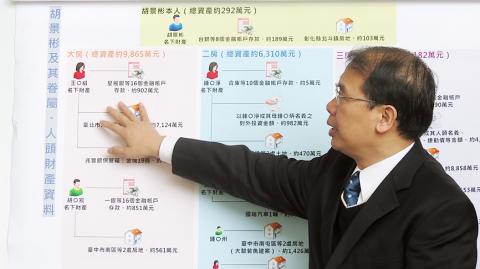
Photo: Yang Cheng-chun, Taipei Times
The SID said it received a complaint in 2010 alleging that Hu asked for a bribe of NT$4.5 million from a defendant in a case he was handling, and launched an investigation in November that year.
Hu was arrested in August this year and has been detained by the Taichung District Court ever since.
SID prosecutors seized NT$27 million in cash from his residence.
They also confiscated about 500 bottles of high-end liquor that prosecutors said could have been given to Hu as bribes.
Prosecutors said that as a High Court judge, Hu earns an annual salary of more than NT$2 million, but he has a wife, two mistresses and six children to support.
Prosecutors said Hu spent more than NT$500,000 per year to support his three families.
They also suspect that Hu’s wife and mistresses are guilty of money laundering.
They added that Hu’s wife owns several properties in Taipei, one of his mistresses owns more than NT$60 million in property and the second mistress has assets worth NT$170 million.
Prosecutors said one of Hu’s mistresses, Huang Yueh-chan (黃月蟾), was also indicted on suspicion of involvement in bribery.
Hu first faced criminal charges in 1996 for investing in suspicious banking practices.
After charges were filed against him, he was transferred from Taichung to Tainan and suspended from office for three years by the Judicial Yuan.
He was allowed to return to the bench in 2000 because his case was still under appeal.
He lost that appeal in 2001, but was retained in his post.
Lawyer Chen Po-wen (陳博文), who had served as a judge at the Taipei District Court, said the reason the government paid much higher wages to judges than to other types of public servants was to prevent them from succumbing to the temptation of accepting bribes and making unfair judgements.
“Judges are paid a minimum monthly salary of NT$150,000, which may not be enough to be rich, but is sufficient to be financially secure… However, some of the judges’ failure to apply the same moral standards has led to criticism that the judiciary is a place ‘where the rich live and the poor die,’” Chen said.
Kao Jung-chih (高榮志), a lawyer and office director for the Judicial Reform Foundation, accused the Judicial Yuan of being too lenient in Hu’s case.
“The Judicial Yuan only suspended Hu when it should have dismissed him, allowing a corrupt judge to do nothing while receiving half of his pay. The system is in desperate need of a complete overhaul,” Kao said.
Additional reporting by staff writer
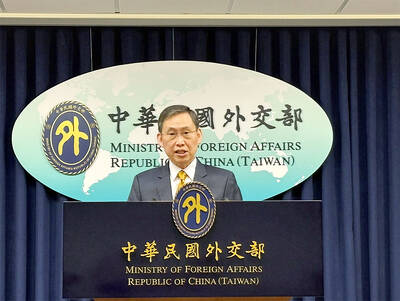
A Ministry of Foreign Affairs official yesterday said that a delegation that visited China for an APEC meeting did not receive any kind of treatment that downgraded Taiwan’s sovereignty. Department of International Organizations Director-General Jonathan Sun (孫儉元) said that he and a group of ministry officials visited Shenzhen, China, to attend the APEC Informal Senior Officials’ Meeting last month. The trip went “smoothly and safely” for all Taiwanese delegates, as the Chinese side arranged the trip in accordance with long-standing practices, Sun said at the ministry’s weekly briefing. The Taiwanese group did not encounter any political suppression, he said. Sun made the remarks when
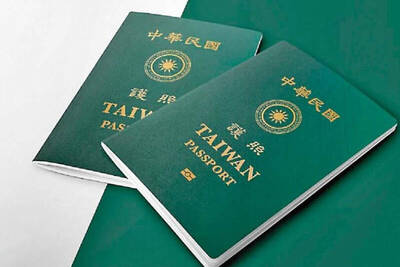
The Taiwanese passport ranked 33rd in a global listing of passports by convenience this month, rising three places from last month’s ranking, but matching its position in January last year. The Henley Passport Index, an international ranking of passports by the number of designations its holder can travel to without a visa, showed that the Taiwan passport enables holders to travel to 139 countries and territories without a visa. Singapore’s passport was ranked the most powerful with visa-free access to 192 destinations out of 227, according to the index published on Tuesday by UK-based migration investment consultancy firm Henley and Partners. Japan’s and
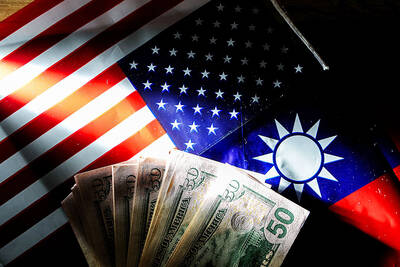
BROAD AGREEMENT: The two are nearing a trade deal to reduce Taiwan’s tariff to 15% and a commitment for TSMC to build five more fabs, a ‘New York Times’ report said Taiwan and the US have reached a broad consensus on a trade deal, the Executive Yuan’s Office of Trade Negotiations said yesterday, after a report said that Washington is set to reduce Taiwan’s tariff rate to 15 percent. The New York Times on Monday reported that the two nations are nearing a trade deal to reduce Taiwan’s tariff rate to 15 percent and commit Taiwan Semiconductor Manufacturing Co (TSMC, 台積電) to building at least five more facilities in the US. “The agreement, which has been under negotiation for months, is being legally scrubbed and could be announced this month,” the paper said,
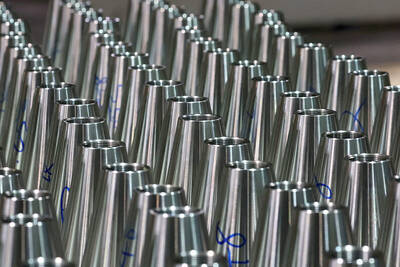
MIXED SOURCING: While Taiwan is expanding domestic production, it also sources munitions overseas, as some, like M855 rounds, are cheaper than locally made ones Taiwan and the US plan to jointly produce 155mm artillery shells, as the munition is in high demand due to the Ukraine-Russia war and should be useful in Taiwan’s self-defense, Armaments Bureau Director-General Lieutenant General Lin Wen-hsiang (林文祥) told lawmakers in Taipei yesterday. Lin was responding to questions about Taiwan’s partnership with allies in producing munitions at a meeting of the legislature’s Foreign Affairs and National Defense Committee. Given the intense demand for 155mm artillery shells in Ukraine’s defense against the Russian invasion, and in light of Taiwan’s own defensive needs, Taipei and Washington plan to jointly produce 155mm shells, said Lin,


 RSS
RSS