


The Taipei District Court sentenced Justin Lee (李宗瑞) to 18-and-a-half years in prison yesterday for sexually assaulting a number of women. He also received a three-year-and-10-month sentence for filming women without their consent and must compensate 12 victims a total of NT$14,250,000 (US$478,000).
The Taipei District Prosecutors’ Office charged Lee with sexually assaulting 28 women and filming the acts, and asked for a combined sentence of 30 years in prison for all the offenses.
However, the court ruled that Lee only raped nine women and filmed sex acts with 15 women without their consent.
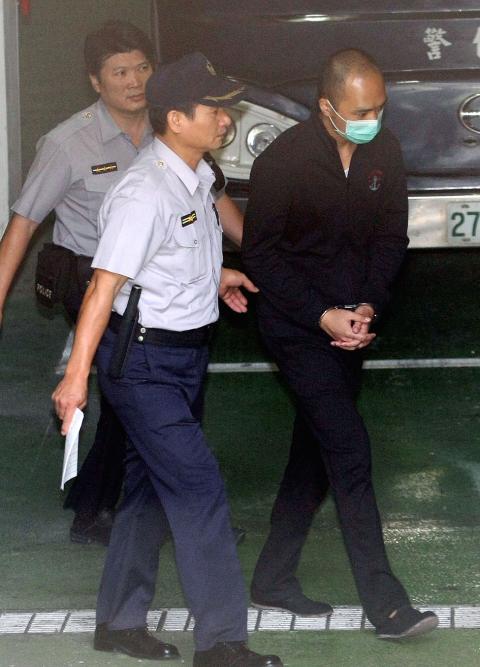
Photo: CNA
Lee, who has been detained since August last year, appeared in court for the ruling. Lee’s attorney Chou Chih-hung (鄒志鴻) said Lee was unhappy with the verdict and would appeal it.
The district prosecutors’ office also said it would appeal the ruling with the Taiwan High Court.
An attorney for one of the women, Chang Li-yeh (張立業), quoted his client as saying that the sentence was too lenient.
“Lee is loathsome and he should be given a heavier sentence,” Chang cited his client as saying, adding that she has asked him to appeal the verdict.
Taipei prosecutors had said that Lee was suspected of drugging a number of women in several luxury nightclubs in Taipei since August 2009, taking them to his home and raping them while they were unconscious.
Lee also allegedly took home several women after getting them drunk at nightclubs and raped them, prosecutors added.
The district court said there was not sufficient evidence to prove that these women were drugged by Lee.
The court therefore referred to Article 255 of the Criminal Code, which states that a person commits rape when taking advantage of someone’s insanity or similar condition which makes resistance impossible, instead of charging Lee with aggravated forcible rape according to Article 221.
The three-year-and-10-months sentence is for invasion of privacy, while a 40-day sentence for threatening a victim can be commuted to a fine of NT$2.87 million.
Two victims reached settlements with Lee’s attorney outside of court and did not testify in the hearing, the court added.
The 28-year-old Lee has insisted during the hearing that the women had consented to sex and that he had not made any secret films.
Prosecutors have videos seized from Lee’s computers, but some of the videos and photographs — believed to be stills taken from the videos — were posted on the Internet shortly after Lee went into hiding last year.
Lee is the son of former Yuanta Financial Holding Co board member Lee Yueh-tsang (李岳蒼). He was well-known in Taipei for attending fashion parties and nightclubs, and several of his alleged victims were celebrities and models.
An investigation into Lee began after twin sisters accused him in July 2011 of drugging and raping the elder sister, and filming the entire process.
Additional reporting by staff writer

PROVOCATIVE: Chinese Deputy Ambassador to the UN Sun Lei accused Japan of sending military vessels to deliberately provoke tensions in the Taiwan Strait China denounced remarks by Japan and the EU about the South China Sea at a UN Security Council meeting on Monday, and accused Tokyo of provocative behavior in the Taiwan Strait and planning military expansion. Ayano Kunimitsu, a Japanese vice foreign minister, told the Council meeting on maritime security that Tokyo was seriously concerned about the situation in the East China and South China seas, and reiterated Japan’s opposition to any attempt to change the “status quo” by force, and obstruction of freedom of navigation and overflight. Stavros Lambrinidis, head of the EU delegation to the UN, also highlighted South China Sea

SILENCING CRITICS: In addition to blocking Taiwan, China aimed to prevent rights activists from speaking out against authoritarian states, a Cabinet department said The Ministry of Foreign Affairs (MOFA) yesterday condemned transnational repression by Beijing after RightsCon, a major digital human rights conference scheduled to be held in Zambia this week, was abruptly canceled due to Chinese pressure over Taiwanese participation. This year’s RightsCon, the world’s largest conference discussing issues “at the intersection of human rights and technology,” was scheduled to take place from tomorrow to Friday in Lusaka, and expected to draw 2,600 in-person attendees from 150 countries, along with 1,100 online participants. However, organizers were forced to cancel the event due to behind-the-scenes pressure from China, the ministry said, expressing its “strongest condemnation”
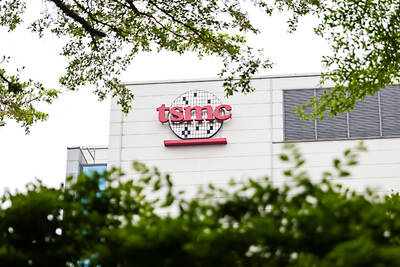
Taiwan Semiconductor Manufacturing Co (TSMC, 台積電), the world’s largest contract chipmaker, said it expects its 2-nanometer (2nm) chip capacity to grow at a compound annual rate of 70 percent from this year to 2028. The projection comes as five fabs begin volume production of 2-nanometer chips this year — two in Hsinchu and three in Kaohsiung — TSMC senior vice president and deputy cochief operating officer Cliff Hou (侯永清) said at the company’s annual technology symposium in Silicon Valley, California, last week. Output in the first year of 2-nanometer production, which began in the fourth quarter of last year, is expected to
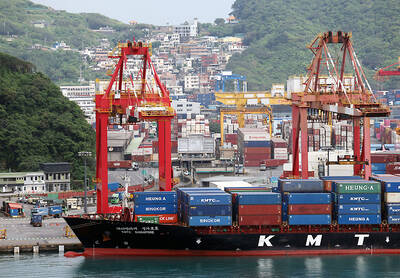
Taiwan’s economy grew far faster than expected in the first quarter, as booming demand for artificial intelligence (AI) applications drove a surge in exports, spilling over into investment and consumption, the Directorate-General of Budget, Accounting and Statistics (DGBAS) said yesterday. GDP growth was 13.69 percent year-on-year during the January-to-March period, beating the DGBAS’ February forecast by 2.23 percentage points and marking the most robust growth in nearly four decades, DGBAS senior official Chiang Hsin-yi (江心怡) told a news conference in Taipei. The result was powered by exports, which remain the backbone of Taiwan’s economy, Chiang said. Outbound shipments jumped 51.12 percent year-on-year to


 RSS
RSS