


Japan for the first time yesterday officially marked the 61st anniversary of the day it regained sovereignty following its World War II defeat, as Japanese Prime Minister Shinzo Abe steps up his nationalist campaign.
After taking over as prime minister in December last year, Abe focused mainly on improving Japan’s slumping economy.
However, he recently has shifted his focus to pursuing his political agenda, and the marking of the anniversary is seen as a step to drum up support for revising Japan’s US-inspired pacifist constitution. Abe’s Liberal Democratic Party has for years denounced the current constitution as one imposed by the US, which occupied Japan from the end of World War II until 1952.
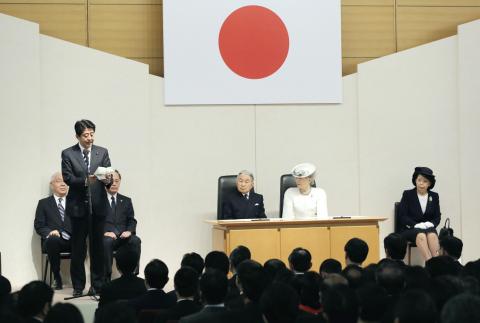
Photo: Reuters
Last month, the Cabinet approved a plan by the ruling party to designate April 28 as Japan’s “sovereignty recovery” day, and yesterday’s ceremony was the first government-sponsored event to mark the day.
Yesterday’s proceedings were filled with nationalistic rituals considered symbols of the imperial worship that drove Japan to its 20th century aggression in Asia.
The ceremony started with the singing of the controversial national anthem Kimigayo (“His Majesty’s Reign”) and ended with cheers for Japanese Emperor Akihito.
There also was a huge rising sun decoration on the center stage.
Abe urged Japanese to mark the day in their hearts, pledging to make Japan a stronger country with national pride.
He said that 61 years ago, Japanese had high hopes and commitment to make a better Japan, adding that people today must live up to the expectations.
“We are obliged to make Japan strong and tough so our country becomes one that the rest of the world can count on,” Abe said.
He said he was seeking to make Japan a better and more “beautiful nation,” a phrase critics say has a nationalistic undertone.
The ceremony was the latest in a series of events and remarks that have invited harsh reactions from neighboring countries that suffered from Japan’s wartime aggression.
Visits by several government ministers and nearly 170 lawmakers to Tokyo’s Yasukuni Shrine this month enraged China and South Korea. Japanese political leaders’ visits to the shrine — which memorializes 2.3 million war dead, including 14 wartime leaders convicted of war crimes — have been a point of contention with those countries.
Abe has also campaigned for recognizing Japan’s Self-Defense Forces as a full-fledged national military, for revising Japan’s past apologies for atrocities committed by its Imperial Army before and during World War II and for upgrading the emperor’s status to head of state, as outlined in the Liberal Democratic Party platform.

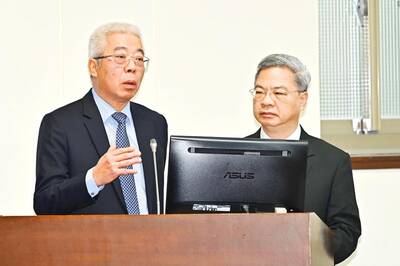
Taiwan has arranged for about 8 million barrels of crude oil, or about one-third of its monthly needs, to be shipped from the Red Sea this month to bypass the Strait of Hormuz and ease domestic supply pressures, CPC Corp, Taiwan (CPC, 台灣中油) said yesterday. The state-run oil company has worked with Middle Eastern suppliers to secure routes other than the Strait of Hormuz, through which about 20 percent of the world’s oil and liquefied natural gas typically passes, CPC chairman Fang Jeng-zen (方振仁) said at a meeting of the legislature’s Economics Committee in Taipei. Suppliers in Saudi Arabia have indicated they
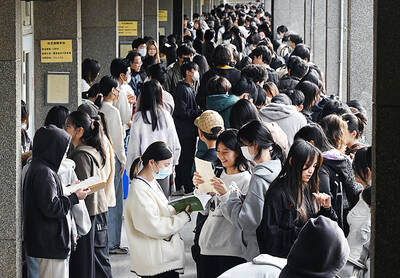
A global survey showed that 60 percent of Taiwanese had attained higher education, second only to Canada, the Ministry of the Interior said. Taiwan easily surpassed the global average of 43 percent and ranked ahead of major economies, including Japan, South Korea and the US, data from the Organisation for Economic Co-operation and Development (OECD) for 2024 showed. Taiwan has a high literacy rate, data released by the ministry showed. As of the end of last year, Taiwan had 20.617 million people aged 15 or older, accounting for 88.5 percent of the total population, with a literacy rate of 99.4 percent, the data
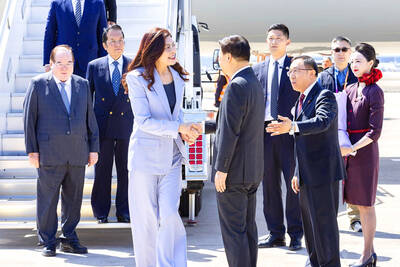
CCP ‘PAWN’? Beijing could use the KMT chairwoman’s visit to signal to the world that many people in Taiwan support the ‘one China’ principle, an academic said Chinese Nationalist Party (KMT) Chairwoman Cheng Li-wun (鄭麗文) yesterday arrived in China for a “peace” mission and potential meeting with Chinese President Xi Jinping (習近平), while a Taiwanese minister detailed the number of Chinese warships currently deployed around the nation. Cheng is visiting at a time of increased Chinese military pressure on Taiwan, as the opposition-dominated Legislative Yuan stalls a government plan for US$40 billion in extra defense spending. Speaking to reporters before going to the airport, Cheng said she was going on a “historic journey for peace,” but added that some people felt uneasy about her trip. “If you truly love Taiwan,

NEW LOW: The council in 2024 based predictions on a pessimistic estimate for the nation’s total fertility rate of 0.84, but last year that rate was 0.69, 17 percent lower An expected National Development Council (NDC) report expects the nation’s population to drop below 12 million by 2065, with the old-age dependency ratio to top 100 percent sooner than 2070, sources said yesterday. The council is slated to release its latest population projections in August, using an ultra-low fertility model, the sources said. The previous report projected that Taiwan’s population would fall to 14.37 million by 2070, but based on a new estimate of the total fertility rate (TFR) — the average number of children born to a woman over her lifetime — the population is expected to reach 12 million by


 RSS
RSS