


Taipei has reached an agreement with Washington which earns Taiwanese diplomats stationed in the US different degrees of immunities from criminal and civil jurisdiction, and from obligation to provide evidence as witnesses when they act outside the scope of their official duties, a Ministry of Foreign Affairs official said yesterday.
This brings the level of legal protection for Taiwanese diplomats to an extent “very similar to” that the US grants to diplomats from countries with which Washington has diplomatic relations, said Bruce Linghu (令狐榮達), director-general of the ministry’s Department of North American Affairs.
The agreement was signed on Monday in Washington by Representative to the US King Pu-tsung (金溥聰) and American Institute in Taiwan (AIT) Managing Director Barbara Schrage and it took effect immediately, the ministry said.
Taiwan and the US signed an agreement on privileges, exemptions and immunities on Oct. 2, 1980, to cover personnel in the Coordination Council for North American Affairs and AIT, which were established to deal with bilateral matters after the US changed its diplomatic recognition from Taipei to Beijing in 1979.
The new deal is not a revision of the 1980 accord, but a new one that incorporates “clear and concise stipulations” that accentuated the necessity to treat diplomats with due respect and courtesy, and the procedures by which diplomats are entitled to more protections and privileges, the ministry said.
Citing administrative procedures on both sides, the ministry said that the agreement will be unveiled only after the procedures are complete, in about two weeks’ time.
Linghu said the signing of the agreement held “significant meaning” for both countries to further develop bilateral relations because it was “a better safeguard” to protect diplomatic personnel in each other’s country.
“This enables them to exert their functions more effectively and thus to facilitate bilateral relations,” Linghu said at a regular news briefing.
Under the 1980 agreement, Taiwanese diplomats were only immune from legal suits and processes when the activities that they had allegedly committed were acts performed in the exercise of their authorized functions, or known as “functional immunity,” as opposed to the traditional rule of “absolute immunity” for diplomats as codified in the Vienna Convention on Diplomatic Relations.
Taiwan initiated a review of that pact in January last year after Jacqueline Liu (劉姍姍), then the director-general of the Taipei Economic and Cultural Office (TECO) in Kansas City, Missouri, pleaded guilty to charges of violating a US federal labor law by mistreating two Filipina housekeepers.
Liu’s case demonstrated that Taipei and Washington had different interpretations of immunity coverage.
Liu was arrested by FBI agents in November 2011 outside the ladies’ room in the office building where her office was located and detained for two months before she pleaded guilty as part of a plea agreement that helped secure her release.
The ministry had protested Liu’s arrest, calling it a “violation” of the 1980 agreement, and demanded her immediate and unconditional release. It said Liu should receive immunity under the 1980 pact. However, the US said Liu was not eligible for immunity for “actions not performed within the scope of [her] authorized functions.”
A ministry official, who wished to remain anonymous, yesterday disclosed some of the contents of the new agreement, under which diplomats at the Taipei Economic and Cultural Representative Office (TECRO) in Washington are accorded more privileges than diplomats in TECOs located in 12 states.
The arrangement was in line with international practices that the diplomatic privileges of ambassadors are different from those of consular officials, the ministry official said.
Taiwanese diplomats and their families in Washington will be entitled to “functional immunities” and “immunities in general,” meaning that they will have “personal inviolability,” immunity from criminal and civil jurisdiction, and their residences and property will be inviolable, the official said.
For TECO directors-general and deputy directors-general, in addition to the immunities stipulated under the 1980 agreement when they perform their duties, they will now have “a certain degree of immunity when they act beyond the scope of their authorities,” the official said.
They will be immune from arrest or detention unless they have allegedly committed crimes for which a sentence of one year or longer may be imposed, another source said.
TECO personnel below the rank of deputy director-general have immunity only when they are involved in acts relating to official duties, but a new provision stipulates that they must be treated with due respect and courtesy, the ministry official said.
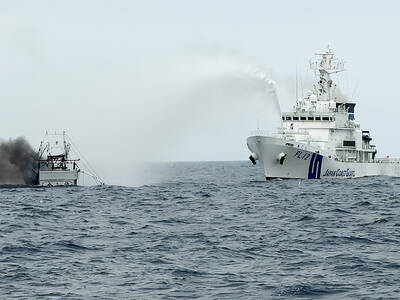
CREDIT-GRABBER: China said its coast guard rescued the crew of a fishing vessel that caught fire, who were actually rescued by a nearby Taiwanese boat and the CGA Maritime search and rescue operations do not have borders, and China should not use a shipwreck to infringe upon Taiwanese sovereignty, the Coast Guard Administration (CGA) said yesterday. The coast guard made the statement in response to the China Coast Guard (CCG) saying it saved a Taiwanese fishing boat. The Chuan Yu No. 6 (全漁6號), a fishing vessel registered in Keelung, on Thursday caught fire and sank in waters northeast of Diaoyutai Islands (釣魚台). The vessel left Keelung’s Badouzih Fishing Harbor (八斗子漁港) at 3:35pm on Sunday last week, with seven people on board — a 62-year-old Taiwanese captain surnamed Chang (張) and six

LEVERAGE: China did not ‘need to fire a shot’ to deny Taiwan airspace over Africa when it owns ‘half the continent’s debt,’ a US official said, calling it economic warfare The EU has raised concerns about overflight rights following the delay of President William Lai’s (賴清德) planned state visit to the Kingdom of Eswatini after three African nations denied overflight clearance for his charter at the last minute. Taiwanese allies Paraguay and Saint Kitts and Nevis, as well as several US lawmakers and the Inter-Parliamentary Alliance on China (IPAC) condemned China for allegedly pressuring the countries. Lai was scheduled to fly directly to Taiwan’s only African ally from yesterday to Sunday to celebrate the 40th anniversary of King Mswati III’s accession and his 58th birthday, but Seychelles, Mauritius and Madagascar suddenly revoked
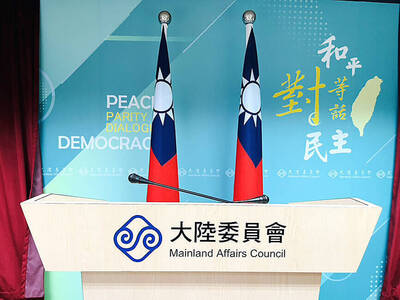
RISKY BUSINESS: The ‘incentives’ include initiatives that get suspended for no reason, creating uncertainty and resulting in considerable losses for Taiwanese, the MAC said China’s “incentives” failed to sway sentiment in Taiwan, as willingness to work in China hit a record low of 1.6 percent, a Ministry of Labor survey showed. The Directorate-General of Budget, Accounting and Statistics (DGBAS) also reported that the number of Taiwanese workers in China has nearly halved from a peak of 430,000 in 2012 to an estimated 231,000 in 2024. That marked a new low in the proportion of Taiwanese going abroad to work. The ministry’s annual survey on “Labor Life and Employment Status” includes questions respondents’ willingness to seek employment overseas. Willingness to work in China has steadily declined from
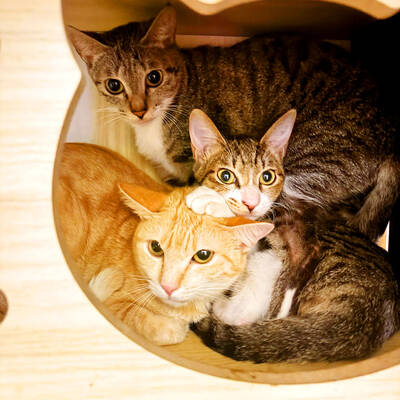
The number of pet cats in Taiwan surpassed that of pet dogs for the first time last year, reaching 1,742,033, a 32.8 percent increase from 2023, the Ministry of Agriculture said yesterday, citing a survey. By contrast, the number of pet dogs declined slightly by 1.2 percent over the same period to 1,462,528, the ministry said. Despite the shift, households with dogs still slightly outnumber those with cats by 1.2 percent. However, while the number of households with multiple dogs has remained relatively stable, households keeping more than two cats have increased, contributing to the overall rise in the feline population. The trend


 RSS
RSS