


The Cabinet yesterday approved a draft of the political party act that Democratic Progressive Party (DPP) lawmakers said “contained no effective mechanism” to deal with the ill-gotten assets of the Chinese Nationalist Party (KMT) and thus would fail to create a level playing field for all political parties.
Legislation that regulates party-owned and operated business enterprises is regarded by many as essential to address the huge amount of assets the KMT amassed when it fled China and took control of Taiwan after Japan’s defeat in World War II, which many point to as the root cause of unfair competition between political parties in the country.
The proposal advocated by the Cabinet will not achieve the desired effect, DPP Legislator Lee Chun-yi (李俊俋) said when asked to comment on the draft articles.
According to the draft act, political parties must not operate or invest in profit-making enterprises; and must transfer ownership of or sell off shares in such enterprises within two years of the legislation being enacted. If they failed to sell off the assets at the end of the two-year period, they would then have to place them into a trust within six months.
President Ma Ying-jeou (馬英九) pledged to divest the KMT of its assets when he took over the party helm in 2005. However, the Cabinet’s approval of the act yesterday was the first time since 2008 that the Ma administration has proposed a bill to deal with the assets.
Compared with a previous version of the political party act proposed by the KMT caucus in the Seventh Legislature during Ma’s first term, the most recent draft shows that the government has become more “lenient” on the issue of corruption, DPP Legislator Chen Chi-mai (陳其邁) said.
The Cabinet’s new version would allow political parties to continue to hold assets because it granted them the option of putting the assets in trust, while the previous version required political parties to dispose of all their assets in two years, Chen said.
Opening the door for the KMT to place party assets in trust was like allowing it to “take its money from its left pocket and put it in its right pocket,” he added.
Lee said the KMT has concealed from the public information about its assets that it said have been placed in trust because the enterprises are unlisted public companies.
“As a result, we have no way of knowing if the KMT has put all of its assets into the trust as it claims,” he said.
“Based on the data reported to the Ministry of the Interior that the KMT made NT$2.9 billion [US$98.9 million] through stock dividends in 2010 and NT$1.5 billion last year, we know the claims are false,” Lee said.
Introducing the clause that allowed the option of placing party assets in a trust was debated at the Cabinet meeting.
The Cabinet removed the draft act from the agenda for its meeting on Thursday last week at the last minute after it failed to settle differences among officials.
National Science Council Minister Cyrus Chu (朱敬一) opposed the clause because he said it should be mandatory for political parties to dispose of their assets, a Cabinet official who asked to remain anonymous said.
However, Minister Without Portfolio Luo Ying-shay (羅瑩雪) said that an act that required political parties to dispose of assets could be unconstitutional.
The Cabinet’s version, like the previous KMT caucus’ proposal, made no mention of how to handle the assets the KMT acquired from the Japanese colonial government, private businesses and individuals throughout the 1940s and 1950s.
A draft of the act proposed by the DPP would designate all assets — except political donations, government-offered grants and derivative interests — possessed by political parties before the lifting of the martial law in 1987 ill-gotten assets that could not be sold. If the assets had already been sold, parties would be required to return the profits to the buyer or to a government fund.
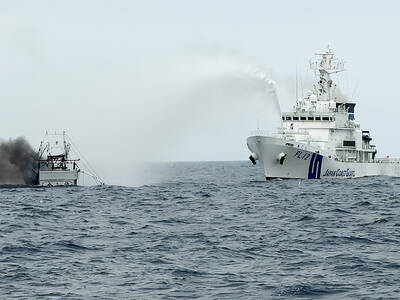
CREDIT-GRABBER: China said its coast guard rescued the crew of a fishing vessel that caught fire, who were actually rescued by a nearby Taiwanese boat and the CGA Maritime search and rescue operations do not have borders, and China should not use a shipwreck to infringe upon Taiwanese sovereignty, the Coast Guard Administration (CGA) said yesterday. The coast guard made the statement in response to the China Coast Guard (CCG) saying it saved a Taiwanese fishing boat. The Chuan Yu No. 6 (全漁6號), a fishing vessel registered in Keelung, on Thursday caught fire and sank in waters northeast of Diaoyutai Islands (釣魚台). The vessel left Keelung’s Badouzih Fishing Harbor (八斗子漁港) at 3:35pm on Sunday last week, with seven people on board — a 62-year-old Taiwanese captain surnamed Chang (張) and six

The Legislative Yuan’s Finance Committee yesterday approved proposed amendments to the Amusement Tax Act (娛樂稅法) that would abolish taxes on films, cultural activities and competitive sporting events, retaining the fee only for dance halls and golf courses. The proposed changes would set the maximum tax rate for dance halls and golf courses at 50 and 20 percent respectively, with local governments authorized to suspend the levies. Article 2 of the act says that “amusement tax shall be levied on tickets sold or fees charged by amusement places, facilities or activities” in six categories: “Cinema; professional singing, story-telling, dancing, circus, magic show, acrobatics

Tainan, Taipei and New Taipei City recorded the highest fines nationwide for illegal accommodations in the first quarter of this year, with fines issued in the three cities each exceeding NT$7 million (US$220,639), Tourism Administration data showed. Among them, Taipei had the highest number of illegal short-term rental units, with 410. There were 3,280 legally registered hotels nationwide in the first quarter, down by 14 properties, or 0.43 percent, from a year earlier, likely indicating operators exiting the market, the agency said. However, the number of unregistered properties rose to 1,174, including 314 illegal hotels and 860 illegal short-term rental
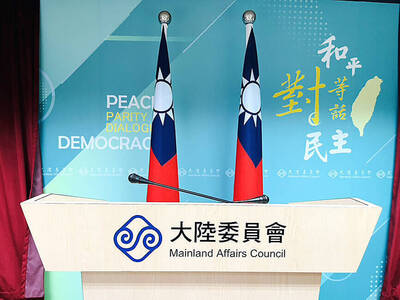
RISKY BUSINESS: The ‘incentives’ include initiatives that get suspended for no reason, creating uncertainty and resulting in considerable losses for Taiwanese, the MAC said China’s “incentives” failed to sway sentiment in Taiwan, as willingness to work in China hit a record low of 1.6 percent, a Ministry of Labor survey showed. The Directorate-General of Budget, Accounting and Statistics (DGBAS) also reported that the number of Taiwanese workers in China has nearly halved from a peak of 430,000 in 2012 to an estimated 231,000 in 2024. That marked a new low in the proportion of Taiwanese going abroad to work. The ministry’s annual survey on “Labor Life and Employment Status” includes questions respondents’ willingness to seek employment overseas. Willingness to work in China has steadily declined from


 RSS
RSS