


A senior Chinese official demanded yesterday that foreign embassies stop issuing air-pollution readings, saying it was against the law and diplomatic conventions, in pointed criticism of a closely watched US embassy index.
The level of air pollution in China’s heaving capital varies, depending on the wind, but a cocktail of smokestack emissions, vehicle exhaust, dust and aerosols often blankets the city in a pungent, beige shroud for days on end.
Many residents dismiss the common official readings of “slight” pollution in Beijing as grossly understated.
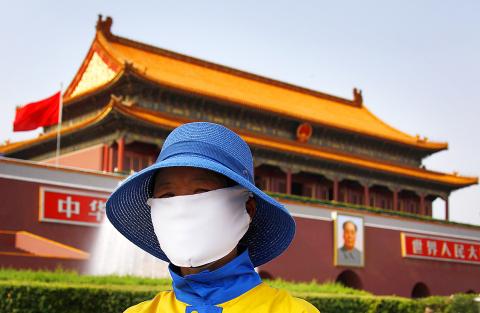
Photo: Reuters
The US embassy has installed a monitoring point on its roof that releases hourly air-quality data via a widely followed Twitter feed. The US consulate in Shanghai provides a similar service.
While China tightened air pollution monitoring standards in January, the official reading and the US embassy reading can often be far apart.
Chinese experts have criticized the single US embassy monitoring point as “unscientific.”
Chinese Deputy Minister of the Environment Wu Xiaoqing (吳曉青) went a step further, saying such readings were illegal and should stop, though he did not directly name the US.
“According to the Vienna Convention on Diplomatic Relations ... foreign diplomats are required to respect and follow local laws and cannot interfere in internal affairs,” Wu told a news conference.
“China’s air quality monitoring and information release involve the public interest and are up to the government. Foreign consulates in China taking it on themselves to monitor air quality and release the information online not only goes against the spirit of the Vienna Convention ... it also contravenes relevant environmental protection rules,” he said.
The US embassy acknowledges on its Web site that its equipment cannot be relied upon for general monitoring, saying “citywide analysis cannot be done ... on data from a lone machine.”
Embassy officials were not immediately available for comment on Wu’s criticism.
Wu said China’s air quality standards were drawn up in consultation with the WHO and “accorded with the present situation in our country.”
Despite his criticism, Wu acknowledged that China’s air quality and overall environmental situation remained precarious, with more than one tenth of monitored rivers rated severely polluted, for example.
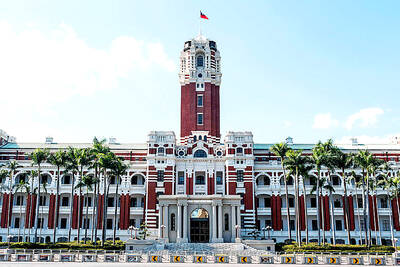
SECURITY: Taipei presses the US for arms supplies, saying the arms sales are not only a reflection of the US security commitment to Taiwan but also serve as a mutual deterrent against regional threats Taiwan is committed to preserving the cross-strait “status quo” and contributing to regional peace and stability, the Presidential Office said yesterday. “It is an undeniable fact that the Republic of China is a sovereign and independent democratic nation,” Presidential Office spokeswoman Karen Kuo (郭雅慧) reiterated, adding that Beijing has no right to claim sovereignty over Taiwan. The statements came after US President Donald Trump warned against Taiwanese independence. Trump wrapped up a state visit to Beijing on Friday, during which Chinese President Xi Jinping (習近平) had pressed him not to support Taiwan. Taiwan depends heavily on US security backing to deter China from carrying
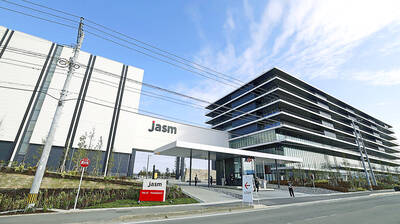
The subsidiary of Taiwan Semiconductor Manufacturing Co (TSMC, 台積電) in Kumamoto, Japan, turned a profit in the first quarter of this year, marking the first time the first fab of the unit has become profitable since mass production started at the end of 2024. According to the contract chipmaker’s financial statement released on Friday, Japan Advanced Semiconductor Manufacturing Inc (JASM), a joint venture running the fab in Kumamoto, posted NT$951 million (US$30.19 million) in profit in the January-to-March period, compared with a loss of NT$1.39 billion in the previous quarter, and a loss of NT$3.25 billion in the first quarter of
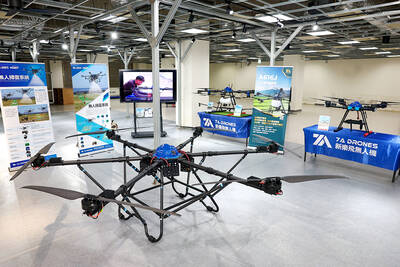
DRONE CENTRAL: Taiwan aims to become Asia’s democratic hub for drones, with most exports focused on high-quality military-grade models, an official said Taiwan’s drone industry is expected to expand significantly by 2030, producing 100,000 units per month and exporting half of them, the Ministry of Economic Affairs said yesterday. Current drone production capacity is about 15,000 units per month, but the industry can quickly scale up as demand increases, Industrial Development Administration Director-General Chiou Chyou-huey (邱求慧) told a news conference in Taipei. Taiwan’s drone output grew 2.5-fold last year to NT$12.9 billion (US$408.3 million) under a government program to develop the uncrewed vehicle sector, he said. The Executive Yuan in October last year approved plans to invest NT$44.2 billion into domestic production of uncrewed aerial
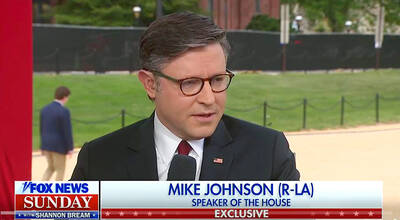
RESOLUTE BACKING: Two Republican senators are planning to introduce legislation that would impose immediate sanctions on China if it attempts to invade Taiwan US House of Representatives Speaker Mike Johnson on Sunday reaffirmed US congressional support for Taiwan, saying the US and “all freedom-loving people” have a stake in preventing China from seizing Taiwan by force. Johnson made the remarks in an interview with Fox News Sunday on US President Donald Trump’s summit with Chinese President Xi Jinping (習近平) last week. In an interview that aired on Friday on Fox News, just as Trump wrapped up a high-stakes visit to China, he said he has yet to green-light a new US$14 billion arms package to Taiwan and that it “depends on China.” “It’s a very good


 RSS
RSS