


Two surveys of commodity prices yesterday revealed that the prices of four kinds of household goods have increased slightly following the government’s announcement in April of increases in fuel and electricity rates.
Consumers’ Foundation chairwoman Joann Su (蘇錦霞) said her group’s collaboration with the Executive Yuan’s Consumer Protection Commission in conducting the surveys aimed to examine whether prices of household goods have risen because of the fuel price hike on April 2.
Among the 10 kinds of household goods surveyed, the average prices of washing powder, shower gel, toothpaste and tissues sold at major hypermarkets and supermarkets were found to have increased slightly between March and last month.
According to survey results from the commission and foundation respectively, the average prices of washing powder increased by 5.4 percent and 2.8 percent; those for shower gel rose 3.5 percent and 5.2 percent; toothpaste by 2.9 percent and 2.5 percent; and tissues by 2.5 percent and 6.5 percent.
Commission Director-General Liu Ching-fang (劉清芳) said the long-term price trend of the 10 kinds of household goods was still stable and reasonable and the increases could not be directly attributed to the rise in fuel and electricity prices.
However, Liu said there were three cases that aroused suspicion in the surveys.
The first suspect case was the sudden increase in the price of a brand of tissues sold at a hypermarket from NT$149 per pack in March to NT$176 per pack last month, which will be reported to the Fair Trade Commission for further examination.
The second case was a brand of eggs that remained at the same price of NT$57 a box for 16 months, with only one promotional price of NT$54 in June last year.
Liu said it was suspected that the lengthy sales promotion was used to deceive consumers about its original price.
“It’s like a store attracting consumers who seek a good bargain by claiming it is having a clearance sale, but the store is still there after two years, and the promotional price is actually the original price,” Su said.
The third case concerned whether the slightly reduced price of milk powder (an average price drop of between 0.1 percent and 1.8 percent between March and last month) was in line with the reduction on import duties on milk powder from 5 percent to 2.5 percent, Su said.
Commission Deputy Director-General Wu Cheng-hsueh (吳政學) said that although the survey results of the commission and the foundation showed similar patterns of roughly stable prices, consumers should compare prices of the same commodity between brands when shopping instead of always relying on the same brands, to save more money.
The commission has a toll-free line, 0800-007-007 for the public to report price gouging, while the Consumers’ Foundation welcomes such reports on its Facebook page, www.facebook.com/price0601.
Additional reporting by CNA
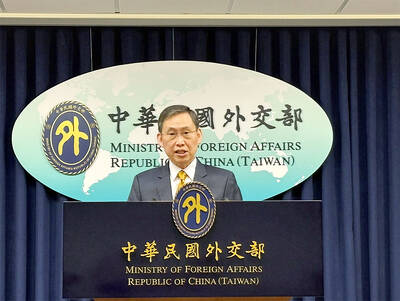
A Ministry of Foreign Affairs official yesterday said that a delegation that visited China for an APEC meeting did not receive any kind of treatment that downgraded Taiwan’s sovereignty. Department of International Organizations Director-General Jonathan Sun (孫儉元) said that he and a group of ministry officials visited Shenzhen, China, to attend the APEC Informal Senior Officials’ Meeting last month. The trip went “smoothly and safely” for all Taiwanese delegates, as the Chinese side arranged the trip in accordance with long-standing practices, Sun said at the ministry’s weekly briefing. The Taiwanese group did not encounter any political suppression, he said. Sun made the remarks when
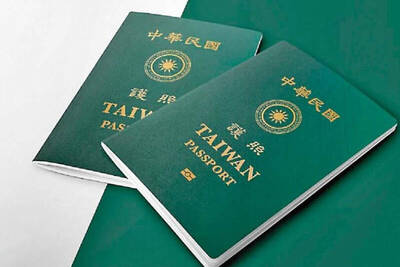
The Taiwanese passport ranked 33rd in a global listing of passports by convenience this month, rising three places from last month’s ranking, but matching its position in January last year. The Henley Passport Index, an international ranking of passports by the number of designations its holder can travel to without a visa, showed that the Taiwan passport enables holders to travel to 139 countries and territories without a visa. Singapore’s passport was ranked the most powerful with visa-free access to 192 destinations out of 227, according to the index published on Tuesday by UK-based migration investment consultancy firm Henley and Partners. Japan’s and
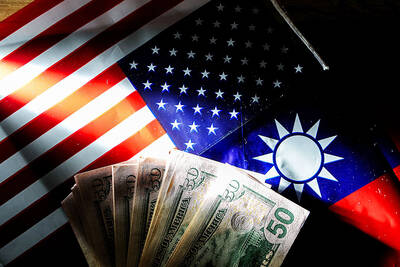
BROAD AGREEMENT: The two are nearing a trade deal to reduce Taiwan’s tariff to 15% and a commitment for TSMC to build five more fabs, a ‘New York Times’ report said Taiwan and the US have reached a broad consensus on a trade deal, the Executive Yuan’s Office of Trade Negotiations said yesterday, after a report said that Washington is set to reduce Taiwan’s tariff rate to 15 percent. The New York Times on Monday reported that the two nations are nearing a trade deal to reduce Taiwan’s tariff rate to 15 percent and commit Taiwan Semiconductor Manufacturing Co (TSMC, 台積電) to building at least five more facilities in the US. “The agreement, which has been under negotiation for months, is being legally scrubbed and could be announced this month,” the paper said,
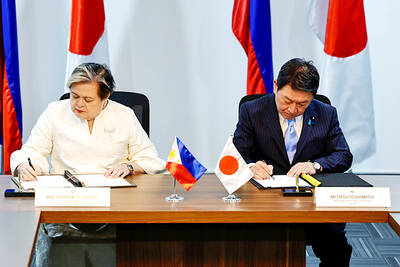
Japan and the Philippines yesterday signed a defense pact that would allow the tax-free provision of ammunition, fuel, food and other necessities when their forces stage joint training to boost deterrence against China’s growing aggression in the region and to bolster their preparation for natural disasters. Japan has faced increasing political, trade and security tensions with China, which was angered by Japanese Prime Minister Sanae Takaichi’s remark that a Chinese attack on Taiwan would be a survival-threatening situation for Japan, triggering a military response. Japan and the Philippines have also had separate territorial conflicts with Beijing in the East and South China


 RSS
RSS