


Taiwan Sports Lottery Corp (運彩科技), a subsidiary of Fubon Financial Holding Co (富邦金控), said yesterday it would suspend sales of problematic sports lottery tickets in the face of a fraud investigation, company executives said.
The company and its parent group offered an apology for the scandal and promised to remedy the alleged wrongdoing by employee Lin Hao-chin (林昊縉).
“We will suspend sales forthwith of sports lottery products that allow winning betters to divide the sweepstakes among themselves,” Taiwan Sports Lottery president Paul Chai (翟小璧) told a press conference, accompanied by Fubon Financial president Victor Kung (龔天行).
Chai said his company offers two categories of sports lottery products — one promises a fixed cash prize and the other allows winning betters to divide the sweepstake.
The troubled “Da San Yuan” (大三元) and “Da Si Xi” (大四喜) on which Lin allegedly bet unfairly in July and last month fell into the latter category, Chai said.
A preliminary internal probe showed Lin’s actions were the only such occurrence since the products were launched in September last year, Chai said.
Sports lotteries with fixed prizes are the company’s main line of products, accounting for more than 99 percent of revenue, company data showed.
Sales of sports lotteries with fixed-ratio prizes totaled NT$1.37 billion (US$46.44 million) last month, while bet-dividing lottery products accounted for NT$8.8 million, according to Taiwan Sports Lottery.
“We will not put problematic lottery tickets back on the shelves before we can make ensure the game is fair,” Chai said.
The company would conduct a thorough review of related products from their production to their sale, Chai said.
Denying earlier claims that Lin had won NT$2.3 million, Taiwan Sports Lottery said he had won NT$520,000, and has repaid this amount to the company.
The company added that it had decided not to press charges because of concerns about his career.
However, the Taipei District Prosecutors’ Office launched an investigation into the case on Saturday.
“Taiwan Sports Lottery regrets that decision, which failed to factor in its impact on the company’s reputation and public sentiment,” the company said in a statement.
To make up for Lin’s alleged misdeeds, the company has tried to contact 34 winning ticket holders whose prizes were reduced by Lin’s actions and offered them further prizes ranging from NT$3,000 to NT$130,000, in line with their tax records, the statement said.
Another 124 winners, whose prizes fell below taxation requirements, could contact the company and divide an extra NT$4,276 between them the statement said.
Taiwan Sport Lottery promised to strengthen internal management and personnel training to prevent a recurrence of irregularities and rebuild public confidence in sports lottery products, Chai said.

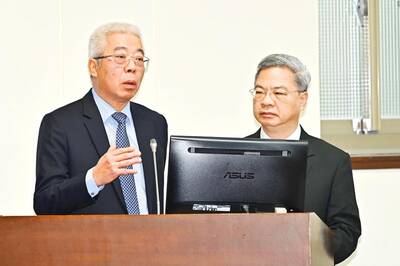
Taiwan has arranged for about 8 million barrels of crude oil, or about one-third of its monthly needs, to be shipped from the Red Sea this month to bypass the Strait of Hormuz and ease domestic supply pressures, CPC Corp, Taiwan (CPC, 台灣中油) said yesterday. The state-run oil company has worked with Middle Eastern suppliers to secure routes other than the Strait of Hormuz, through which about 20 percent of the world’s oil and liquefied natural gas typically passes, CPC chairman Fang Jeng-zen (方振仁) said at a meeting of the legislature’s Economics Committee in Taipei. Suppliers in Saudi Arabia have indicated they
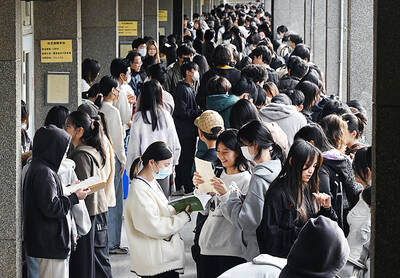
A global survey showed that 60 percent of Taiwanese had attained higher education, second only to Canada, the Ministry of the Interior said. Taiwan easily surpassed the global average of 43 percent and ranked ahead of major economies, including Japan, South Korea and the US, data from the Organisation for Economic Co-operation and Development (OECD) for 2024 showed. Taiwan has a high literacy rate, data released by the ministry showed. As of the end of last year, Taiwan had 20.617 million people aged 15 or older, accounting for 88.5 percent of the total population, with a literacy rate of 99.4 percent, the data

CCP ‘PAWN’? Beijing could use the KMT chairwoman’s visit to signal to the world that many people in Taiwan support the ‘one China’ principle, an academic said Chinese Nationalist Party (KMT) Chairwoman Cheng Li-wun (鄭麗文) yesterday arrived in China for a “peace” mission and potential meeting with Chinese President Xi Jinping (習近平), while a Taiwanese minister detailed the number of Chinese warships currently deployed around the nation. Cheng is visiting at a time of increased Chinese military pressure on Taiwan, as the opposition-dominated Legislative Yuan stalls a government plan for US$40 billion in extra defense spending. Speaking to reporters before going to the airport, Cheng said she was going on a “historic journey for peace,” but added that some people felt uneasy about her trip. “If you truly love Taiwan,

NEW LOW: The council in 2024 based predictions on a pessimistic estimate for the nation’s total fertility rate of 0.84, but last year that rate was 0.69, 17 percent lower An expected National Development Council (NDC) report expects the nation’s population to drop below 12 million by 2065, with the old-age dependency ratio to top 100 percent sooner than 2070, sources said yesterday. The council is slated to release its latest population projections in August, using an ultra-low fertility model, the sources said. The previous report projected that Taiwan’s population would fall to 14.37 million by 2070, but based on a new estimate of the total fertility rate (TFR) — the average number of children born to a woman over her lifetime — the population is expected to reach 12 million by


 RSS
RSS