


A US military expert is playing down the threat to Taiwan of China’s new DF-21D ballistic anti-ship missile, which is said to be capable of sinking an aircraft carrier.
Four-star US Admiral Robert Willard, commander of the US Pacific Command, made headlines earlier this week when he revealed for the first time that the missile was now in the early stages of deployment.
There are widespread fears the missile could be a “game changer” and that it could deny the US access to the seas around Taiwan, making it impossible for Washington to dispatch an aircraft carrier group to help defend Taiwan in the event of a Chinese attack.
The Financial Times of London reported that the missile could force US aircraft carriers to “stay away from waters where China does not want to see them.”
“These include the Taiwan Strait, where a potential conflict could develop over the self-ruled island which China claims,” it said.
However, defense analyst John Pike, founder of the Washington-based think tank Global Security, told the Taipei Times: “The Pentagon can counter this missile. We would know that it was aimed at the carrier; why would we doubt our ability to shoot it down before it reached target?”
“You are going to have to fire several interceptors per incoming warhead, making the economics less palatable, but we have the money,” he said. “This missile is not a game changer. It will not stop us defending Taiwan.”
“But there isn’t going to be a war anyway because President Ma [Ying-jeou (馬英九)] is getting sucked back into the mainland. That’s the game changer,” Pike said.
“If the Chinese launched an invasion of Taiwan, the US military would send an aircraft carrier. They are on automatic pilot to do that. If the Chinese in their infinite wisdom sank the thing, with massive loss of life — bigger than Pearl Harbor and 9/11 combined — there would be no more dithering in Washington,” he said.
“America would want payback. And that’s where you get to when you game this thing out. Would Beijing want to go there?” he said.
Mark Stokes, executive director at the Project 2049 Institute, who has written extensively on the DF-21D, also believes the missile can be countered.
“The missile has the potential to complicate US ability to intervene in the event of a crisis in the Taiwan Strait, but my impression is that the [US] Department of Defense can take action to counter it. We could go after the targeting systems, for example,” he said.
Rick Fisher of the International Assessment and Strategy Center sounded a cautious note.
“The deployment of a working anti-ship ballistic missile shifts the balance of power in a manner threatening to Taiwan and other Asian democracies. The US military currently lacks a decisive weapon that can defend ships, meaning it must attack Chinese missiles on land or guidance systems in space, all of which is most destabilizing,” he said.
The Financial Times said the land-based missile was designed to target and track aircraft carrier groups with the help of satellites, unmanned aerial vehicles and over-the-horizon radar.
Earlier this year there were reports that the DF-21D was undergoing extensive testing, that China had started production of missile motors and that it was eventually to be deployed at a nuclear base near Shaoguan in Guangdong Province.
Still, defense analysts believed its deployment was years away.
However, earlier this week Willard told Japan’s Asahi Shimbun that while the missile was still being developed, it was now in the early stages of deployment.
“We have not seen an over-water test of the entire system,” he said.
The missile has an expanded capability that ranged “beyond the first island chain and overlaps countries in the region,” he said.
Andrew Erickson, a professor at the US Naval War College, said the admiral’s comments on the missile deployment meant that China must have conducted a rigorous testing program.
While the missile was “doubtless an area of continuous challenge and improvement,” Erickson said, its command, control, communications, computers, information, surveillance and reconnaissance infrastructure must be sufficient at this stage to support its use.
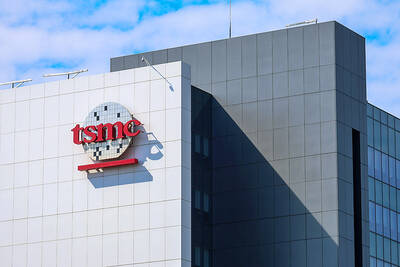
Taiwan Semiconductor Manufacturing Co (TSMC, 台積電), the world’s largest foundry service provider, yesterday said that global semiconductor revenue is projected to hit US$1.5 trillion in 2030, after the figure exceeds US$1 trillion this year, as artificial intelligence (AI) demand boosts consumption of token and compute power. “We are still at the beginning of the AI revolution, but we already see a significant impact across the whole semiconductor ecosystem,” TSMC deputy cochief operating officer Kevin Zhang (張曉強) said at the company’s annual technology symposium in Hsinchu City. “It is fair to say that in the past decade, smartphones and other mobile devices were
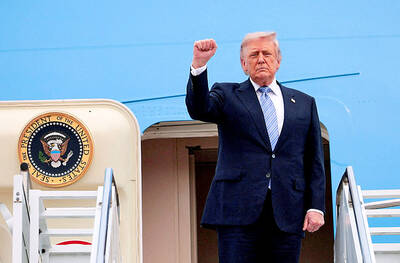
US-CHINA SUMMIT: MOFA welcomed US reassurance of no change in its Taiwan policy; Trump said he did not comment when Xi talked of opposing independence US President Donald Trump yesterday said he has not made a decision on whether to move forward with a major arms package for Taiwan after hearing concerns about it from Chinese President Xi Jinping (習近平). Trump’s comments on Taiwan came as he flew back to Washington after wrapping up critical talks in which both leaders said important progress was made in stabilizing US-China relations even as deep differences persist between the world’s two biggest powers on Iran and Taiwan. “I will make a determination,” Trump said, adding: “I’ll be making decisions. But, you know, I think the last thing we need right
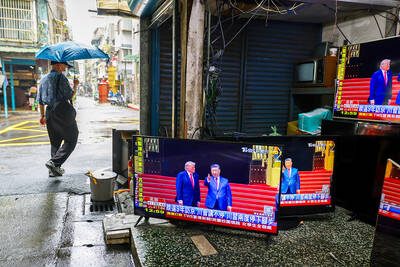
TAIWAN ISSUE: US treasury secretary Scott Bessent said on the first day of meetings that ‘it wouldn’t be a US-China summit without the Taiwan issue coming up’ There were no surprises on the first day of the summit between US President Donald Trump and Chinese President Xi Jinping (習近平), the Mainland Affairs Council (MAC) said yesterday, as the government reiterated that cross-strait stability is crucial to the Asia-Pacific region, as well as the world. As the two presidents met for a highly anticipated summit yesterday, Chinese state media reported that Xi warned Trump that missteps regarding Taiwan could push their two countries into “conflict.” Trump arrived in China with accolades for his host, calling Xi a “great leader” and “friend,” and extending an invitation to visit the White House
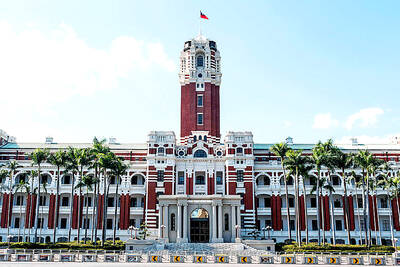
SECURITY: Taipei presses the US for arms supplies, saying the arms sales are not only a reflection of the US security commitment to Taiwan but also serve as a mutual deterrent against regional threats Taiwan is committed to preserving the cross-strait “status quo” and contributing to regional peace and stability, the Presidential Office said yesterday. “It is an undeniable fact that the Republic of China is a sovereign and independent democratic nation,” Presidential Office spokeswoman Karen Kuo (郭雅慧) reiterated, adding that Beijing has no right to claim sovereignty over Taiwan. The statements came after US President Donald Trump warned against Taiwanese independence. Trump wrapped up a state visit to Beijing on Friday, during which Chinese President Xi Jinping (習近平) had pressed him not to support Taiwan. Taiwan depends heavily on US security backing to deter China from carrying


 RSS
RSS