


Greek public and private sector workers went on strike yesterday, grounding flights, shutting schools and halting public transport in the second nationwide walkout in two weeks in protest against austerity plans.
Athens’ streets echoed with loud-speakers blaring slogans calling for the rich to pay for a severe debt crisis, as thousands marched against cuts in civil servants’ income, tax hikes, a pension freeze and increase in the retirement age.
“No sacrifice for the rich,” protesters chanted, beating drums and holding banners reading: “Where did the money go?”
Under pressure from EU partners and markets to do more to stem a crisis that has shaken the euro, the government last week unveiled a 4.8 billion euro (US$6.51 billion) austerity package to slash spending and raise taxes.
The 24-hour strike was unlikely to derail the plan, however.
Although most Greeks agree measures are necessary, the package is viewed as hitting the wrong people in a nation with widespread corruption and tax evasion.
“The measures are unfair ... we cannot make it, we have children, families. We need to find the money to support them,” said 60-year-old health sector worker Odysseas Panagopoulos. “Banks and rich people should pay for this crisis.”
Last week’s austerity package, aimed at reassuring markets that Athens can handle a 300 billion euro debt mountain, came just five months after the socialists won an election on a promise to help the poor face Greece’s first recession in 16 years.
The level of participation in the strike and protests will be watched closely outside Greece. EU policymakers, rating agencies and financial markets welcomed the latest measures but want to see them implemented quickly and smoothly.
“This government deceived us,” said Zaharoula Toulia, 57, a private sector pensioner, who voted for the socialists in October.
“They said there was money. Where is it?” asked Toulia, who lives on an 800 euro pension and says her two children are unemployed.
Unions from taxi drivers to garbage collectors have stepped up protests over the past weeks. Yesterday’s strike was called by the main private sector union GSEE and its public sector sister ADEDY, which together represent half of the country’s 5 million workforce. ADEDY is preparing more action next month.
Opinion polls show Greeks, even those protesting, widely believe the measures will be applied despite growing opposition.
“Everything will be dead in Greece but the majority of people understand there is no other option,” ALCO pollster Costas Panagopoulos said. “I don’t believe a strike and rallies can seriously affect the government’s policies.”
Buses and trains were not operating in Athens, and ships were docked. Journalists and state TV were also on strike. Bank employees, firefighters, tax collectors and even police officers were also expected to be among those marching. Many archeological sites and museums were closed to visitors.
Opposition to the cuts has been relatively subdued so far, but Greeks are prone to take to the streets in protests that can turn violent. Riot police were stationed throughout central Athens and police said they were bracing for trouble after clashes at an anti-austerity march last week.
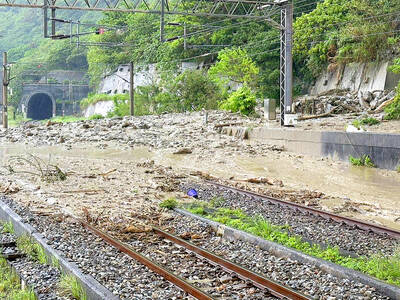
ROLLER-COASTER RIDE: More than five earthquakes ranging from magnitude 4.4 to 5.5 on the Richter scale shook eastern Taiwan in rapid succession yesterday afternoon Back-to-back weather fronts are forecast to hit Taiwan this week, resulting in rain across the nation in the coming days, the Central Weather Administration said yesterday, as it also warned residents in mountainous regions to be wary of landslides and rockfalls. As the first front approached, sporadic rainfall began in central and northern parts of Taiwan yesterday, the agency said, adding that rain is forecast to intensify in those regions today, while brief showers would also affect other parts of the nation. A second weather system is forecast to arrive on Thursday, bringing additional rain to the whole nation until Sunday, it
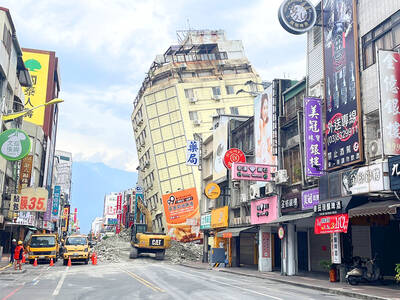
LANDSLIDES POSSIBLE: The agency advised the public to avoid visiting mountainous regions due to more expected aftershocks and rainfall from a series of weather fronts A series of earthquakes over the past few days were likely aftershocks of the April 3 earthquake in Hualien County, with further aftershocks to be expected for up to a year, the Central Weather Administration (CWA) said yesterday. Based on the nation’s experience after the quake on Sept. 21, 1999, more aftershocks are possible over the next six months to a year, the agency said. A total of 103 earthquakes of magnitude 4 on the local magnitude scale or higher hit Hualien County from 5:08pm on Monday to 10:27am yesterday, with 27 of them exceeding magnitude 5. They included two, of magnitude

CONDITIONAL: The PRC imposes secret requirements that the funding it provides cannot be spent in states with diplomatic relations with Taiwan, Emma Reilly said China has been bribing UN officials to obtain “special benefits” and to block funding from countries that have diplomatic ties with Taiwan, a former UN employee told the British House of Commons on Tuesday. At a House of Commons Foreign Affairs Committee hearing into “international relations within the multilateral system,” former Office of the UN High Commissioner for Human Rights (OHCHR) employee Emma Reilly said in a written statement that “Beijing paid bribes to the two successive Presidents of the [UN] General Assembly” during the two-year negotiation of the Sustainable Development Goals. Another way China exercises influence within the UN Secretariat is

Taiwan’s first drag queen to compete on the internationally acclaimed RuPaul’s Drag Race, Nymphia Wind (妮妃雅), was on Friday crowned the “Next Drag Superstar.” Dressed in a sparkling banana dress, Nymphia Wind swept onto the stage for the final, and stole the show. “Taiwan this is for you,” she said right after show host RuPaul announced her as the winner. “To those who feel like they don’t belong, just remember to live fearlessly and to live their truth,” she said on stage. One of the frontrunners for the past 15 episodes, the 28-year-old breezed through to the final after weeks of showcasing her unique


 RSS
RSS