


Taiwan High Speed Rail Corp (THSRC, 台灣高鐵) shares jumped 47 percent on the Emerging Stock Market to close at NT$5 yesterday on reports the government could take over the debt-ridden company or dominate a board reshuffle.
THSRC shares picked up NT$1.6 from NT$3.4 on Friday, after Premier Wu Den-yih (吳敦義) confirmed on Sunday that chairwoman Nita Ing’s (殷琪) would step down.
No company spokesperson could be reached for comments on a reported extraordinary board meeting today to set the agenda for a board reshuffle.
Eric Lai (賴建承), an analyst at Marbo Securities Consultant Co (萬寶證券投顧), said reports of a government takeover led to optimism that the financial troubles plaguing the nation’s first build-for-transfer project could soon be over.
Government officials, however, denied any takeover plan later yesterday.
Lai said THSRC shares will enter correction in coming days as the drama unfolds.
“I don’t believe the government will sit around watching THSRC collapse,” Lai said by telephone. “The company’s stocks will prove worthy after the dust settles.”
The company, which has more than NT$70 billion (US$2.16 billion) in accumulated losses, or 67 percent of its capital, is seeking a syndicated loan of NT$390 billion.
The banks have suggested THSRC raise between NT$10 billion and NT$20 billion in new capital — in addition to seeking bank loans — to improve its finances. THSRC has resisted the idea, saying that high depreciation costs would scare away investors.
THSRC spokesman Ted Chia (賈先德) said in earlier interviews it would be more realistic if banks agreed to lower interest rates and the government allowed a longer depreciation period.
Chia said improving ticket revenue and declining losses justified lower default risks and interest rates.
Susan Chang (張秀蓮), chairwoman of the Bank of Taiwan (臺灣銀行), told the Central News Agency yesterday that the government-owned lender would lend its support for the syndicated loan.
Chang said the bank would help facilitate the loan approval to prevent the matter from disrupting normal operations at the company. The bullet train plays a key role in north-south transportation, she said.
Norman Yin (殷乃平), a money and banking professor at National Chengchih University, said the bank group would likely bail out the company at the government’s request if the government was reluctant to do so itself.
Yin, a former lawmaker, said the government should consider taking over THSRC without compensation and address legal barriers to solve the thorny issue once and for all.
“A board reshuffle may prove no remedy as the company is expected to remain in the red for quite a while,” Yin said by telephone.

Taiwanese firms have increased investment in the Philippines in recent years as Manila’s ties with Washington deepen and global supply chains continue to shift away from China, an expert at the Chung-Hua Institution for Economic Research (CIER, 中華經濟研究院) said yesterday. The Philippines had not been among Taiwanese investors’ top choices in Southeast Asia, CIER Taiwan ASEAN Studies Center director Kristy Hsu (徐遵慈) said at a seminar in Taipei. However, Taiwan’s investment in the country has grown significantly since the COVID-19 pandemic, reaching US $257 million last year, a high in recent years, she said. Although Taiwan’s total investment in the Philippines still lags

Intel Corp regards Taiwan Semiconductor Manufacturing Co (TSMC, 台積電) as a longstanding partner, as the US chipmaker would continue outsourcing production of advanced chips to TSMC, Intel chief executive officer Lip-Bu Tan (陳立武) said yesterday. “I don’t look at people as competitors. I look at the collaboration... Nvidia is also, you know, a good friend,” Tan told a news conference following his keynote speech at the Computex trade show in Taipei. “It’s a very trusted partnership for us... We are a big, top customer for them, and we’re going to continue doing that,” he said, referring to TSMC, the world’s largest foundry

Artificial intelligence (AI) agents would supplant smartphones as the center of people’s digital lives, fundamentally reshaping personal devices and driving a major computing upgrade cycle, Qualcomm Inc CEO Cristiano Amon said yesterday. In his keynote speech for this year’s Computex trade show in Taipei, Amon said that the rise of "agentic AI" — AI systems capable of reasoning, planning and carrying out tasks autonomously — would transform how people interact with technology across phones, PCs, vehicles and wearable devices. Describing the technology as the next major evolution in computing, Amon said that "2026 is the year of agents.” For decades, smartphones have sat
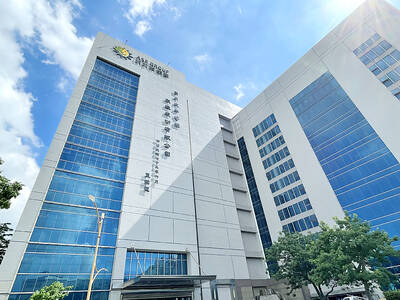
The average pay to employees by ASE Technology Holding Co (日月光投控) was the highest among the companies listed on the local main board last year, while contract chipmaker Taiwan Semiconductor Manufacturing Co (TSMC, 台積電) ranked seventh, the Taiwan Stock Exchange (TWSE) said on Monday. Data compiled by the exchange showed ASE Technology, the world’s largest chip packaging and testing services provider, paid its employees an average of NT$6.28 million (US$199,746) last year, up 40 percent from a year earlier. TSMC, the world’s largest contract chipmaker and the most profitable company in Taiwan, paid its employees NT$4.09 million on average, up


 RSS
RSS