


President Ma Ying-jeou (馬英九) yesterday said his administration would expedite the signing of an economic cooperation framework agreement (ECFA) with Beijing, promising the planned pact would not contain politically sensitive terms such as “one China,” “peaceful unification” or “one country, two systems.”
Ma made the remarks in an interview with the Chinese-language United Evening News yesterday morning. The report was published later yesterday.
Ma said unofficial cross-strait talks on the issue had been held, and official negotiations “would not have to wait until next year.” He said the proposed pact would follow the spirit and context of the WTO and the ASEAN Plus One.
While some have voiced concern that signing an ECFA would undermine Taiwan's sovereignty, Ma said the proposed pact was an economic issue and it would be different from the Closer Economic Partnership Arrangement (CEPA) signed between Hong Kong and Beijing.
Ma also dismissed a report by the Chinese-language Liberty Times (the Taipei Times' sister newspaper) that cited a study by the Chung-Hua Institution for Economic Research. The study said the electronics and electric machinery industries could lose up to NT$350 billion (US$10.7 billion) if the ECFA was signed and that the number of people who would suffer would outnumber those who would benefit by two to one.
“Do you think the government is that stupid?” Ma asked, adding that since Taiwanese electronic goods already enjoy zero tariffs, signing an ECFA would not impact on the industry.
The proposed ECFA would include the so-called “early harvest” clause, which would benefit petrochemical, machinery, auto parts and textile industries, he said.
Ma said he realized some industries would benefit from the trade accord and some would suffer from it, but the country could not wait until ASEAN became a stronger economic bloc to sign an ECFA with Beijing. The government's job was to strike a balance between gains and losses, he said.
While the Democratic Progressive Party (DPP) has requested a referendum to decide whether to sign the trade agreement, Ma said the DPP did not ask the people whether the country should join the WTO when it was in power.
Ma said he realized the ECFA was not a passport to easy sailing, but would ease the concern of other countries wishing to develop economic ties with Taiwan.
On party affairs, Ma, who has just won the Chinese Nationalist Party's (KMT) uncontested race for party chairman, said he was not in a hurry to meet his counterpart, Chinese President Hu Jintao (胡錦濤), who doubles as the Chinese Communist Party (CCP) general secretary.
Regarding the KMT-CCP forum, Ma said the party chairman does not necessarily have to attend the event every time nor does he have any immediate plan to do so.
Saying he was still willing to meet DPP Chairperson Tsai Ing-wen (蔡英文), Ma also invited the DPP to jointly develop a China policy acceptable to both parties to strengthen the country's leverage at the negotiating table.
Also See: Lai defends ECFA at Rotary meeting

Japan has deployed long-range missiles in a southwestern region near China, the Japanese defense minister said yesterday, at a time when ties with Beijing are at their lowest in recent years. The missiles were installed in Kumamoto in the southern region of Kyushu, as Japan is attempting to shore up its military capacity as China steps up naval activity in the East China Sea. “Standoff defense capabilities enable us to counter the threat of enemy forces attempting to invade our country ... while ensuring the safety of our personnel,” Japanese Minister of Defense Shinjiro Koizumi said. “This is an extremely important initiative for
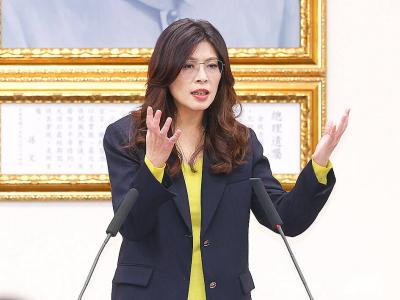
Chinese Nationalist Party (KMT) Chairwoman Cheng Li-wun (鄭麗文) today accepted an invitation from Chinese President Xi Jinping (習近平) to lead a delegation to China next month, saying she hopes to promote the peaceful development of cross-strait relations and bring stability to the Taiwan Strait. “I am grateful and happy to accept this invitation,” Cheng said in a statement from the KMT chairperson’s office. Cheng said she hopes both sides can work together to promote the peaceful development of cross-strait relations, enhance exchange and cooperation, bring stability to the Taiwan Strait and improve people’s livelihoods. At today's news conference, Cheng said any efforts to

MORE POPULAR: Taiwan Pass sales increased by 59 percent during the first quarter compared with the same period last year, the Tourism Administration said The Tourism Administration yesterday said that it has streamlined the Taiwan Pass, with two versions available for purchase beginning today. The tourism agency has made the pass available to international tourists since 2024, allowing them to access the high-speed rail, Taiwan Railway Corp services, four MRT systems and four Taiwan Tourist Shuttles. Previously, five types of Taiwan Pass were available, but some tourists have said that the offerings were too complicated. The agency said only two types of Taiwan Pass would be available, starting from a three-day pass with the high-speed rail and a three-day pass with Taiwan Railway Corp. The former costs NT$2,800
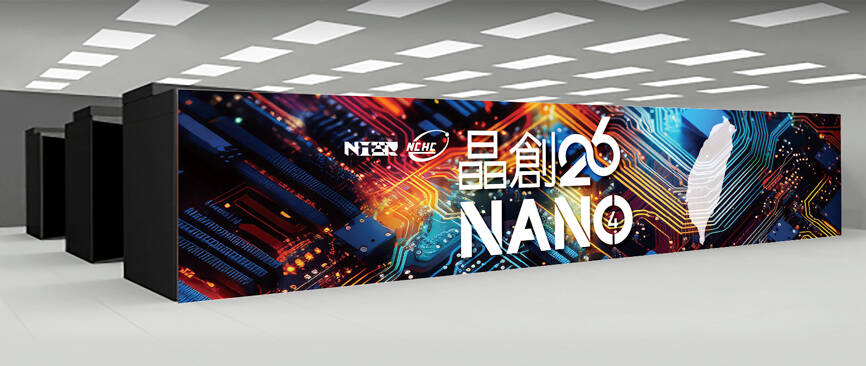
The nation’s fastest supercomputer, Nano 4 (晶創26), is scheduled to be launched in the third quarter, and would be used to train large language models in finance and national defense sectors, the National Center for High-Performance Computing (NCHC) said. The supercomputer, which would operate at about 86.05 petaflops, is being tested at a new cloud computing center in the Southern Taiwan Science Park in Tainan. The exterior of the server cabinet features chip circuitry patterns overlaid with a map of Taiwan, highlighting the nation’s central position in the semiconductor industry. The center also houses Taiwania 2, Taiwania 3, Forerunner 1 and


 RSS
RSS