


General Motors Co (GM) filed for bankruptcy yesterday, forcing the 100-year-old automaker once seen as a symbol of US economic might and dynamism into a new and uncertain era of government ownership.
The bankruptcy filing is the third-largest in US history and the largest ever in US manufacturing.
The decision to push GM into a fast-track bankruptcy and provide US$30 billion of additional taxpayer funds to restructure the automaker, is a huge gamble for US President Barack Obama’s administration.
But in a sign of progress in the government’s high-stakes effort, a bankruptcy judge approved the sale of substantially all of US automaker Chrysler’s assets to a group led by Italy’s Fiat SpA in an opinion filed late on Sunday.
Chrysler’s bankruptcy, also financed by the US Treasury, has been widely seen as a test run for the much bigger and more complex reorganization of GM.
The GM plan is for a quick sale process that would allow a much smaller GM to emerge from court protection in as little as 60 to 90 days.
“Now the hard part begins, which is making GM and Chrysler competitive. If they don’t do that, then we’ll be doing this all over again in a few years,” said Christopher Richter, auto analyst at CLSA Asia-Pacific Markets in Tokyo.
“The immediate implication is that the companies are going to get smaller and so market share is up for grabs, which means that rivals like Toyota, Honda, Nissan and Hyundai are going to gain share,” he said.
Since the start of the year, GM has been kept alive with US government funding as a White House-appointed task force vetted plans for a sweeping reorganization that would be undertaken with US$50 billion in federal financing.
By taking a 60 percent stake in a reorganized GM, the Obama administration is gambling that the automaker can compete with the likes of Toyota after its debt is cut by half and its labor costs are slashed under a new contract with the United Auto Workers (UAW) union.
The governments of Canada and the province of Ontario agreed to provide another US$9.5 billion to GM in a late addition to the plans for the bankruptcy.
GM intends to close 11 facilities in the US and idle another three plants. It has not provided an updated target for job cuts but had been looking to cut 21,000 factory jobs from the 54,000 UAW workers it now employs in the US.
The UAW would have a 17.5 percent stake in the “new GM.” The Canadian government would own 12 percent and GM bondholders would get 10 percent.
Officials involved in the planning for GM said the White House was a “reluctant investor” in GM, but had to prevent a liquidation that analysts say would have cost tens of thousands of jobs at a time when the economy is mired in recession.
GM alone employs 92,000 in the US and is indirectly responsible for 500,000 retirees.
“We want a quick, clean exit [from bankruptcy] as soon as conditions permit,” Treasury Secretary Timothy Geithner told students at Peking University in Beijing. “We’re very optimistic these firms will emerge without further government assistance.”
Obama was scheduled to speak on the auto industry shortly before noon yesterday. A news conference by GM chief executive Fritz Henderson is to follow.
US officials said there was no plan to provide any further funding for GM and insisted that all of the Detroit Three could survive. Ford Motor Co has not sought emergency federal aid.
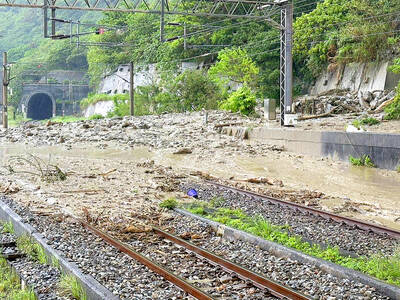
ROLLER-COASTER RIDE: More than five earthquakes ranging from magnitude 4.4 to 5.5 on the Richter scale shook eastern Taiwan in rapid succession yesterday afternoon Back-to-back weather fronts are forecast to hit Taiwan this week, resulting in rain across the nation in the coming days, the Central Weather Administration said yesterday, as it also warned residents in mountainous regions to be wary of landslides and rockfalls. As the first front approached, sporadic rainfall began in central and northern parts of Taiwan yesterday, the agency said, adding that rain is forecast to intensify in those regions today, while brief showers would also affect other parts of the nation. A second weather system is forecast to arrive on Thursday, bringing additional rain to the whole nation until Sunday, it
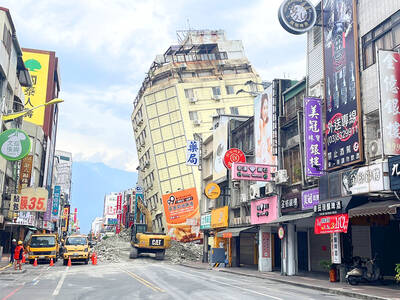
LANDSLIDES POSSIBLE: The agency advised the public to avoid visiting mountainous regions due to more expected aftershocks and rainfall from a series of weather fronts A series of earthquakes over the past few days were likely aftershocks of the April 3 earthquake in Hualien County, with further aftershocks to be expected for up to a year, the Central Weather Administration (CWA) said yesterday. Based on the nation’s experience after the quake on Sept. 21, 1999, more aftershocks are possible over the next six months to a year, the agency said. A total of 103 earthquakes of magnitude 4 on the local magnitude scale or higher hit Hualien County from 5:08pm on Monday to 10:27am yesterday, with 27 of them exceeding magnitude 5. They included two, of magnitude

CONDITIONAL: The PRC imposes secret requirements that the funding it provides cannot be spent in states with diplomatic relations with Taiwan, Emma Reilly said China has been bribing UN officials to obtain “special benefits” and to block funding from countries that have diplomatic ties with Taiwan, a former UN employee told the British House of Commons on Tuesday. At a House of Commons Foreign Affairs Committee hearing into “international relations within the multilateral system,” former Office of the UN High Commissioner for Human Rights (OHCHR) employee Emma Reilly said in a written statement that “Beijing paid bribes to the two successive Presidents of the [UN] General Assembly” during the two-year negotiation of the Sustainable Development Goals. Another way China exercises influence within the UN Secretariat is

Taiwan’s first drag queen to compete on the internationally acclaimed RuPaul’s Drag Race, Nymphia Wind (妮妃雅), was on Friday crowned the “Next Drag Superstar.” Dressed in a sparkling banana dress, Nymphia Wind swept onto the stage for the final, and stole the show. “Taiwan this is for you,” she said right after show host RuPaul announced her as the winner. “To those who feel like they don’t belong, just remember to live fearlessly and to live their truth,” she said on stage. One of the frontrunners for the past 15 episodes, the 28-year-old breezed through to the final after weeks of showcasing her unique


 RSS
RSS