


The government should not sign a Comprehensive Economic Cooperation Agreement (CECA) with China without the social consensus of the Taiwanese public, Democratic Progressive Party (DPP) Chairperson Tsai Ing-wen (蔡英文) said yesterday.
Tsai made the remark after a local media report quoted National Security Council Secretary-General Su Chi (蘇起) as having said the government would sign a CECA with China and that negotiations with China on the issue would begin through the Straits Exchange Foundation (SEF).
The government should be “more prudent” about the issue as it would affect the country’s economy and politics, Tsai said, urging the government to inform and convince the public of its purpose.
If the government signed a CECA without the consensus of the people, it would have a negative impact on society, Tsai said.
Tsai said the signing of the CECA would involve delicate political issues that might cause serious social conflict in Taiwan if the government does not seek public approval.
The discussion and evaluation of the feasibility of signing a CECA should be conducted in a transparent manner, Tsai said, adding that this would be the “only way” to let Taiwanese understand how the agreement would affect the nation economically, socially and politically.
Industry and business groups have been pushing for the government to forge closer economic links with China by signing a CECA and to quickly liberalize cross-strait trade through measures such as the removal of tariffs.
On Friday, the Ministry of Economic Affairs (MOEA) said in a press statement that it had been closely monitoring the formation of a regional economic bloc that includes ASEAN and its neighboring trade partners China, Japan and South Korea.
The MOEA said that Taiwanese exporters would face tough challenges when the “ASEAN plus one” — ASEAN and China — free trade zone goes into operation next year. Therefore, the government has been seeking free trade agreements (FTAs) with major trading partners and has spared no effort in devising strategies to combat its exclusion from the regional economic bloc, the ministry said.
Amid some doubt in Taiwan regarding the CECA, the ministry said it would conduct a study on how such an agreement could be achieved without sacrificing the overall interests of local industrial sectors.
President Ma Ying-jeou (馬英九) has sought to build closer economic ties with China, drawing strong criticism from some quarters.
Taiwan Solidarity Union Chairman Huang Kun-huei (黃昆輝) has said that the proposed CECA with China would force Taiwan to follow the Hong Kong and Macau model, making Taiwan subordinate to Beijing.
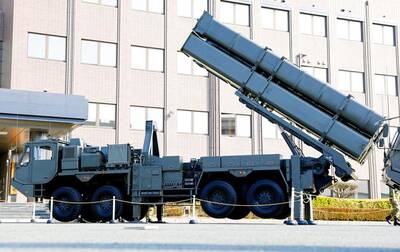
Japan has deployed long-range missiles in a southwestern region near China, the Japanese defense minister said yesterday, at a time when ties with Beijing are at their lowest in recent years. The missiles were installed in Kumamoto in the southern region of Kyushu, as Japan is attempting to shore up its military capacity as China steps up naval activity in the East China Sea. “Standoff defense capabilities enable us to counter the threat of enemy forces attempting to invade our country ... while ensuring the safety of our personnel,” Japanese Minister of Defense Shinjiro Koizumi said. “This is an extremely important initiative for
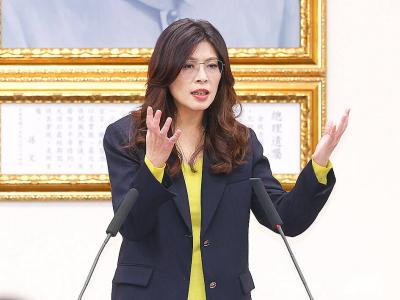
Chinese Nationalist Party (KMT) Chairwoman Cheng Li-wun (鄭麗文) today accepted an invitation from Chinese President Xi Jinping (習近平) to lead a delegation to China next month, saying she hopes to promote the peaceful development of cross-strait relations and bring stability to the Taiwan Strait. “I am grateful and happy to accept this invitation,” Cheng said in a statement from the KMT chairperson’s office. Cheng said she hopes both sides can work together to promote the peaceful development of cross-strait relations, enhance exchange and cooperation, bring stability to the Taiwan Strait and improve people’s livelihoods. At today's news conference, Cheng said any efforts to
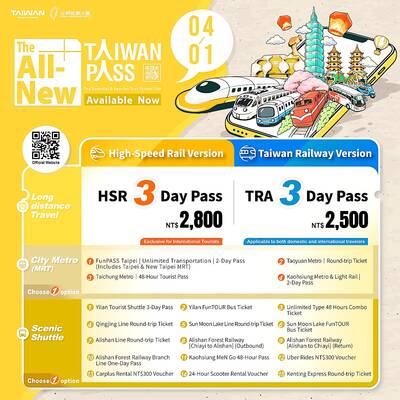
MORE POPULAR: Taiwan Pass sales increased by 59 percent during the first quarter compared with the same period last year, the Tourism Administration said The Tourism Administration yesterday said that it has streamlined the Taiwan Pass, with two versions available for purchase beginning today. The tourism agency has made the pass available to international tourists since 2024, allowing them to access the high-speed rail, Taiwan Railway Corp services, four MRT systems and four Taiwan Tourist Shuttles. Previously, five types of Taiwan Pass were available, but some tourists have said that the offerings were too complicated. The agency said only two types of Taiwan Pass would be available, starting from a three-day pass with the high-speed rail and a three-day pass with Taiwan Railway Corp. The former costs NT$2,800

The nation’s fastest supercomputer, Nano 4 (晶創26), is scheduled to be launched in the third quarter, and would be used to train large language models in finance and national defense sectors, the National Center for High-Performance Computing (NCHC) said. The supercomputer, which would operate at about 86.05 petaflops, is being tested at a new cloud computing center in the Southern Taiwan Science Park in Tainan. The exterior of the server cabinet features chip circuitry patterns overlaid with a map of Taiwan, highlighting the nation’s central position in the semiconductor industry. The center also houses Taiwania 2, Taiwania 3, Forerunner 1 and


 RSS
RSS