


When a customs agent at San Francisco International Airport examined a package from Taiwan that was supposed to contain a birthday gift of candy and books, he thought it smelled “fishy.”
Thinking it might contain food that had been imported illegally, the agent opened the parcel. Inside, he found US$380,000 in counterfeit US$100 bills hidden among 20 bags of dried seafood.
The discovery earned Chen Mei-ling, 47, a Taiwanese woman from Kaohsiung City to a 33-month prison sentence and a US$4,300 fine last week.
It has also reawakened fears in the US that Taiwan is a center for the printing of so-called “supernotes” — forged currency that is so nearly perfect that it is almost impossible to detect.
Court papers showed that Chen arrived in San Francisco in July and stayed at the home of her former husband in Sunnyvale, California.
She has pleaded guilty to bringing US$20,000 in counterfeit US$100 bills into the US.
Within a few days she had used the forged money to buy luxury items at stores including Louis Vuitton, Coach, Foot Locker and Bath and Body Works.
Her plan had worked perfectly — until the fishy smelling parcel arrived at customs. She had posted the parcel to herself at her former husband’s address before leaving Taipei.
The customs agent took the notes to government experts who determined they were forged, whereupon Chen was arrested and charged.
Later, she admitted to having used US$3,200 in counterfeit bills at local shops.
Chen has been in custody since her arrest.
The US Secret Service, which investigates all forgery cases, as well as providing security for the president and other VIPs, determined that the fake money fell into the “supernotes” category.
“The Secret Service has led a 19-year investigation into the production and distribution of this highly deceptive family of counterfeit notes,” prosecutors said.
“First detected in 1989, the supernote is of such high quality that it often goes undetected until it reaches the Federal Reserve Bank. The Secret Service’s investigation has spanned the globe, involving more than 130 countries and resulting in more than 200 arrests,” they said.
On Aug. 20 — about a month after Chen’s arrest — Taipei police discovered what media reports described as “the most sophisticated counterfeiting factory ever found in Taiwan, with finished and semi-finished US$100 bills whose printing technology shocked the US.”
In addition to her prison sentence and fine, Chen was also ordered to pay US$3,200 in restitution to the stores where she used the fake bills and will be on probation for three years after she leaves prison.
US law enforcement sources said Taiwan has long had a reputation as a center for high-quality counterfeit money production. In recent years, however, the forgers were believed to be concentrating on the Chinese currency.
There were indications that large quantities of US$100 bills were again being produced in Taiwan, the sources said.
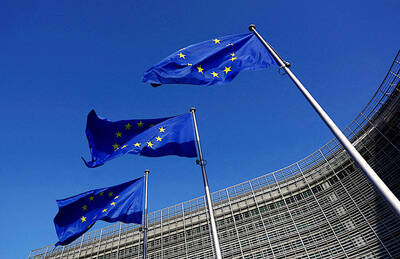
LEVERAGE: China did not ‘need to fire a shot’ to deny Taiwan airspace over Africa when it owns ‘half the continent’s debt,’ a US official said, calling it economic warfare The EU has raised concerns about overflight rights following the delay of President William Lai’s (賴清德) planned state visit to the Kingdom of Eswatini after three African nations denied overflight clearance for his charter at the last minute. Taiwanese allies Paraguay and Saint Kitts and Nevis, as well as several US lawmakers and the Inter-Parliamentary Alliance on China (IPAC) condemned China for allegedly pressuring the countries. Lai was scheduled to fly directly to Taiwan’s only African ally from yesterday to Sunday to celebrate the 40th anniversary of King Mswati III’s accession and his 58th birthday, but Seychelles, Mauritius and Madagascar suddenly revoked
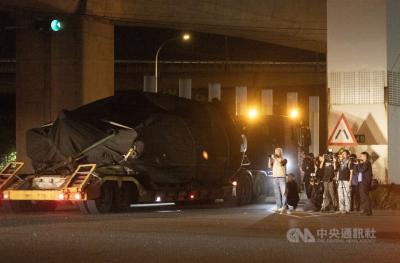
The final batch of 28 M1A2T Abrams tanks purchased from the US arrived at Taipei Port last night and were transported to the Armor Training Command in Hsinchu County’s Hukou Township (湖口), completing the military’s multi-year procurement of 108 of the tanks. Starting at 12:10am today, reporters observed more than a dozen civilian flatbed trailers departing from Taipei Port, each carrying an M1A2T tank covered with black waterproof tarps. Escorted by military vehicles, the convoy traveled via the West Coast Expressway to the Armor Training Command, with police implementing traffic control. The army operates about 1,000 tanks, including CM-11 Brave Tiger
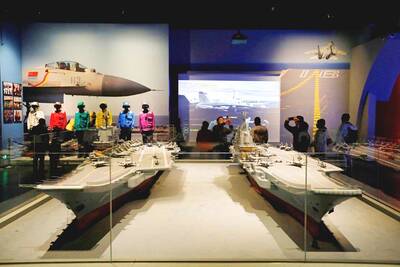
China on Wednesday teased in a video an aircraft carrier that could be its fourth, and the first using nuclear power, while making an allusion to Taiwan and vowing to further build up its islands, as it looks to boost maritime power, secure resources and bolster territorial claims. The video, issued on the eve of the 77th founding anniversary of the Chinese People’s Liberation Army Navy, featured fictional officers with names that are homophones of three commissioned aircraft carriers, the Liaoning (遼寧), Shandong (山東) and Fujian (福建). Titled Into the Deep, it showed a 19-year-old named “Hejian” (何劍) joining the group, sparking
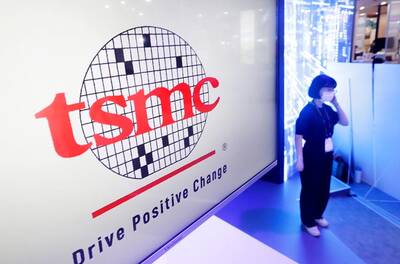
BIG YEAR: The company said it would also release its A12 chip the same year to keep a ‘reliable stream of new silicon technologies’ flowing to its customers Taiwan Semiconductor Manufacturing Co (TSMC, 台積電) yesterday said its newest A13 chip is to enter volume production in 2029 as the chipmaker seeks to hold onto its tech leadership and demand for next-generation chips used in artificial intelligence (AI), high-performance-computing (HPC) and mobile applications. TSMC, the world’s biggest contract chipmaker, also unveiled its A12 chip at its annual technology symposium in Santa Clara, California. The A12 chip, which features TSMC’s super-power-rail technology to provide backside power delivery for AI and HPC applications, is also to enter volume production in 2029, a year after the scheduled release of the A14 chip. The technology moves


 RSS
RSS