


The unemployment rate climbed for the fifth consecutive month to a five-year high of 4.64 percent last month, with the number of unemployed hitting more than 500,000 as the economic downturn deepens, the Directorate General of Budget, Accounting and Statistics (DGBAS) said in a report yesterday.
With a recession expected to dominate next year, the agency warned of higher unemployment figures after the Lunar New Year holidays, when seasonal employment tapers off.
“The unemployment rate rose 0.27 percentage points, or by 31,000 people, to 4.37 percent last month, the highest since September 2004,” DGBAS Deputy Director Huang Jiann-jong (黃建中) told a media briefing.
The seasonally adjusted figure rose 0.33 percentage points to 4.62 percent — the highest since March 2004, he said.
Huang attributed the rising trend to deepening economic woes and voiced concern about the potential social impact of unemployment among people aged 45 to 64, which shot up 9.98 percent to 100,800 last month.
This age group, normally the financial pillar of households, accounted for 55.5 percent of people who lost their jobs to business closures or downsizing, the report said.
“People who lost their jobs to business closures or downsizing reached 202,000 last month, up 36,000 from October,” Huang said.
Huang also expressed concern about the rising number of workers taking unpaid leave as companies and factories increasingly use the measure to cope with dropping demand.
“The number of people working 35 hours or less per week reached 741,000 last month, up from 536,000 in October,” Huang said. “While they make no contribution to unemployment figures, they will pull down real wage growth if the phenomenon persists.”
The decline in continued to break records in October, the report showed. The nominal wage contracted 0.03 percent for the third month to NT$37,045 (US$1,125) in October, pushing the decline in the real wage to a record 2.89 percent, the report showed.
Huang said the labor market would face tougher challenges in the months ahead.
“The unemployment rate will slow down for the Lunar New Year holidays, when some businesses offer short-term jobs,” he said. “The figure is expected to rise at the end of the holidays.”
However, Ryan Wu (吳睿穎), chief operating officer of the Internet-based 1111 Job Bank (1111 人力銀行), said yesterday that the actual number of unemployed could be greater than government numbers as workers who are paid less than NT$10,000 per month — lower than the minimum of NT$10,368 in monthly subsidy to the unemployed — were not listed as unemployed.
He said the problem would worsen as the economy enters a phase where interest rates, salaries and confidence are at record lows.
Presidential Office Spokesman Wang Yu-chi (王郁琦) said yesterday that the economic crisis was affecting the whole world and that Taiwan was no exception.
He said the government would squarely face the problem in light of the figures.
Wang said the government had already launched an employment promotion project.
President Ma Ying-jeou (馬英九) has also been prompting the Cabinet to pay attention to the unemployment problem for some time.
Unemployment has been Premier Liu Chao-shiuan’s (劉兆玄) main cause for concern recently.
Last week he invited the Council of Labor Affairs, the Small and Medium Enterprise Administration, the Council for Economic Planning and Development and the National Youth Commission to discuss the implementation of the short-term employment stimulus package announced by the Cabinet not long ago.
Liu also called on the government bodies to keep working hard in carrying out the policy.
The government has come up with a series of trickle-down measures that officials have promised would support the banks, which in turn would support businesses, which would then support employees.
Aside from the short-term stimulus package meant to spur employment, a longer-term plan covering the period from next year until 2012 is in development.
As well as using persuasion, the Council of Labor Affairs is formulating a plan to subsidize companies that do not lay off workers.
ADDITIONAL REPORTING BY CNA
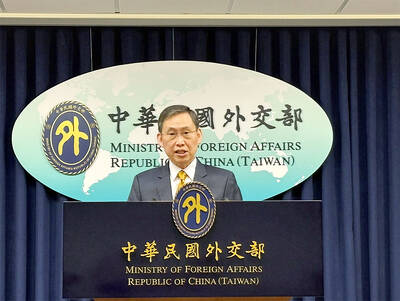
A Ministry of Foreign Affairs official yesterday said that a delegation that visited China for an APEC meeting did not receive any kind of treatment that downgraded Taiwan’s sovereignty. Department of International Organizations Director-General Jonathan Sun (孫儉元) said that he and a group of ministry officials visited Shenzhen, China, to attend the APEC Informal Senior Officials’ Meeting last month. The trip went “smoothly and safely” for all Taiwanese delegates, as the Chinese side arranged the trip in accordance with long-standing practices, Sun said at the ministry’s weekly briefing. The Taiwanese group did not encounter any political suppression, he said. Sun made the remarks when

PREPAREDNESS: Given the difficulty of importing ammunition during wartime, the Ministry of National Defense said it would prioritize ‘coproduction’ partnerships A newly formed unit of the Marine Corps tasked with land-based security operations has recently replaced its aging, domestically produced rifles with more advanced, US-made M4A1 rifles, a source said yesterday. The unnamed source familiar with the matter said the First Security Battalion of the Marine Corps’ Air Defense and Base Guard Group has replaced its older T65K2 rifles, which have been in service since the late 1980s, with the newly received M4A1s. The source did not say exactly when the upgrade took place or how many M4A1s were issued to the battalion. The confirmation came after Chinese-language media reported
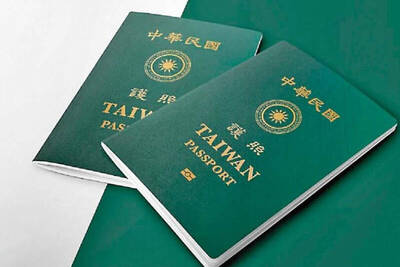
The Taiwanese passport ranked 33rd in a global listing of passports by convenience this month, rising three places from last month’s ranking, but matching its position in January last year. The Henley Passport Index, an international ranking of passports by the number of designations its holder can travel to without a visa, showed that the Taiwan passport enables holders to travel to 139 countries and territories without a visa. Singapore’s passport was ranked the most powerful with visa-free access to 192 destinations out of 227, according to the index published on Tuesday by UK-based migration investment consultancy firm Henley and Partners. Japan’s and

BROAD AGREEMENT: The two are nearing a trade deal to reduce Taiwan’s tariff to 15% and a commitment for TSMC to build five more fabs, a ‘New York Times’ report said Taiwan and the US have reached a broad consensus on a trade deal, the Executive Yuan’s Office of Trade Negotiations said yesterday, after a report said that Washington is set to reduce Taiwan’s tariff rate to 15 percent. The New York Times on Monday reported that the two nations are nearing a trade deal to reduce Taiwan’s tariff rate to 15 percent and commit Taiwan Semiconductor Manufacturing Co (TSMC, 台積電) to building at least five more facilities in the US. “The agreement, which has been under negotiation for months, is being legally scrubbed and could be announced this month,” the paper said,


 RSS
RSS