


The legislature approved an amendment yesterday that transfers the authority to appoint National Communications Commission (NCC) members from the legislature to the premier.
The Council of Grand Justices ruled in July last year that the original regulation empowering political parties to appoint NCC members based on the ratio of their seats in the legislature was unconstitutional.
The justices gave current commission members a grace period, while requiring the legislature to amend the organization's legislation by the end of this year.
The amendment to the Organic Law of the National Communications Commission (國家通訊傳播委員會組織法) now stipulates that the commission shall consist of seven members nominated by the premier and approved by the legislature.
No more than three of the commission members may share membership of the same political party, the amendment states, adding that each member will serve a four-year term.
Incumbent commission mem-bers have said they will resign at the end of next month, but the amendment allows them to stay until new members assume office.
The amendment states that commission members may stay in office if the nomination process for new members is stalled.
NCC spokesman Howard Shyr (
"This commission is ready to hand over to the next commission as soon as possible," Shyr was quoted as saying in a Central News Agency report.
Shyr said he hoped the next commission could take over in time so that the commission would not be left unstaffed.
Meanwhile, a proposed amendment to the Offshore Islands Development Law (離島建設條例) aimed at legalizing casinos on the nation's outlying islands failed to pass yesterday, with lawmakers voting 84 to 57 against it.
The legislature also rejected an article contained in the proposal backed by the Non-Partisan Solidarity Union to grant tax exemptions for cargo transported to outlying islands.
However, the legislature passed an amendment to the President and Vice President Election and Recall Law (總統副總統選舉罷免法) designating a threshold for candidates seeking a ballot recount.
The amendment, proposed by the Chinese Nationalist Party (KMT), would allow the two presidential candidates who garner the most votes to ask for a ballot recount within seven days of the election if the margin of victory is less than 0.3 percent of the valid votes in the poll.
Candidates who ask for a vote recount are required to pay a deposit of NT$3 per ballot, according to the amendment.
The legislature, however, did not approve an article in the proposal that would require newspapers, magazines, radio programs or TV shows to grant a candidate or a political party opportunities to respond to media criticism.
The legislature also decided to maintain an election lawsuit regulation that designates a second trial as a final trial. An article in the KMT's proposal sought to allow candidates to file the same election lawsuit again if new evidence were found.
Additional reporting by Angelica Oung

‘UNFRIENDLY’: Changing the nationality listing of Taiwanese residents to ‘China’ goes against EU foreign policy as well as democratic and human rights principles, MOFA said Taiwan yesterday called on Denmark to correct its designation of the nationality of Taiwanese residents as “China” or face retaliatory measures. The Danish government in 2024 changed the nationality of Taiwanese citizens on their residence permits from “Taiwan” to “China.” The decision goes against EU foreign policy and contravenes democratic and human rights principles, Ministry of Foreign Affairs (MOFA) spokesman Hsiao Kuang-wei (蕭光偉) said. Denmark should present a solution acceptable to Taiwan as soon as possible and correct the erroneous designation to preserve the longstanding friendship between the two nations, Hsiao said. The issue could damage Denmark’s image and business reputation in Taiwan,

KEY INDUSTRY: The vice premier discussed a plan to create a non-red drone supply chain by next year, which has been allocated a budget of more than NT$7.2 billion The government has budgeted NT$44.2 billion (US$1.38 billion) to cultivate Taiwan’s uncrewed aerial vehicle (UAV) industry over the next five years, which would make the nation a major player in the industry’s democratic supply chain in the Asia-Pacific region, Premier Cho Jung-tai (卓榮泰) said yesterday. Cho made the remarks during a visit to the facilities of Cub Elecparts Inc (為升電裝). Democratic Progressive Party (DPP) Legislator Chen Su-yueh (陳素月) and Chinese Nationalist Party (KMT) Legislator Hsieh Yi-fong (謝依鳳) also participated in the trip. Cub Elecparts has transitioned from the automotive industry to the defense industry, which is the top priority among the nation’s
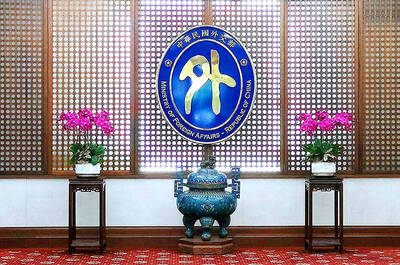
SOUTH KOREA DISPUTE: If Seoul continues to ignore its request, Taiwan would change South Korea’s designation on its arrival cards, the foreign ministry said If South Korea does not reply appropriately to a request to correct Taiwan’s name on its e-Arrival card system before March 31, the government would take corresponding measures to change how South Korea is labeled on the online Taiwan Arrival Card system, the Ministry of Foreign Affairs said yesterday. South Korea’s e-Arrival card system lists Taiwan as “China (Taiwan)” in the “point of departure” and “next destination” fields. Taipei has asked Seoul to change the wording. Since March 1, South Koreans who hold government-issued Alien Resident Certificates (ARC) have been identified as from “South Korea” rather than the “Republic of Korea,” the
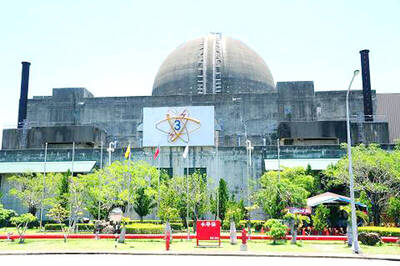
SUFFICIENT: The president said Taiwan has enough oil for next month, with reserves covering more than 100 days and natural gas enough for 12 to 14 days A restart plan for the Guosheng Nuclear Power Plant in New Taipei City’s Wanli District (萬里) and the Ma-anshan Nuclear Power Plant in Pingtung County’s Hengchun Township (恆春) would be submitted to the Nuclear Safety Commission by the end of the month, President William Lai (賴清德) said yesterday, reversing the government’s policy to abolish nuclear energy. On May 17 last year, Taiwan shut down its last nuclear reactor and became the first non-nuclear nation in East Asia, fulfilling the Democratic Progressive Party (DPP) government’s pledge of a “nuclear-free homeland.” Even without nuclear power, Taiwan can maintain a stable electricity supply until 2032,


 RSS
RSS