


South Korea's parliament voted yesterday to launch a new probe into fraud allegations against presidential opposition frontrunner Lee Myung-bak two days before the country goes to the polls.
A specially appointed independent lawyer will investigate claims including share-rigging, faking documents and embezzlement against Lee, the favorite in tomorrow's election, in the wake of new video evidence.
Analysts said Lee is still expected to win the presidency, but that the affair would cloud his first months in office.
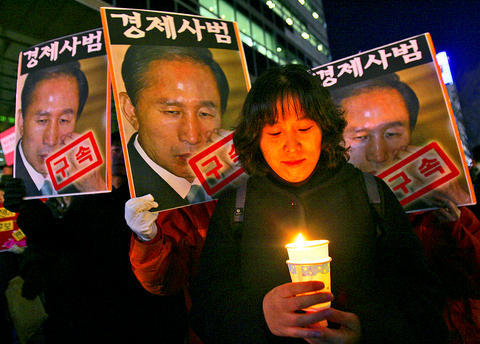
PHOTO: AP
It was unclear when the new probe would start. If elected, he would assume office on Feb. 25 and as president would have immunity from prosecution.
The business-friendly Lee, 65, was cleared on Dec. 5 of a fraud allegedly engineered by his business partner and linked to the BBK investment firm.
However, government allies accused prosecutors of bias and pushed for an independent probe.
Some 160 lawmakers voted in favor of appointing the special counsel, with none against. Lee's conservative Grand National Party (GNP) did not participate.
"The motion on appointing an independent counsel has been passed," a parliamentary official said.
Pressure to reopen the probe was spurred on Sunday with the release of a video clip recorded in 2000 in which Lee appears to say during a speech at a university that he founded BBK.
He had previously denied involvement in the firm.
The video clip came to light after police arrested three men for trying to extort 2 billion won (US$3.2 million) from the GNP in return for withholding the tape.
Lee, a 65-year-old former construction executive, is seen by many as the candidate best suited to reinvigorate the economy after years of relatively modest growth.
When the deadline for opinion polls expired last week, he was almost 30 percentage points ahead of his closest rival.
The request for a special investigator was sent to the government yesterday for approval, and South Korean President Roh Moo-hyun is expected to endorse it, presidential spokesman Cheon Ho-seon said.
Roh told his justice minister on Sunday to consider reopening the prosecution probe, an action denounced by the GNP as interference in the election.
Roh is barred by the Constitution from standing for a second five-year term. Most of his political allies are members of the newly formed UNDP.
The justice ministry side-stepped Roh's call yesterday but said it would accept any inquiry by an independent counsel.
Lee said yesterday that he made "erroneous remarks" in the university speech while he was promoting a separate new business venture. But he again denied he had owned BBK.
Opponents went for the jugular.
"As of yesterday, GNP candidate Lee Myung-bak is nothing more than a criminal," UNDP candidate Chung Dong-Young said. "He must immediately stand down."
Analysts said the GNP candidate was still expected to win.
The video "will deal a painful but not lethal blow to Lee Myung-bak," said Chun In-young, a political science professor at Seoul National University.
Chun said Lee will still likely win but will be damaged while in office by the possibility of being questioned by an independent counsel, adding: "It may be hard for him to push for strong policies in office."

AGING: As of last month, people aged 65 or older accounted for 20.06 percent of the total population and the number of couples who got married fell by 18,685 from 2024 Taiwan has surpassed South Korea as the country least willing to have children, with an annual crude birthrate of 4.62 per 1,000 people, Ministry of the Interior data showed yesterday. The nation was previously ranked the second-lowest country in terms of total fertility rate, or the average number of children a woman has in her lifetime. However, South Korea’s fertility rate began to recover from 2023, with total fertility rate rising from 0.72 and estimated to reach 0.82 to 0.85 by last year, and the crude birthrate projected at 6.7 per 1,000 people. Japan’s crude birthrate was projected to fall below six,
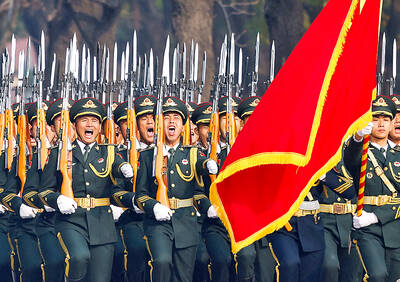
Conflict with Taiwan could leave China with “massive economic disruption, catastrophic military losses, significant social unrest, and devastating sanctions,” a US think tank said in a report released on Monday. The German Marshall Fund released a report titled If China Attacks Taiwan: The Consequences for China of “Minor Conflict” and “Major War” Scenarios. The report details the “massive” economic, military, social and international costs to China in the event of a minor conflict or major war with Taiwan, estimating that the Chinese People’s Liberation Army (PLA) could sustain losses of more than half of its active-duty ground forces, including 100,000 troops. Understanding Chinese
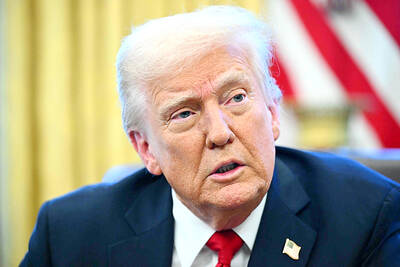
US President Donald Trump in an interview with the New York Times published on Thursday said that “it’s up to” Chinese President Xi Jinping (習近平) what China does on Taiwan, but that he would be “very unhappy” with a change in the “status quo.” “He [Xi] considers it to be a part of China, and that’s up to him what he’s going to be doing, but I’ve expressed to him that I would be very unhappy if he did that, and I don’t think he’ll do that. I hope he doesn’t do that,” Trump said. Trump made the comments in the context
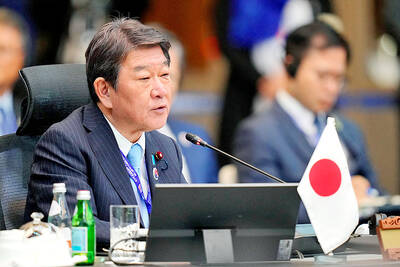
SELF-DEFENSE: Tokyo has accelerated its spending goal and its defense minister said the nation needs to discuss whether it should develop nuclear-powered submarines China is ramping up objections to what it sees as Japan’s desire to acquire nuclear weapons, despite Tokyo’s longstanding renunciation of such arms, deepening another fissure in the two neighbors’ increasingly tense ties. In what appears to be a concerted effort, China’s foreign and defense ministries issued statements on Thursday condemning alleged remilitarism efforts by Tokyo. The remarks came as two of the country’s top think tanks jointly issued a 29-page report framing actions by “right-wing forces” in Japan as posing a “serious threat” to world peace. While that report did not define “right-wing forces,” the Chinese Ministry of Foreign Affairs was


 RSS
RSS