


The saga over China's refusal to allow US warships to enter Hong Kong took another twist on Friday, when it was confirmed that Beijing had rejected more US requests for a holiday visit and a consulate support flight to Hong Kong.
Beijing told Washington on Nov. 22 that it was rejecting a request for a New Year's visit by the USS Reuben James, Pentagon East Asia public affairs officer Stewart Upton told the Taipei Times.
That was the same date that Beijing told Washington it made a mistake in rejecting a request by the USS Kitty Hawk and its battle group to visit Hong Kong for Thanksgiving. But by that time, it was too late, and the group sailed back to its Japanese base.
At the same time it rejected the Navy frigate Reuben James' visit, Beijing also nixed the flight of a C-17 cargo plane to Hong Kong for its scheduled quarterly support mission for the US consulate, Upton said.
The rejections appear to have deepened the military crisis between Beijing and Washington, which Chinese foreign ministry officials have linked to the expansion of US arms sales to Taiwan this year.
Over the past three months, the Pentagon has notified Congress of plans to sell more that US$2 billion in major defense systems aimed at countering a Chinese attack on Taiwan.
concern
That has come as Beijing has expressed serious concern over President Chen Shui-bian's (
Potentially adding to the tensions are reports that the Kitty Hawk group, after sailing from the Hong Kong area, traveled through the Taiwan Strait and may have encountered a secret Chinese military exercise simulating an invasion of Taiwan.
At the White House, spokesman Dana Perino said that the Bush administration was "communicating with [Beijing], and I am sure that we will be able to work it out with them ... We are working to make sure that this situation can be resolved."
For the second day in a row, Perino tried to put a positive face on the crisis, emphasizing the positive aspects to US-China relations.
"This incident has not prevented us from being able to work with the Chinese," she told reporters on Friday. "We have a deep and mature relationship."
President George W. Bush believes, Perino said, that "this relationship is growing and maturing, and this is something the two nations should be able to work through, and I don't think escalating it everyday is necessary."
nine in all
The latest Chinese actions brought to nine the number of US warships denied entry into Hong Kong since China took over the territory from Britain in 1997.
That includes the Kitty Hawk and five vessels in its group, the USS Reuben James, and two minesweepers turned away from Hong Kong last month after getting caught in a violent storm at sea.
After the handover, the US and China reached an agreement on port visits that gave China veto over the port calls, but anticipated a routine approval of such visits.
Some 50 US warships visit Hong Kong annually, and port calls have been rejected only in extreme periods of US-China tension, such as the EP-3 incident in 2001 in which a US reconnaissance plane was forced down over Hainan.
The level of turndowns is unprecedented and some observers in Washington think it reflects a new period of US-China tension over Taiwan and Tibet.
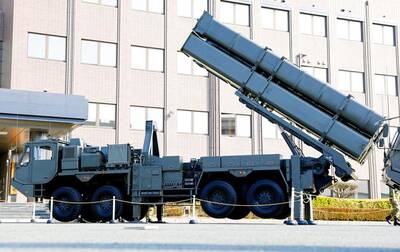
Japan has deployed long-range missiles in a southwestern region near China, the Japanese defense minister said yesterday, at a time when ties with Beijing are at their lowest in recent years. The missiles were installed in Kumamoto in the southern region of Kyushu, as Japan is attempting to shore up its military capacity as China steps up naval activity in the East China Sea. “Standoff defense capabilities enable us to counter the threat of enemy forces attempting to invade our country ... while ensuring the safety of our personnel,” Japanese Minister of Defense Shinjiro Koizumi said. “This is an extremely important initiative for
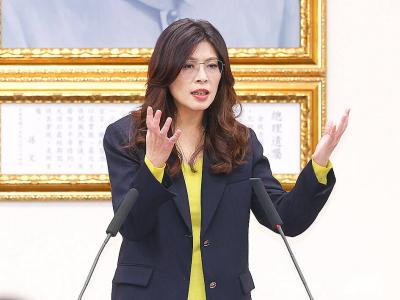
Chinese Nationalist Party (KMT) Chairwoman Cheng Li-wun (鄭麗文) today accepted an invitation from Chinese President Xi Jinping (習近平) to lead a delegation to China next month, saying she hopes to promote the peaceful development of cross-strait relations and bring stability to the Taiwan Strait. “I am grateful and happy to accept this invitation,” Cheng said in a statement from the KMT chairperson’s office. Cheng said she hopes both sides can work together to promote the peaceful development of cross-strait relations, enhance exchange and cooperation, bring stability to the Taiwan Strait and improve people’s livelihoods. At today's news conference, Cheng said any efforts to
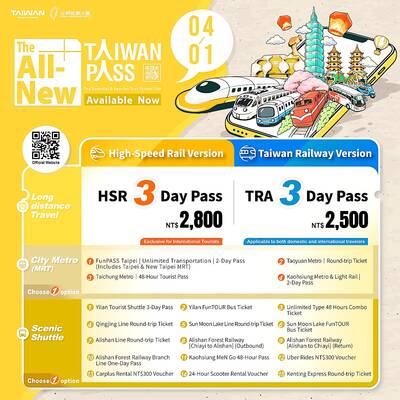
MORE POPULAR: Taiwan Pass sales increased by 59 percent during the first quarter compared with the same period last year, the Tourism Administration said The Tourism Administration yesterday said that it has streamlined the Taiwan Pass, with two versions available for purchase beginning today. The tourism agency has made the pass available to international tourists since 2024, allowing them to access the high-speed rail, Taiwan Railway Corp services, four MRT systems and four Taiwan Tourist Shuttles. Previously, five types of Taiwan Pass were available, but some tourists have said that the offerings were too complicated. The agency said only two types of Taiwan Pass would be available, starting from a three-day pass with the high-speed rail and a three-day pass with Taiwan Railway Corp. The former costs NT$2,800

The nation’s fastest supercomputer, Nano 4 (晶創26), is scheduled to be launched in the third quarter, and would be used to train large language models in finance and national defense sectors, the National Center for High-Performance Computing (NCHC) said. The supercomputer, which would operate at about 86.05 petaflops, is being tested at a new cloud computing center in the Southern Taiwan Science Park in Tainan. The exterior of the server cabinet features chip circuitry patterns overlaid with a map of Taiwan, highlighting the nation’s central position in the semiconductor industry. The center also houses Taiwania 2, Taiwania 3, Forerunner 1 and


 RSS
RSS