


Infectious diseases are emerging faster than at any time in history, the WHO warned in a report yesterday that urged closer global cooperation to tackle the growing health threats of the 21st century.
The WHO underlined that the threats knew no boundaries and included not only epidemics, but also foodborne diseases, chemical, biological or nuclear accidents or attacks, industrial pollution and the impact of climate change "that may put millions of people at risk in several countries."
"The report emphasizes that the international response required today is not only to the known, but also to the unknown," the WHO said in The World Health Report 2007: A Safer Future.
Open sharing of medical know-how, technology and supplies between rich and poor countries is also crucial and "one of the most feasible routes to global health security," it said.
Since the 1970s new diseases have been identified at the "unprecedented" rate of one or more per year, the report said.
Other centuries-old threats such as influenza, malaria and tuberculosis were also thriving because of a mix of biological mutations, rising resistance to antibiotics and weak health systems.
"Given today's universal vulnerability to these threats, better security calls for global solidarity," WHO Director-General Margaret Chan (
The report is largely based on the notion that a given health threat is no longer easily confined within a country and can spread around the world swiftly, partly due to the expansion in passenger air travel over the past half century and to trade.
The report warned of "serious gaps, particularly in health services in many countries," caused by poverty or a lack of investment that severely weakens the global safety net.
Health and medical care are not only essential to help prevent or treat illness, they are also vital in the timely detection of outbreaks, new diseases, as well as bioweapon attacks, environmental health problems, the report said.
"It would be extremely naive and complacent to assume that there will not be another disease like AIDS, another Ebola, another SARS, sooner or later," it said.
The three historical advances that helped stifle diseases such as bubonic plague, cholera and smallpox -- quarantines, better sanitation and immunization -- came about separately but became successes once they were applied internationally, the report argued.
The WHO introduced new International Health Regulations this year that are meant to sharpen the response of its 193 members to major health threats within their own borders or abroad.
It is also trying to resolve with Indonesian complaints about the availability of newly developed medicines in poor countries, which halted crucial bird flu virus sharing with foreign laboratories.
The sharing of tissue samples from human victims is needed to detect possible mutations in the deadly H5N1 bird flu virus -- one of the biggest fears of the beginning of this century -- that might lead to a flu pandemic.

A signaling system malfunction disrupted high-speed rail (HSR) services beginning at 8am today, with trains temporarily reduced to three northbound and three southbound trains per hour as authorities conduct inspections. The malfunction occurred on a section of track in Miaoli County during pre-operation checks early this morning, forcing northbound and southbound trains to use a single track, the HSR operator said. The regular schedule has been replaced with three hourly trains offering only nonreserved seating in each direction, stopping at every station, it said, adding that business class cars would still have reserved seating. Departures from terminal stations are scheduled at the top
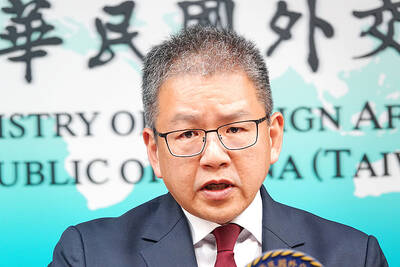
Taiwan is still in the process of assessing the possibility of recruiting workers from Eswatini, the Ministry of Foreign Affairs said yesterday, adding that its goal is to help Eswatini upgrade its vocational training centers. If there are plans to recruit workers from Eswatini, safeguarding national security, protecting public health and ensuring the employment rights of Taiwanese would be prerequisites, Department of West Asian and African Affairs Director-General Yen Chia-liang (顏嘉良) told a news conference. Key considerations would also include filling labor shortages in specific industries, and fostering bilateral professional and technical exchanges, he said. Yen was asked about the progress of labor

A US uncrewed surface vessel (USV) encountered multiple Chinese warships during an autonomous transit of the Taiwan Strait, US defense company Seasats said in a statement on Wednesday. Seasats announced that a Lightfish USV had completed the first autonomous transit of the Taiwan Strait. Over five days, the USV traversed the entire length of the Strait while constantly monitoring surface vessel traffic, the company said. The Lightfish encountered multiple Chinese warships, one of which was a Chinese People’s Liberation Army Navy (PLAN) Type 056 corvette, it said. The Chinese vessels were operating “well within Taiwan’s exclusive economic zone without transmitting their identity via the

VERBOSE VESSELS: A CGA cutter and a China Coast Guard exchanged verbal barbs for more than a day in Taiwanese-controlled waters before the Chinese vessel left The Taiwanese and Chinese coast guards had a standoff near the strategically located Pratas Islands (Dongsha Islands, 東沙群島) in the north of the South China Sea, the Coast Guard Administration (CGA) said yesterday. The two sides engaged in intense radio exchanges over sovereignty claims during the 33-hour standoff. China Coast Guard vessel 3501 eventually left the restricted waters, 26.6 nautical miles (49.2km) west of the Pratas Islands, at 5pm yesterday, the CGA said. Lying approximately between southern Taiwan and Hong Kong, the Taiwan-controlled Pratas are seen by some security experts as vulnerable to Chinese attack due to their distance — more than


 RSS
RSS