


Asian stocks plunged yesterday as fallout spread across the region from global market turmoil set off by a US mortgage problem.
The Bank of Japan joined its US and European counterparts in pouring cash into money markets to calm growing jitters, while the European Central Bank yesterday again injected cash into the eurozone banking market.
The bank said it was a "fine tuning" operation and "follows up on the operation conducted yesterday and aims to assure orderly conditions on the euro money market."
It gave no indication of how much it was injecting.
The NIKKEI 225 index dropped 2.37 percent to close at 16,764.09 points in Tokyo, while the Korea Composite Stock Price Index fell 4.2 percent to 1,828.49. The index fell as much as 5 percent in intraday trading.
Taiwanese shares also plummeted, with the TAIEX index falling 251.29 points, or 2.74 percent, to close at 8,931.31 points.
Elsewhere in Asia, Hong Kong's blue chip Hang Seng Index was down 2.88 percent at 21,792.71. Singapore's Straits Times Index was down 1.6 percent at 3,359.18.
Philippine share prices closed 3 percent lower, with the composite index shedding 103.24 points to 3,281.96, while the S&P/ASX 200 plunged 3.7 percent or 229.6 points to close at 5,936.
The plunge came after the Dow Jones industrial average fell 387.18, or 2.83 percent, to 13,270.68 in New York on Thursday after a French bank announced it was freezing funds that invested in US subprime mortgages, deepening fears of a credit crunch.
Short-term investors have led the selling in Asia, concerned over whether the problem has been contained to the subprime sector, said Song Seng Wun, regional economist with Singapore's CIMB-GK Research.
"But there hasn't been any panic selling. The long-term people are still looking and waiting," Song said.
Amid yesterday's decline, the Bank of Japan said that it injected ?1 trillion (US$8.39 billion) into money markets to curb rises in a key overnight interest rate.
The European Central Bank provided nearly 95 billion euros (US$130.8 billion) to money markets, the bank's biggest infusion ever. The US Federal Reserve added a larger-than-normal US$24 billion in temporary reserves to the US banking system.
Early yesterday, the Fed announced a three-day repurchase agreement to inject liquidity into the market. The Fed said it would accept US$19 billion. The move occurred after the Fed funds rate, the rate banks charge each other for overnight loans, ticked above 6 percent again yesterday, well above the Fed's target of 5.25 percent.
The Australian central bank followed suit, as the Reserve Bank of Australia yesterday injected A$4.95 billion (US$4.19 billion) into the money market, more than double the daily average.
The central banks in South Korea and Singapore said they were prepared to intervene if needed, although Jang Byung-wha, director-general in the Bank of Korea's financial markets department, said Korean financial institutions had not invested large amounts in subprime mortgages.
Meanwhile, central banks in Malaysia, Indonesia and the Philippines intervened in markets to support their currencies by selling US dollars, as escalating credit market worries hit risky assets around the region.
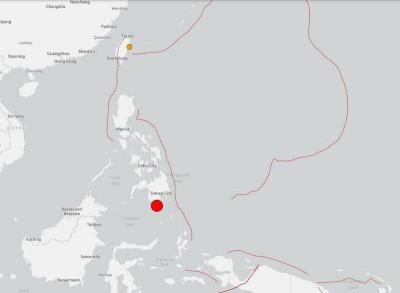
A magnitude 7.8 earthquake struck off the southern coast of Mindanao in the Philippines at 7:38am today, prompting the US Tsunami Warning System to issue an alert for neighboring countries, including Taiwan. The system issued a purple alert indicating a "tsunami threat." The potential threat zone includes Taiwan, the Philippines, Papua New Guinea, Yap and Palau. Philippine authorities were assessing the damage from the quake, with the office of civil defense seeking to verifying initial reports that 15 people had been killed and 129 injured in the region, mostly from falling debris. Arlene Hollero, disaster chief of Maasim town in the Philippines' Sarangani Province,
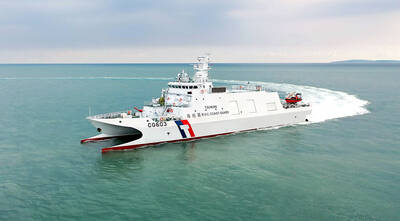
‘GRAY ZONE’ PRESSURE: Beijing’s activities are intended to create the deceitful impression that China has jurisdiction over the area around Taiwan, the CGA said Taiwan’s rights over its territorial waters and exclusive economic zone must not be violated by any country, the Mainland Affairs Council said yesterday, adding that it will not accept any unprovoked actions. The council issued the remarks in response to the China Coast Guard conducting maritime enforcement drills near eastern Taiwan and claiming to fully exercise China’s maritime administrative law enforcement authority. The Coast Guard Administration (CGA) has been closely monitoring the situation and is taking concrete steps to defend the nation’s sovereignty and secure its waters, the council said. China has no sovereign rights over the waters off eastern

RESILIENCE: Taiwan plays a key role in semiconductors, energy, information infrastructure and advanced manufacturing, AIT Director Raymond Greene said Taiwan’s continued investment in deterrence and resilience remains vital, especially in uncrewed systems and other emerging technologies, American Institute in Taiwan (AIT) Director Raymond Greene said yesterday. Greene made the remarks at the annual National Strategic Summit on Supply Chain Resilience held by the Research Institute for Democracy, Society and Emerging Technology (DSET), a government-backed think tank. As Taiwan last year became the US’ fourth-largest trading partner and supply chain security is becoming more important, cooperation in emerging technologies continues to deepen between the two countries, he said. The US is committed to accelerating innovation, building key infrastructure, strengthening cooperation

RIGHT DIRECTION: Taiwan’s efforts to prevent forced labor include a proposal to ‘fully prohibit’ employers from withholding workers’ documents, an official said Taiwan is to establish a mechanism to restrict imports of goods linked to forced labor, the Executive Yuan said yesterday, after the US proposed imposing additional tariffs on Taiwanese goods over labor concerns. “The Ministry of Labor and the Ministry of Economic Affairs are to establish an interministerial review procedure,” Executive Yuan spokesperson Michelle Lee (李慧芝) said at a news briefing in Taipei. “The government is to use the Foreign Trade Act [貿易法] as the legal basis to restrict imports of goods produced with forced labor” and bring its supply chain governance more in line with international standards on human rights, resilience


 RSS
RSS