


A former Canadian Cabinet member and a human rights lawyer issued a report on Thursday alleging China harvests organs from unwilling live prison inmates, mostly Falun Gong practitioners, for transplants on a large scale.
The report's authors, Canada's former Secretary of State for the Asia-Pacific region David Kilgour and human rights lawyer David Matas, implicated dozens of hospitals and jails throughout China after a two-month investigation.
The pair also identified some 41,500 suspect transplants in China since 2000, saying they were unable to track the source of the organs used.
"We believe that there has been and continues today to be large scale organ seizures from unwilling Falun Gong practitioners," they wrote in their report.
"This is a form of evil that we have yet to see on this planet, a new form of evil," Matas told reporters on Thursday.
China, which has denied similar allegations, refused entry to both to investigate the claims further, he said.
The US-based lobby group The Coalition to Investigate the Persecution of the Falun Gong in China (CIPFG) asked the duo to investigate claims by several of their members.
China banned the spiritual group in 1999 and has vehemently denied the allegations of organ harvesting, accusing the group of spreading rumors in a bid to undermine the country's international relations and "social stability."
Kilgour and Matas said many of the claims were second-hand, but that there is enough evidence to warrant a broader investigation.
"There are investigative difficulties in establishing these allegations because ... the victim is dead, the perpetrator is not going to confess and the scene of the crime leaves no trace; it's an operating room," Matas said.
"I don't know if this is policy or corruption, but it's widespread," he added.
The two called on Chinese authorities, the UN and international human rights organizations to investigate the claims further.
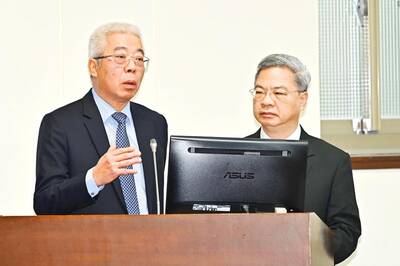
Taiwan has arranged for about 8 million barrels of crude oil, or about one-third of its monthly needs, to be shipped from the Red Sea this month to bypass the Strait of Hormuz and ease domestic supply pressures, CPC Corp, Taiwan (CPC, 台灣中油) said yesterday. The state-run oil company has worked with Middle Eastern suppliers to secure routes other than the Strait of Hormuz, through which about 20 percent of the world’s oil and liquefied natural gas typically passes, CPC chairman Fang Jeng-zen (方振仁) said at a meeting of the legislature’s Economics Committee in Taipei. Suppliers in Saudi Arabia have indicated they

South Korea has adjusted its electronic arrival card system to no longer list Taiwan as a part of China, a move that the Ministry of Foreign Affairs said would help facilitate exchanges between the two sides. South Korea previously listed “Taiwan” as “Taiwan (China)” in the drop-down menus of its online arrival card system, where people had to fill out where they came from and their next destination. The ministry had requested South Korea make a revision and said it would change South Korea’s name on Taiwan’s online immigration system from “Republic of Korea” to “Korea (South),” should the issue not be

CCP ‘PAWN’? Beijing could use the KMT chairwoman’s visit to signal to the world that many people in Taiwan support the ‘one China’ principle, an academic said Chinese Nationalist Party (KMT) Chairwoman Cheng Li-wun (鄭麗文) yesterday arrived in China for a “peace” mission and potential meeting with Chinese President Xi Jinping (習近平), while a Taiwanese minister detailed the number of Chinese warships currently deployed around the nation. Cheng is visiting at a time of increased Chinese military pressure on Taiwan, as the opposition-dominated Legislative Yuan stalls a government plan for US$40 billion in extra defense spending. Speaking to reporters before going to the airport, Cheng said she was going on a “historic journey for peace,” but added that some people felt uneasy about her trip. “If you truly love Taiwan,
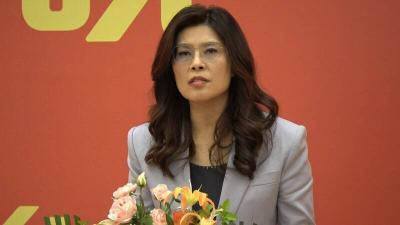
Both sides of the Taiwan Strait share a political foundation based on the “1992 consensus” and opposition to Taiwanese independence, Chinese Nationalist Party (KMT) Chairwoman Cheng Li-wun (鄭麗文) today said during her meeting with Chinese President Xi Jinping (習近平). Both sides of the Strait should plan and build institutionalized and sustainable mechanisms for dialogue and cooperation based on that foundation to make peaceful development across the Strait irreversible, she said. Peace is a shared moral value across the Strait, and both sides should move beyond political confrontation to seek institutionalized solutions to prevent war, she said. Mutually beneficial cross-strait relations are what the


 RSS
RSS