


China Airlines Ltd (CAL,
The report -- in the Chinese-language Liberty Times, the Taipei Times' sister newspaper -- quoted a source described as close to a private pro-independence group, which visited the airline on Friday.
The group, the "908 Taiwan Republic Campaign," visited CAL's headquarters in Taipei on Friday, and asked the carrier to decide on a timeframe in which to get rid of the term "China" from its title, the sources said.
The group threatened to hold a protest rally if the airline does not rename itself.
Wait and see
According to the report, an unnamed airline official responded with a Chinese-language idiom, "shimuyidai (拭目以待)," which roughly translates as "rub the sand from your eyes and anxiously await what happens."
Pro-independence activists have long demanded that state-run enterprises, such as Chinese Petroleum Corp (
Discussions
Chen has reportedly asked CAL to take action on the issue, and the airline has discussed a name change during internal meetings and decided to make the change the next time Chen boards an aircraft to travel abroad, the source said. But CAL officials haven't disclosed exactly what the change will be, citing commercial secrecy, the report said.
Former CAL chairman Chiang Yao-chung (
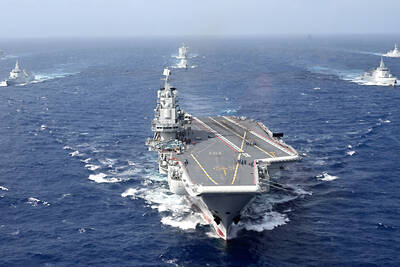
PROVOCATIVE: Chinese Deputy Ambassador to the UN Sun Lei accused Japan of sending military vessels to deliberately provoke tensions in the Taiwan Strait China denounced remarks by Japan and the EU about the South China Sea at a UN Security Council meeting on Monday, and accused Tokyo of provocative behavior in the Taiwan Strait and planning military expansion. Ayano Kunimitsu, a Japanese vice foreign minister, told the Council meeting on maritime security that Tokyo was seriously concerned about the situation in the East China and South China seas, and reiterated Japan’s opposition to any attempt to change the “status quo” by force, and obstruction of freedom of navigation and overflight. Stavros Lambrinidis, head of the EU delegation to the UN, also highlighted South China Sea
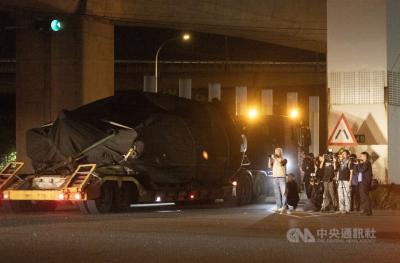
The final batch of 28 M1A2T Abrams tanks purchased from the US arrived at Taipei Port last night and were transported to the Armor Training Command in Hsinchu County’s Hukou Township (湖口), completing the military’s multi-year procurement of 108 of the tanks. Starting at 12:10am today, reporters observed more than a dozen civilian flatbed trailers departing from Taipei Port, each carrying an M1A2T tank covered with black waterproof tarps. Escorted by military vehicles, the convoy traveled via the West Coast Expressway to the Armor Training Command, with police implementing traffic control. The army operates about 1,000 tanks, including CM-11 Brave Tiger
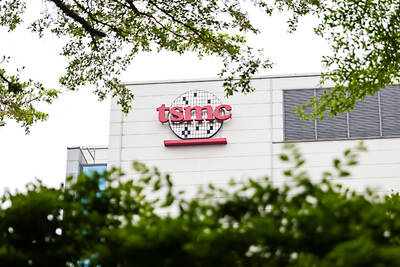
Taiwan Semiconductor Manufacturing Co (TSMC, 台積電), the world’s largest contract chipmaker, said it expects its 2-nanometer (2nm) chip capacity to grow at a compound annual rate of 70 percent from this year to 2028. The projection comes as five fabs begin volume production of 2-nanometer chips this year — two in Hsinchu and three in Kaohsiung — TSMC senior vice president and deputy cochief operating officer Cliff Hou (侯永清) said at the company’s annual technology symposium in Silicon Valley, California, last week. Output in the first year of 2-nanometer production, which began in the fourth quarter of last year, is expected to
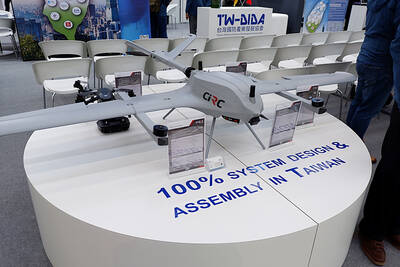
Taiwan’s drone exports surged past US$100 million in the first quarter, exceeding last year’s full-year total, with the Czech Republic emerging as the largest buyer, the Ministry of Economic Affairs said. Exports of complete drones reached US$115.85 million in the period, about 1.2 times the total recorded for all of last year, the ministry said in a report. Exports to the Czech Republic accounted for about US$100 million, far outpacing other markets. Poland, last year’s top destination, recorded about US$11.75 million in the first quarter. Taiwan’s drone exports have expanded rapidly in the past few years, with last year’s total


 RSS
RSS