


Over 1,000 demonstrators from local traditional manufacturing industries protested in front of major government departments yesterday, demanding the government safeguard their businesses against masses of cheap Chinese imports.
The protesters, mainly from the Yunlin Towel Industrial Technology and Development Association, urged the government to impose import-relief taxes on Chinese towels, which they claimed were clobbering the local industry, slashing the output value from NT$2.5 billion (US$77.4 million) to less than NT$500 million in three years.
They requested the government increase duties on made-in-China towels from the current 10.5 percent to 50 percent.
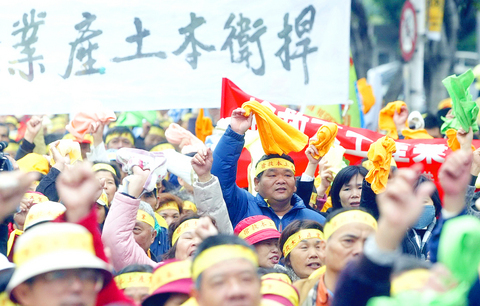
PHOTO: WANG YI-SUNG, TAIPEI TIMES
The towel manufacturers may take to the streets again should the government fail to respond within a week, they said.
The towel dispute has also brought about the first trade negotiations across the Taiwan Strait under the WTO framework since Taiwan and China joined the trade organization in early 2002 and late 2001, respectively.
A delegation of Chinese trade officials and industry representatives attended a hearing in Taipei held yesterday by the Ministry of Economic Affairs' International Trade Commission.
During the hearing, the towel manufacturing association and the Chinese delegation stated their cases and presented related evidence for further investigations.
Chu Chin-yuan (周清源), chairman of the association, said that the filing of a request for import-relief measures on Aug. 24 last year was in accordance with WTO rules, as a flood of Chinese towels have undercut local products and affected local businesses.
Since Taiwan lifted the ban on Chinese towel imports on Feb. 15, 2002, imports have increased rapidly, from 3.7 million kg in the same year to 5.6 million kg in 2003 and to 6.8 million kg in 2004, according to the petition, which cited government statistics.
Translated into market share, Chinese towels took up 45.54 percent of the market in 2002, surged to 62.48 percent in 2003 and climbed further to 70 percent in 2004, the petition said. In contrast, local products' market share dropped from 16.61 percent in 2001, to 8.42 percent in 2004.
Chinese products were about half the price of local towels in 2002, falling to 42 percent the price of local products in 2004.
"The statistics show that our filing complies with all required conditions," Chu said.
Facing protesters outside the Ministry of Economic Affairs building, Vice Minister Shih Yen-hsiang (施顏祥) said the government would consider the protesters' requests on quotas and duties and will work to protect the nation's traditional manufacturers under the WTO framework.
According to the "transitional product-specific safeguard mechanism for imports originating in the People's Republic of China," which is included in the protocol for China's accession to the WTO, safeguard measures may be imposed when products imported from China cause or threaten to cause market disruption to an industry.
Market disruption is said to exist whenever imports of a product are increasing rapidly and become a significant cause of material injury -- or threaten to cause injury -- to an industry, according to the protocol.
But the delegation, led by Cao Xinyu (
Liu Jianwei (劉建偉), a lawyer representing the delegation, said there was no solid proof of Chinese products causing market disruption, as the Taiwanese towel manufacturing industry showed signs of decline before Chinese products arrived.
Citing figures from the petition, Liu said production of locally made towels in 2000 had slumped by 32.65 percent from 1999, and the volume in 2002 slid by 45.96 percent from 2001.
The decline may be related to industry migration to Vietnam and China, Liu said. The growth rate of Chinese towel imports has also declined over the years, and would cause no threat to local rivals, he added.
The commission will conclude the investigation by March 25 and decide whether or not to enact safeguard measures.
On Wednesday, the Ministry of Finance also announced it would launch an anti-dumping investigation into the case, which could take more than 260 days.
A slew of countries have taken safeguard measures to protect their industries from cheaper Chinese goods, including the US and the EU.
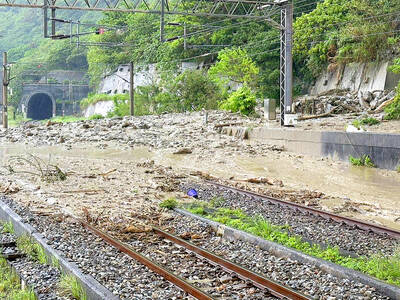
ROLLER-COASTER RIDE: More than five earthquakes ranging from magnitude 4.4 to 5.5 on the Richter scale shook eastern Taiwan in rapid succession yesterday afternoon Back-to-back weather fronts are forecast to hit Taiwan this week, resulting in rain across the nation in the coming days, the Central Weather Administration said yesterday, as it also warned residents in mountainous regions to be wary of landslides and rockfalls. As the first front approached, sporadic rainfall began in central and northern parts of Taiwan yesterday, the agency said, adding that rain is forecast to intensify in those regions today, while brief showers would also affect other parts of the nation. A second weather system is forecast to arrive on Thursday, bringing additional rain to the whole nation until Sunday, it
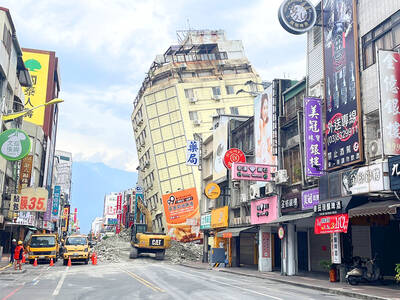
LANDSLIDES POSSIBLE: The agency advised the public to avoid visiting mountainous regions due to more expected aftershocks and rainfall from a series of weather fronts A series of earthquakes over the past few days were likely aftershocks of the April 3 earthquake in Hualien County, with further aftershocks to be expected for up to a year, the Central Weather Administration (CWA) said yesterday. Based on the nation’s experience after the quake on Sept. 21, 1999, more aftershocks are possible over the next six months to a year, the agency said. A total of 103 earthquakes of magnitude 4 on the local magnitude scale or higher hit Hualien County from 5:08pm on Monday to 10:27am yesterday, with 27 of them exceeding magnitude 5. They included two, of magnitude

CONDITIONAL: The PRC imposes secret requirements that the funding it provides cannot be spent in states with diplomatic relations with Taiwan, Emma Reilly said China has been bribing UN officials to obtain “special benefits” and to block funding from countries that have diplomatic ties with Taiwan, a former UN employee told the British House of Commons on Tuesday. At a House of Commons Foreign Affairs Committee hearing into “international relations within the multilateral system,” former Office of the UN High Commissioner for Human Rights (OHCHR) employee Emma Reilly said in a written statement that “Beijing paid bribes to the two successive Presidents of the [UN] General Assembly” during the two-year negotiation of the Sustainable Development Goals. Another way China exercises influence within the UN Secretariat is
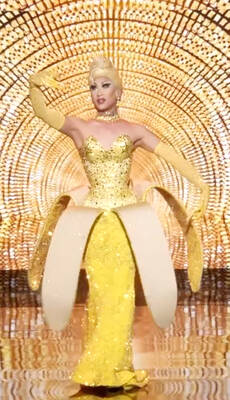
Taiwan’s first drag queen to compete on the internationally acclaimed RuPaul’s Drag Race, Nymphia Wind (妮妃雅), was on Friday crowned the “Next Drag Superstar.” Dressed in a sparkling banana dress, Nymphia Wind swept onto the stage for the final, and stole the show. “Taiwan this is for you,” she said right after show host RuPaul announced her as the winner. “To those who feel like they don’t belong, just remember to live fearlessly and to live their truth,” she said on stage. One of the frontrunners for the past 15 episodes, the 28-year-old breezed through to the final after weeks of showcasing her unique


 RSS
RSS