


Taiwan and Libya will improve bilateral economic exchanges by setting up trade offices and President Chen Shui-bian (陳水扁) may accept an invitation to visit the north African state in near future, the Presidential Office said yesterday.
Chen yesterday met with the chairman of the Qaddafi Foundation, Saif Qaddafi, the third eldest son of Libyan leader Muammar Qaddafi.
Chen said that the visit of Saif Qaddafi to Taiwan as the envoy of the nation's leader was an historic occasion.
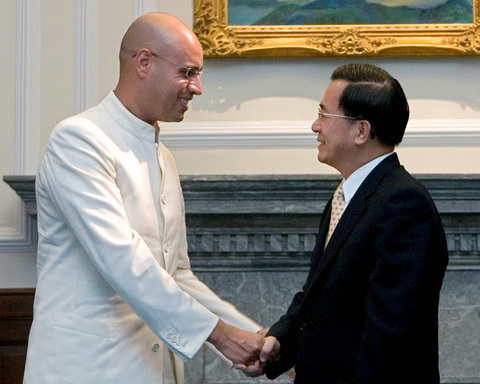
PHOTO: JEROME FAVRE, AP
Accepting an invitation from Muammar Qaddafi to visit Libya in the future, Chen asked Saif Qaddafi to pass on an invitation to his father, asking him to visit Taiwan.
"Both sides have agreed to set up offices in a bid to promote exchanges in diverse areas such as trade, tourism, aviation, education, culture, military affairs and security issues," Chen said.
Saif Qaddafi said that the delegates accompanying him on this trip are especially interested in promoting exchanges in the fields of oil exploitation, technology, trade, security and military affairs.
"I hope Taiwan and Libya can work together to play an important role in Africa to help people there and also to build good partnerships with other African countries," Saif Qaddafi said.
Officials at the Presidential Office attributed Taiwan's recent good relationship with Libya to the long-term efforts of the National Security Council. Officials stressed that it is important for Taiwan to build good relations with oil-producing countries in both Africa and the Middle East.
According to Presidential Office Deputy Secretary-General James Huang (黃志芳), Libya has managed to normalize its relations with the US since the Sept. 11 attacks by helping to combat global terrorism.
"Libya is one of a handful of countries in Africa with large fuel reserves. Good relations are crucial to us. Besides, Libya has expressed a lot of interest in Taiwan's development experience, especially in the areas of science parks and information technology," Huang said.
Ministry of Foreign Affairs Spokesman Michel Lu (呂慶龍) said yesterday that Libya is an important oil-exporting country, and therefore strategically important to Taiwan.
Libya is very keen on further pursuing mutual cooperation with Taiwan on petroleum and high-tech industries, he said.
Taiwan had diplomatic relations with Libya from 1959 to 1978. Taiwan maintained a trade office there from 1980 to 1997 after Libya switched its diplomatic recognition to China. The office was closed in 1997 due to pressure from China.
Additional reporting by Chang Yun-ping
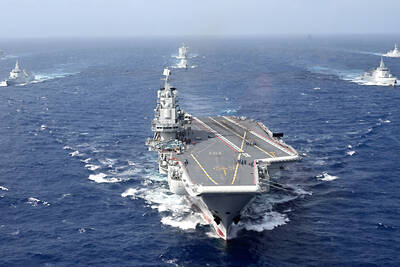
PROVOCATIVE: Chinese Deputy Ambassador to the UN Sun Lei accused Japan of sending military vessels to deliberately provoke tensions in the Taiwan Strait China denounced remarks by Japan and the EU about the South China Sea at a UN Security Council meeting on Monday, and accused Tokyo of provocative behavior in the Taiwan Strait and planning military expansion. Ayano Kunimitsu, a Japanese vice foreign minister, told the Council meeting on maritime security that Tokyo was seriously concerned about the situation in the East China and South China seas, and reiterated Japan’s opposition to any attempt to change the “status quo” by force, and obstruction of freedom of navigation and overflight. Stavros Lambrinidis, head of the EU delegation to the UN, also highlighted South China Sea

SILENCING CRITICS: In addition to blocking Taiwan, China aimed to prevent rights activists from speaking out against authoritarian states, a Cabinet department said The Ministry of Foreign Affairs (MOFA) yesterday condemned transnational repression by Beijing after RightsCon, a major digital human rights conference scheduled to be held in Zambia this week, was abruptly canceled due to Chinese pressure over Taiwanese participation. This year’s RightsCon, the world’s largest conference discussing issues “at the intersection of human rights and technology,” was scheduled to take place from tomorrow to Friday in Lusaka, and expected to draw 2,600 in-person attendees from 150 countries, along with 1,100 online participants. However, organizers were forced to cancel the event due to behind-the-scenes pressure from China, the ministry said, expressing its “strongest condemnation”
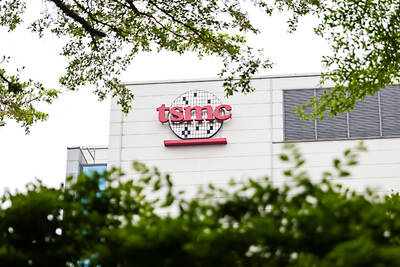
Taiwan Semiconductor Manufacturing Co (TSMC, 台積電), the world’s largest contract chipmaker, said it expects its 2-nanometer (2nm) chip capacity to grow at a compound annual rate of 70 percent from this year to 2028. The projection comes as five fabs begin volume production of 2-nanometer chips this year — two in Hsinchu and three in Kaohsiung — TSMC senior vice president and deputy cochief operating officer Cliff Hou (侯永清) said at the company’s annual technology symposium in Silicon Valley, California, last week. Output in the first year of 2-nanometer production, which began in the fourth quarter of last year, is expected to
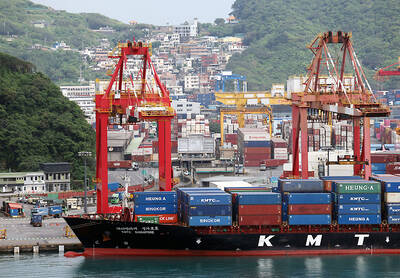
Taiwan’s economy grew far faster than expected in the first quarter, as booming demand for artificial intelligence (AI) applications drove a surge in exports, spilling over into investment and consumption, the Directorate-General of Budget, Accounting and Statistics (DGBAS) said yesterday. GDP growth was 13.69 percent year-on-year during the January-to-March period, beating the DGBAS’ February forecast by 2.23 percentage points and marking the most robust growth in nearly four decades, DGBAS senior official Chiang Hsin-yi (江心怡) told a news conference in Taipei. The result was powered by exports, which remain the backbone of Taiwan’s economy, Chiang said. Outbound shipments jumped 51.12 percent year-on-year to


 RSS
RSS